Natural Language ProcessingRoboticsHuman-computer Interaction
Abstract
Pedestrians increasingly encounter robots in urban public spaces without interacting with them, but how robots change the perceived safety of a street remains unclear. We examine how robot presence and type affect perceived safety across urban contexts. We generate 18 images of Seoul streets that vary in time of day, road class, and robot condition (no robot, a delivery robot, or a humanoid). Two multimodal large language models (MLLMs), Qwen3.8-27B and Gemma4-26B, each conditioned on 500 synthetic personas, choose the safer image in each pair, and 25 human respondents complete the same task. Both models prefer streets without robots and favor the delivery robot over the humanoid. Robots are chosen more often at night and less often by older personas, whereas road class has smaller effects. In the model rationales, the delivery robot appears as a physical obstacle, whereas the humanoid appears as either a threat or a source of protection. Like humans, both models chose robots more often at night, but chose the humanoid over the delivery robot far less often, and Gemma showed a night effect for the humanoid about three times that of humans. These results show that the effect of a robot on perceived safety depends on when it appears, and that persona-conditioned MLLMs capture only part of human judgments.
This paper investigates developing real-world perception for active agents, proposes Gibson Environment for this purpose, and showcases a set of perceptual tasks learned therein.
F. Xia, Amir Zamir, Zhi-Yang He et al.· 2018 IEEE/CVF Conference on...· 1,069 citations· ⚡112
This publication proposes a definition and a classification of agile software development approaches and analyses ten software development methods that can be characterized as being "agile" against the defined criterion.
P. Abrahamsson, O. Salo, Jussi Ronkainen et al.· arXiv.org· 727 citations· ⚡54
The study shows that agile practices improve both informal and formal communication, but indicates that, in larger development situations involving multiple external stakeholders, a mismatch of adequate communication mechanisms can sometimes even hinder the communication.
M. Pikkarainen, Jukka Haikara, O. Salo et al.· Empirical Software Engineeri...· 401 citations· ⚡48
The results indicate that software engineering work practices are chosen opportunistically, adapted and configured to provide value under the constrains imposed by the startup context.
Nicolò Paternoster, Carmine Giardino, M. Unterkalmsteiner et al.· Information and Software Tec...· 394 citations· ⚡54
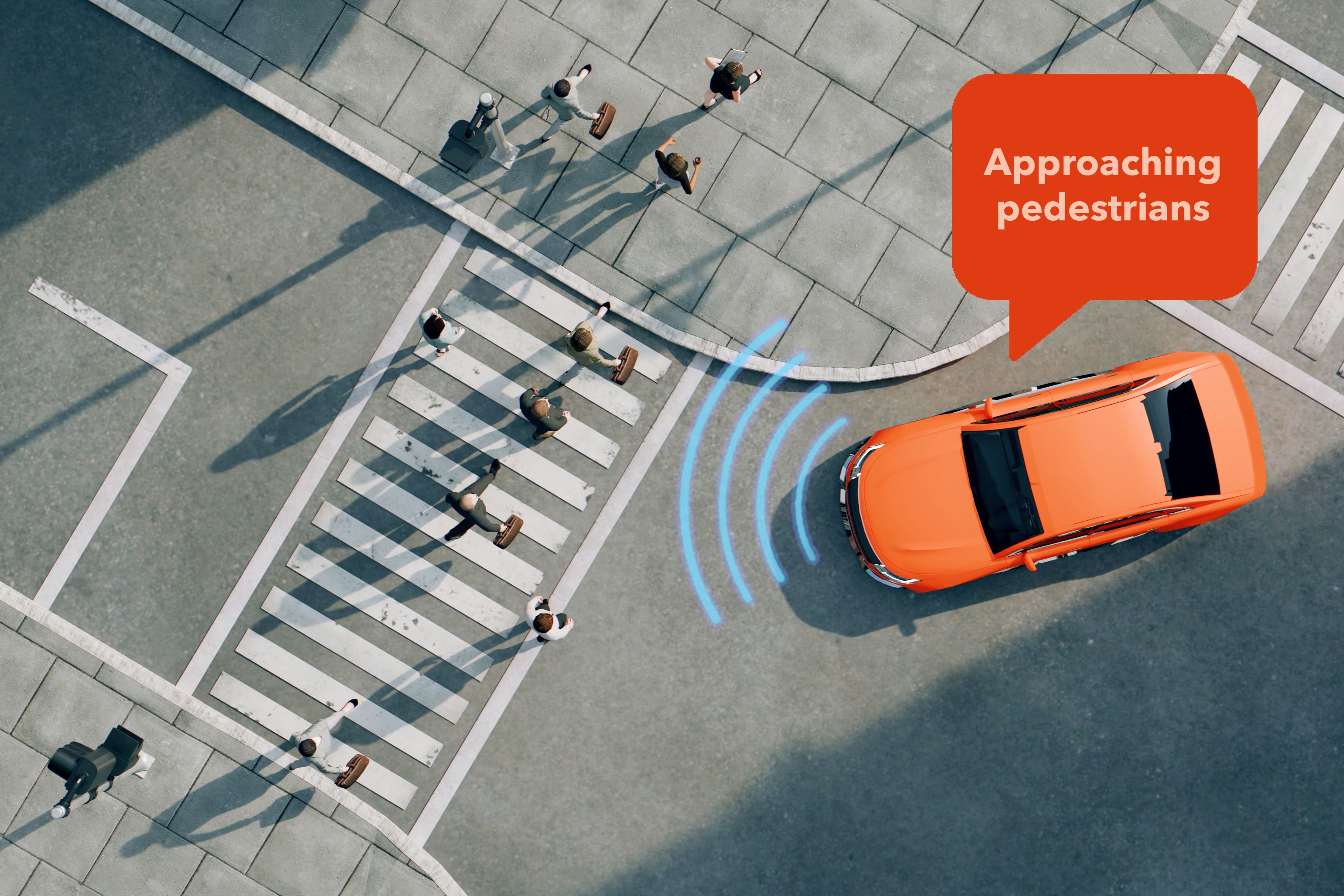
A new method, called CW-Net, translates the reasoning process of an autonomous vehicle’s AI system into understandable concepts that explain its behavior.
Short chart specifications are easy to write, but often produce uninspiring results. Flint is an open-source visualization language that offers a middle path, letting AI agents create expressive charts from compact, human-editable specifications. The post Flint: A visualization language for the AI era appeared first on Microsoft Research.
MIT News · Artificial Intelligence· news.mit.eduJun 26, 2026
To help robots do chores in places like homes and factories, a new approach from MIT uses one language model to clarify users’ instructions, then another to ignore irrelevant info.