Skip to content
#federated learning Review Open access

Machine Learning Integration in Additive Manufacturing: From Process Optimization to Biomedical Implant Applications

Aug 2026 · Acta Mechanica et Automatica · Vol 20, pp. 563 - 576 · 0 citations · 92 references

TL;DR

The findings conclude that transitioning from ‘black-box’ models to explainable AI represents the definitive path forward for meeting FDA/CE regulatory standards in clinical validation.
Abstract

Abstract Machine learning (ML) is accelerating the advancement of additive manufacturing (AM) into an intelligent, autonomous technology, spanning basic process optimization to specialized biomedical implant fabrication. Based on a systematic literature review encompassing 103 screened studies from 2014 to 2025 in accordance with PRISMA-P guidelines, this research maps how ML augments AM workflows in design, in-situ monitoring, and material performance. Supervised techniques like support vector machines, artificial neural networks, and convolutional neural networks are used extensively to forecast melt pool behavior, identify defects, and optimize parameters. Analysis of comparative studies within the reviewed cohort shows that while traditional data-driven models are foundational, physics-informed neural network (PINN) architectures provide a 10–12% increase in microstructural and thermal history prediction accuracy by embedding explicit physical conservation laws relative to purely empirical black-box configurations. Emerging frameworks, including large-scale generative models and federated learning, are evaluated not as immediate clinical solutions, but as experimental methodologies that facilitate advanced inverse design, biomimetic lattice synthesis, and decentralized collaborative manufacturing protocols. Ti-based alloys, particularly Ti–6Al–4V, lead the clinical domain due to structural performance, fine-tuned through ML for site-specific characteristics. The findings conclude that transitioning from ‘black-box’ models to explainable AI represents the definitive path forward for meeting FDA/CE regulatory standards in clinical validation.

Read PDF

Similar papers

Review Aug 2026

Machine learning for biomaterials design

Xiao-Qiong Xia, Tianang Leng, Andrés J. García et al. · 2 citations
Open access Nov 2026

A Multi-Scale AI-Driven Optimization Framework for Industrial Product Design

A physics-aware, multi-scale Artificial Intelligence (AI)-driven optimization framework is proposed that unifies material level attributes, process settings, thermal/in-situ responses, and final mechanical properties into a single predictive pipeline, demonstrating the overall importance of energy density and in-situ t...

Yong He · 0 citations
Review Open access Aug 2026

Machine learning in laser powder bed fusion: a data-centric review of structural prediction and process optimization

This review provides a comprehensive overview of ML-based approaches applied to LPBF, emphasizing the importance of understanding the underlying physical phenomena that significantly influence data collection, preprocessing, and feature engineering strategies essential for effective model training and validation.

M. Bagheri, Daniyal Sayadi, Ali Bonakdar et al. · 0 citations
Open access Sep 2026

Grey box modeling to predict tensile properties in laser powder bed fusion

Additive Manufacturing is an upcoming technology to produce metal structures in industry as complex near net-shaped structures can be built. One commonly used method is Laser Powder Bed Fusion (PBF-LB), that uses lasers to melt metal powder layer by layer. Alongside advantages that come with this technology, the va...

Florian Funcke, Tobias Forster, Marinus Kolbinger et al. · 0 citations

Related blog posts

Microsoft Research Blog Sep 30, 2026

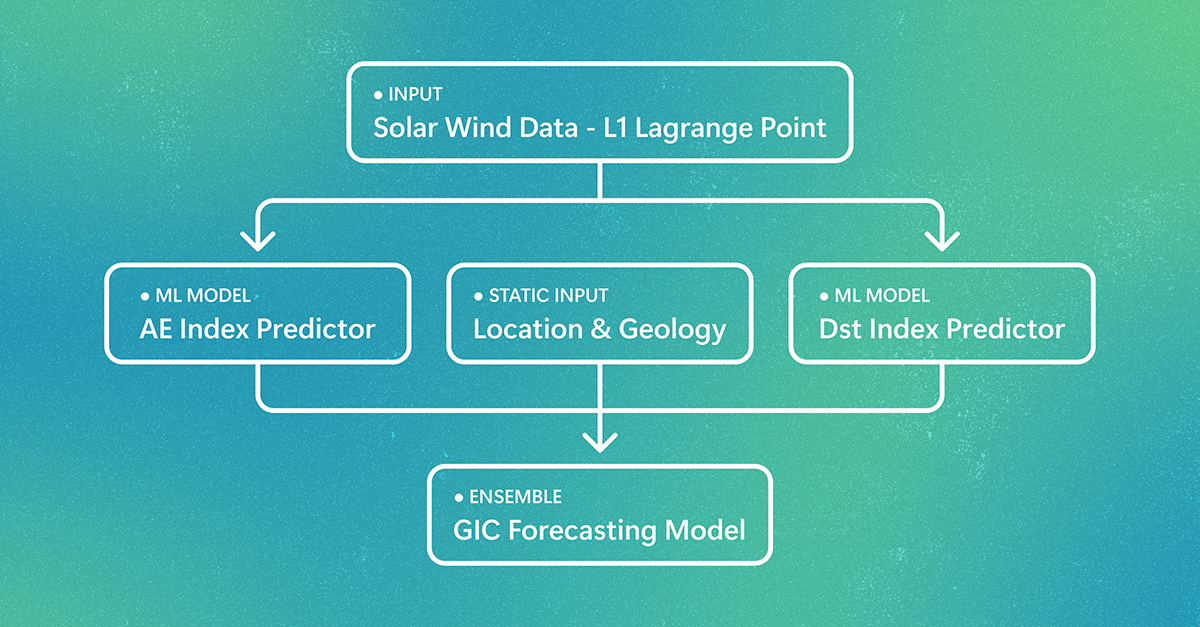
Forecasting space weather risks on power grids

Extreme space-weather events can damage power systems on Earth and degrade GPS accuracy and satellite operations. A new machine learning system can predict where damage is likely to occur 30-60 minutes before a storm arrives. The post Forecasting space weather risks on power grids appeared first on Microsoft Research.

We use cookies to run the site and, with your consent, for analytics and to show ads. See our Cookie Policy.