Large language models rely on a single tokenizer that is chosen at training time and fixed thereafter. Most tokenizers are trained on English-dominant corpora, making them under-serve morphologically rich and non-Latin-script languages, where they can produce fragmented representations, longer sequence lengths, and reduced information density during training. We propose Mixture of Tokenizers MoTo, a modular tokenization framework that trains dedicated per-language BPE tokenizers and composes them into a unified superset vocabulary, where tokens shared across languages are deduplicated into a common ID space. Each tokenizer maintains its own normalization policy, pre-tokenization rules, and vocabulary budget. Despite allocating significantly fewer entries to English, MoTo retains English performance while delivering consistent gains across 18 out of 21 typologically diverse languages spanning six scripts, with improvements most pronounced on morphologically complex and non-Latin-script languages that are systematically underserved by English-dominant tokenizer design. Our results suggest that modular subword tokenization is a practical and extensible alternative to monolithic tokenization for multilingual parity.

It is found that Llama 3 delivers comparable quality to leading language models such as GPT-4 on a plethora of tasks, and performs competitively with the state-of-the-art on image, video, and speech recognition tasks.
This paper investigates developing real-world perception for active agents, proposes Gibson Environment for this purpose, and showcases a set of perceptual tasks learned therein.
F. Xia, Amir Zamir, Zhi-Yang He et al.· 2018 IEEE/CVF Conference on...· 1,069 citations· ⚡112
This publication proposes a definition and a classification of agile software development approaches and analyses ten software development methods that can be characterized as being "agile" against the defined criterion.
P. Abrahamsson, O. Salo, Jussi Ronkainen et al.· arXiv.org· 727 citations· ⚡54
The results indicate that software engineering work practices are chosen opportunistically, adapted and configured to provide value under the constrains imposed by the startup context.
Nicolò Paternoster, Carmine Giardino, M. Unterkalmsteiner et al.· Information and Software Tec...· 394 citations· ⚡54
The possibility of inferring high-dimensional data inference in a model that consists of a prior and an auxiliary differentiable constraint given some additional information is considered, thereby allowing a range of potential applications in adapting models to new domains and tasks.
Alexandros Graikos, Esmeralda S. Whitammer, N. Jojic et al.· Neural Information Processin...· 316 citations· ⚡15
It is proved that any global minimizer of the trajectory balance objective can define a policy that samples exactly from the target distribution, and empirically demonstrate the benefits of the trajectories balance objective for GFlowNet convergence, diversity of generated samples, and robustness to long action sequenc...
Esmeralda S. Whitammer, Moksh Jain, Emmanuel Bengio et al.· Neural Information Processin...· 302 citations· ⚡60
Related blog posts
MIT News · Artificial Intelligence· news.mit.eduNov 17, 2026
By studying the computational foundations of language learning, Associate Professor Jacob Andreas builds intelligent systems that can communicate effectively with humans.
MIT News · Artificial Intelligence· news.mit.eduAug 27, 2026
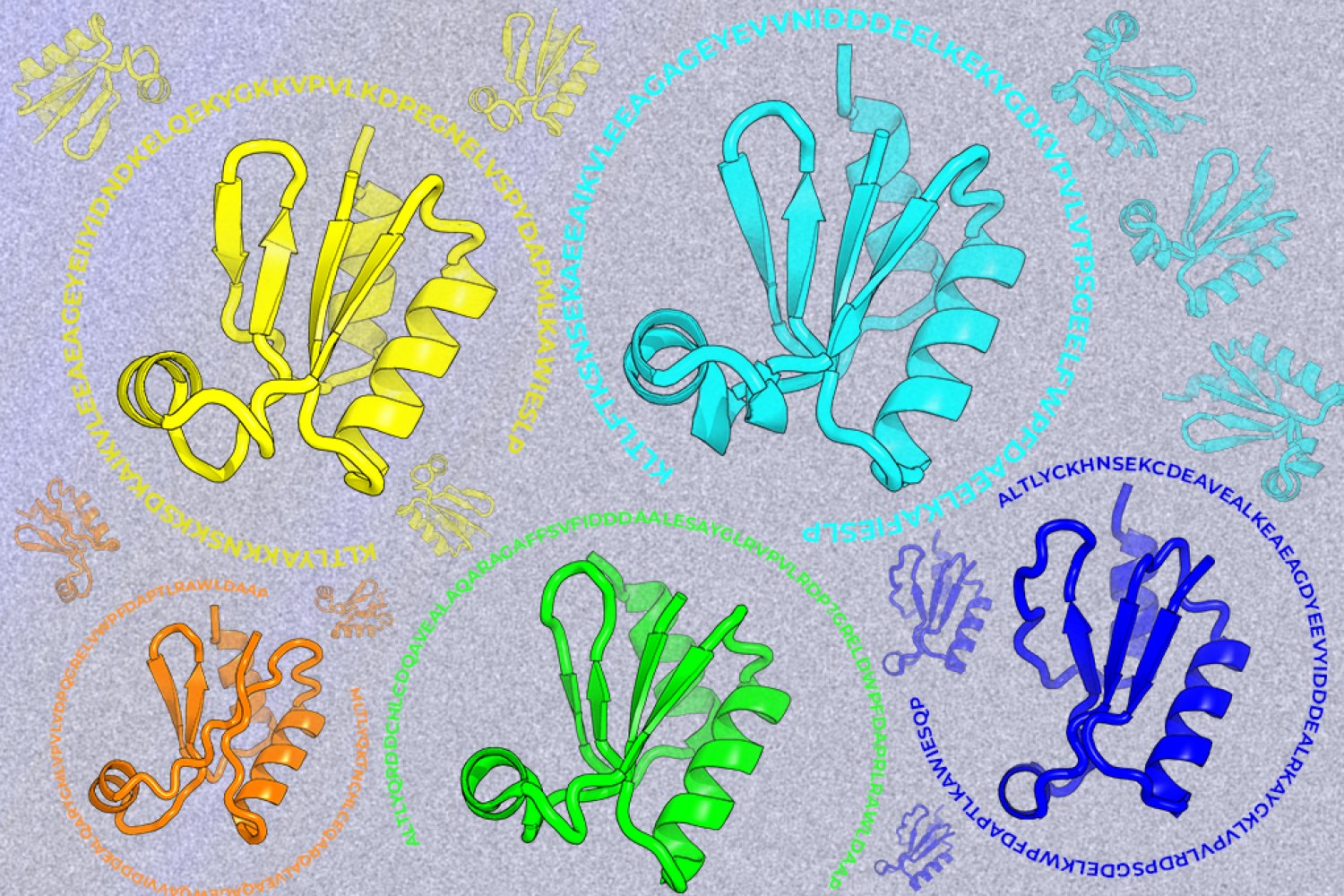
A new machine-learning framework aims to improve the success rate of computational protein design while moving away from results that reproduce sequences found in nature.