Skip to content

Thought-deciphering via hierarchical EEG-to-text alignment

Nov 2026 · 0 citations · 112 references
Computer Science Engineering

Abstract

Non-invasive brain-to-text interfaces offer alternative communication pathways for people with communication disabilities. However, sentence-level decoding from electroencephalography (EEG) remains challenging. We propose a hierarchical EEG-text alignment framework that retrieves previously unseen sentences by progressively decoding coarse-grained semantic information and fine-grained sentence representations. We hypothesize that broader semantic context can be more reliably captured from EEG than individual sentences. Accordingly, EEG representations are first classified into semantic classes, which are defined as groups of related sentences, followed by sentence retrieval within the predicted class. Among over 2,000 unique text samples, our approach achieves, on unseen sentences, average top-5 and top-10 retrieval accuracies of 62.6\% $\pm$ 1.0\% and 83.5\% $\pm$ 1.0\%, respectively, compared with 0.3\% $\pm$ 0.3\% and 0.5\% $\pm$ 0.2\% for direct EEG-sentence alignment without semantic classification. Qualitative analysis further reveals that decoding performance depends strongly on textual context. These findings demonstrate the potential of hierarchical semantic alignment for advancing sentence-level EEG-to-text decoding.


View source

Similar papers

#machine learning Preprint Oct 2026

Semantic Alignment of EEG and Text: A Contrastive Learning Framework for Decoding Imagined Speech

Imagined speech decoding from EEG offers a promising route toward naturalistic brain-computer interfaces. Traditional closed-set classifiers treat semantic categories as independent labels and do not explicitly exploit relationships among linguistic intents, limiting output flexibility. We adapt a multimodal contrastiv...

Shahryar G. Namdari, Francesco Iacomi, R. Barbieri et al. · 0 citations
#natural language process... Preprint Nov 2026

Technical Report MEG2text: Beyond Alignment in Non-Invasive Brain-to-Text

Non-invasive brain-to-text seeks to recover language from brain activity without surgery. A central challenge is turning learned brain-language representations into accurate word predictions. We present MEG2text, a decoding system that combines corrected training and evaluation, brain-text alignment, a class-balanced w...

Yi-Qian Yang, Yi-Qun Duan · 0 citations
Preprint Nov 2026

EEGHyena2: Fixation-Inspired Joint Lexical-Grammatical Conditional Random Field for Interpretable EEG-to-Text Decoding

A sentence is built from words that carry lexical meaning and grammatical roles, and brain activity during reading reflects both. Current EEG-to-text decoders, however, let a large language model (LLM) propose and order the words, so fluent output can reflect the LLM's prior more than the recorded EEG. In this study, w...

Xiao-Shan Zhou, Chen-Lan Liu · 0 citations
Preprint Oct 2026

Predicting Cognitive Tasks from Single-Channel EEG through Task-Semantic Alignment

These exploratory results suggest that EEG datasets that repeat varied cognitive tasks and everyday activities within the same individuals across days, devices and independent studies would be particularly useful for training an EEG foundation model for predicting cognitive states.

R. Kanai · 0 citations
#machine learning Preprint Oct 2026

EEG-Captioner: Grounding EEG-to-Language Generation in Fundamental Signal Properties

Electroencephalography (EEG)-to-language models offer a promising approach for translating complex neural signals into human-readable descriptions. However, generating plausible language does not necessarily demonstrate that a model has learned to interpret the underlying EEG signal. A direct way to assess such interpr...

Le-Yuan Jin, Jia-Hao Mei, Yi-Xuan Yuan et al. · 0 citations

Related blog posts

MIT News · Artificial Intelligence Nov 17, 2026

Learning the language of machine learning

By studying the computational foundations of language learning, Associate Professor Jacob Andreas builds intelligent systems that can communicate effectively with humans.

Microsoft Research Blog Nov 16, 2026

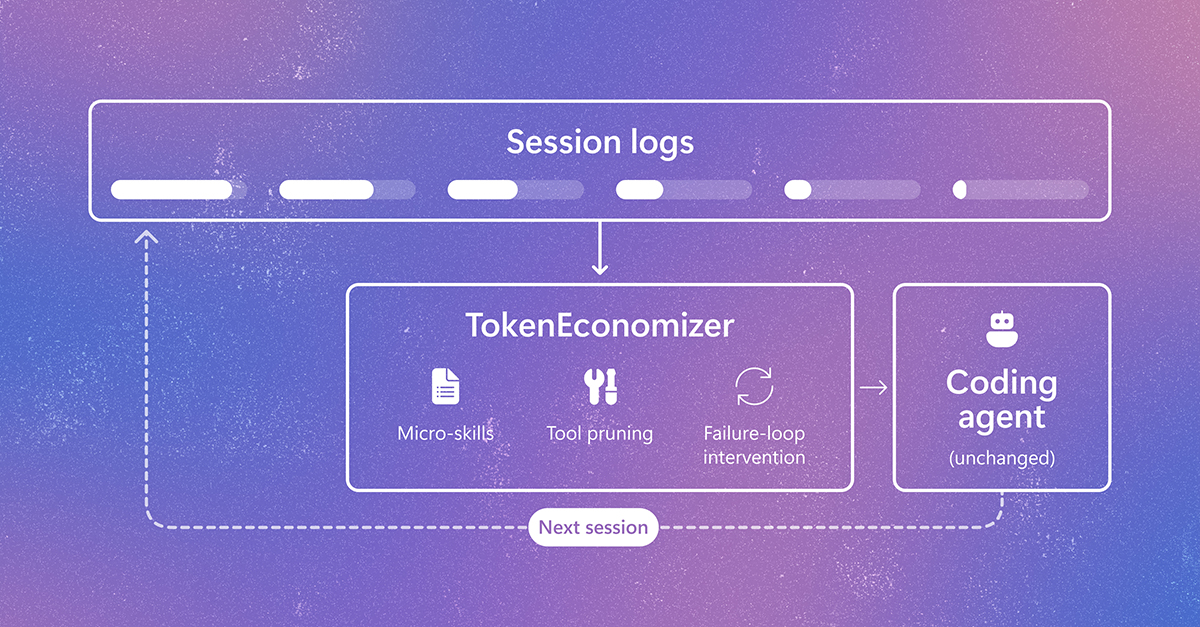
TokenEconomizer: Learning from Experience to Make AI Coding Agents More Efficient

AI coding agents are increasingly help developers fix bugs and build features largely on their own, but every interaction with their models consumes tokens. In each session, an agent sends instructions, tool descriptions, and session history to its model. Most efforts to reduce this cost focus on individual tasks. Yet developers return to the same […] The post TokenEconomizer: Learning from Experience to Make AI Coding Agents More Efficient appeared first on Microsoft Research.

We use cookies to run the site and, with your consent, for analytics and to show ads. See our Cookie Policy.