Oct 2021· 2021 6th International Conference on Signal Processing, Computing and Control (ISPCC)· pp. 150-154· 2 citations
Abstract
Code smells are indicators of some design flaws in the software code. The evolutionary property of an object-oriented software product increases the number of code smells with every release of a version of the product. These code smells like to hamper the quality of the software system. During software maintenance, it becomes cost and effort-intensive to eliminate such a large number of smells due to time and budget constraints. This demands the prioritization of code smells where the developers are with top severe smells to save time and effort. Before proposing any prioritization approach, it becomes important to Figure out the need for code smell elimination using different refactoring activities. Following this, it is imperative to understand the role of different relevant elements in code smell prioritization. To address this need, this paper highlights the drawbacks of code smells as well as provides an overview of several prioritization-related elements such as factors, subject programs, performance metrics, and detection tools. This would help the researchers in getting a preliminary understanding of various parameters that are crucial for proposing and validating code smell prioritization approaches.

This publication proposes a definition and a classification of agile software development approaches and analyses ten software development methods that can be characterized as being "agile" against the defined criterion.
P. Abrahamsson, O. Salo, Jussi Ronkainen et al.· arXiv.org· 727 citations· ⚡54
The study shows that agile practices improve both informal and formal communication, but indicates that, in larger development situations involving multiple external stakeholders, a mismatch of adequate communication mechanisms can sometimes even hinder the communication.
M. Pikkarainen, Jukka Haikara, O. Salo et al.· Empirical Software Engineeri...· 401 citations· ⚡48
The results indicate that software engineering work practices are chosen opportunistically, adapted and configured to provide value under the constrains imposed by the startup context.
Nicolò Paternoster, Carmine Giardino, M. Unterkalmsteiner et al.· Information and Software Tec...· 394 citations· ⚡54
The results show that the embedded industry has been able to apply agile methods in its development processes and that the appreciation of the agile methods and their individual practices appears to increase once adopted and applied in practice.
O. Salo, P. Abrahamsson· IET Software· 238 citations· ⚡9
Consequences of happiness and unhappiness that are beneficial and detrimental for developers' mental well-being, the software development process, and the produced artifacts are found.
D. Graziotin, Fabian Fagerholm, Xiaofeng Wang et al.· Journal of Systems and Softw...· 236 citations· ⚡13
The Mobile-D approach is briefly outlined here and the experiences gained from four case studies are discussed, which helped develop an agile development approach for mobile application development.
P. Abrahamsson, Antti Hanhineva, H. Hulkko et al.· Conference on Object-Oriente...· 225 citations· ⚡18
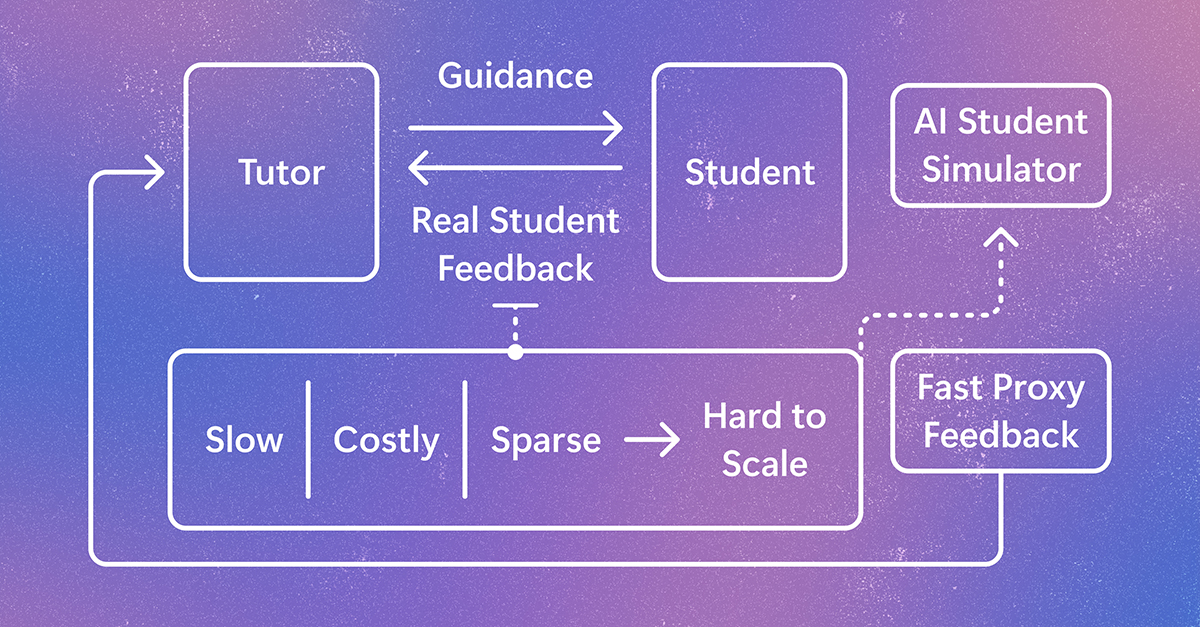
StudentSim is a research system for evaluating and improving AI tutoring tools before they are tested with learners. It models how individuals may engage with tutors, giving feedback to improve tutor performance across subjects like chess, writing, and mathematics. The post Simulating student learning for better AI tutoring appeared first on Microsoft Research.
We use cookies to run the site and, with your consent, for analytics and to show ads.
See our Cookie Policy.