A fundamental challenge in artificial intelligence is the transformation of observations into explicit symbolic representations suitable for abstraction, interpretation, and reasoning. While modern AI systems achieve remarkable perceptual capabilities through large-scale statistical learning, the resulting knowledge is typically encoded within latent parameters that are difficult to inspect or manipulate analytically. Inspired by Neuro-Symbolic AI and theories of human abstraction, this paper investigates the formation of symbolic mathematical representations from geometric observations. We propose NeuSOGA (Neuro-Symbolic Geometric Abstraction), a framework that progressively transforms observations into topological abstractions, geometric abstractions, and ultimately symbolic mathematical representations. The architecture combines topology-guided structural discovery using Euclidean Distance Transforms, foundation-model perception using Segment Anything, adaptive multi-scale geometric abstraction, and symbolic synthesis through Implicit Area Splines. The resulting representation is an analytical implicit model supporting arbitrary-order smoothness, additive composition, and closed-form evaluation. Unlike neural latent encodings, the generated representation remains interpretable, editable, and mathematically explicit. Experiments on ModelNet40 point clouds, arbitrary-view projections, and segmented optical observations demonstrate that NeuSOGA transforms diverse observations into compact symbolic representations while preserving essential geometric and topological structure across sensing modalities and viewing directions. NeuSOGA provides an interpretable and explainable pathway from observation to symbol and establishes

This publication proposes a definition and a classification of agile software development approaches and analyses ten software development methods that can be characterized as being "agile" against the defined criterion.
P. Abrahamsson, O. Salo, Jussi Ronkainen et al.· arXiv.org· 727 citations· ⚡54
The study shows that agile practices improve both informal and formal communication, but indicates that, in larger development situations involving multiple external stakeholders, a mismatch of adequate communication mechanisms can sometimes even hinder the communication.
M. Pikkarainen, Jukka Haikara, O. Salo et al.· Empirical Software Engineeri...· 401 citations· ⚡48
The results indicate that software engineering work practices are chosen opportunistically, adapted and configured to provide value under the constrains imposed by the startup context.
Nicolò Paternoster, Carmine Giardino, M. Unterkalmsteiner et al.· Information and Software Tec...· 394 citations· ⚡54
The possibility of inferring high-dimensional data inference in a model that consists of a prior and an auxiliary differentiable constraint given some additional information is considered, thereby allowing a range of potential applications in adapting models to new domains and tasks.
Alexandros Graikos, Esmeralda S. Whitammer, N. Jojic et al.· Neural Information Processin...· 316 citations· ⚡15
Radiology AI is evolving beyond report generation. CARE-X explores a unified approach that combines flexible reasoning, calibrated predictions, and measurement-based tools for chest X-ray interpretation. The post Introducing CARE-X: Towards Clinically Useful Radiology VLMs with Auxiliary Supervision, Reward-Aligned Learning, and Tool-Augmented Measurement appeared first on Microsoft Research.
Microsoft Research Blog· microsoft.comJul 30, 2026
Computer-use AI agents struggle with multi-step workflows like email and customer support. Echoverse trains agents in realistic environments rather than simply providing more training tasks, helping them improve as the tasks, tests, and environments evolve. The post Echoverse: Deep, evolving environments for computer-use agents appeared first on Microsoft Research.
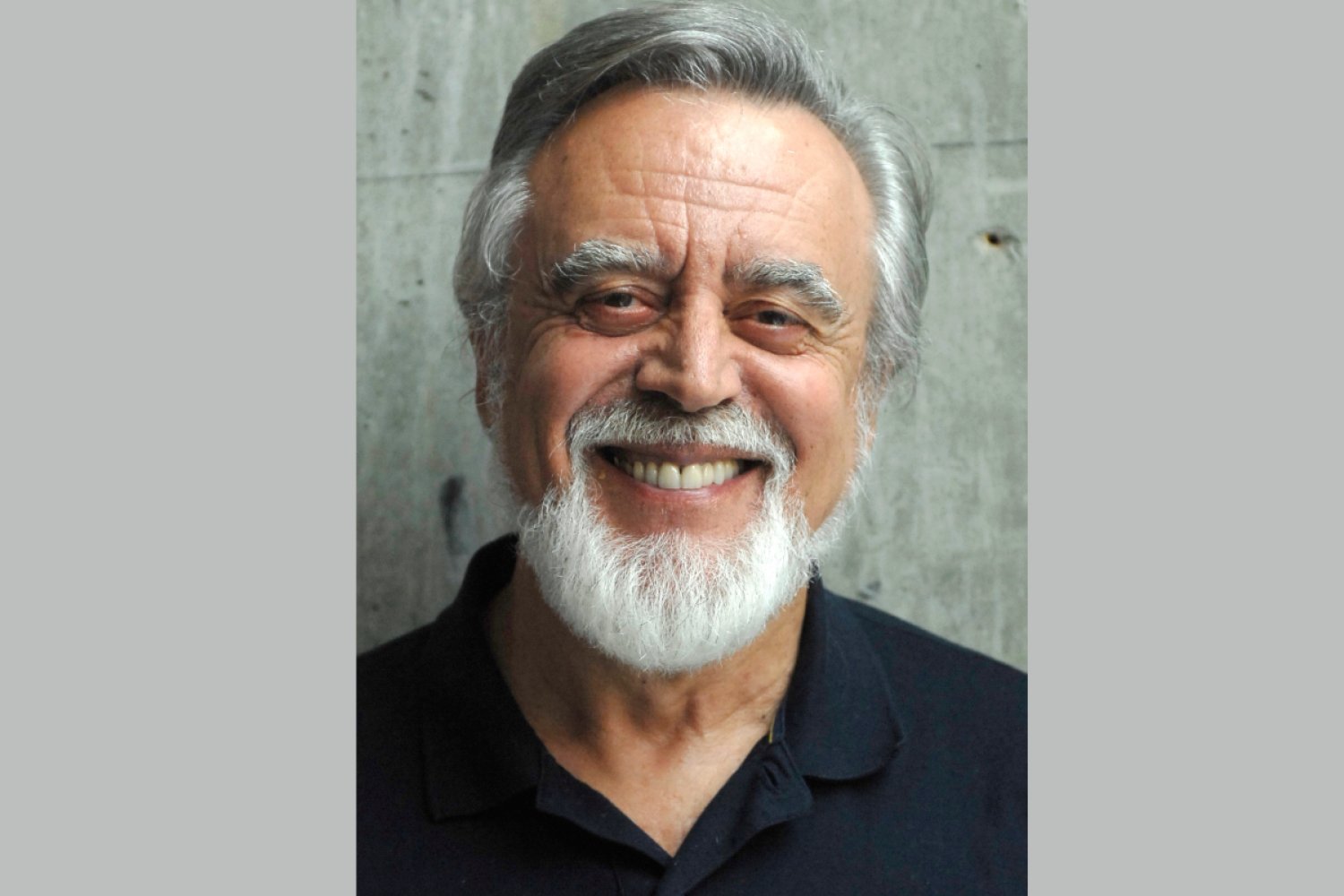
Known for his clear and elegant writing style, Bertsekas shaped fields from control and optimization to large-scale computation and artificial intelligence.
We use cookies to run the site and, with your consent, for analytics and to show ads.
See our Cookie Policy.