Artificial IntelligenceMachine LearningNatural Language Processing
Abstract
Natural Language Explanations (NLEs) describe how Large Language Models (LLMs) make decisions by drawing on external Context Knowledge (CK) and Parametric Knowledge (PK). Understanding the interaction between these sources is key to assessing NLE grounding, yet these dynamics remain underexplored. Prior work has largely focused on i) single-step generation and ii) modeled PK--CK interaction as a binary choice within a rank-1 subspace. This approach overlooks richer interactions and how they unfold over longer generations, such as complementary or supportive knowledge. We propose a novel rank-2 projection subspace that disentangles PK and CK contributions more accurately and use it for the first multi-step analysis of knowledge interactions across longer NLE sequences. Experiments across four QA datasets and three open-weight LLMs demonstrate that rank-1 subspaces struggle to represent diverse interactions, whereas our rank-2 formulation captures them effectively, highlighting PK alignment for supportive interactions and CK alignment for conflicting ones. Our multi-step analysis reveals that hallucinated generations exhibit strong alignment with the PK direction, though context-faithful generations maintain a more balanced alignment between PK and CK.
This publication proposes a definition and a classification of agile software development approaches and analyses ten software development methods that can be characterized as being "agile" against the defined criterion.
P. Abrahamsson, O. Salo, Jussi Ronkainen et al.· arXiv.org· 727 citations· ⚡54
The results indicate that software engineering work practices are chosen opportunistically, adapted and configured to provide value under the constrains imposed by the startup context.
Nicolò Paternoster, Carmine Giardino, M. Unterkalmsteiner et al.· Information and Software Tec...· 394 citations· ⚡54
The possibility of inferring high-dimensional data inference in a model that consists of a prior and an auxiliary differentiable constraint given some additional information is considered, thereby allowing a range of potential applications in adapting models to new domains and tasks.
Alexandros Graikos, Esmeralda S. Whitammer, N. Jojic et al.· Neural Information Processin...· 316 citations· ⚡15
It is proved that any global minimizer of the trajectory balance objective can define a policy that samples exactly from the target distribution, and empirically demonstrate the benefits of the trajectories balance objective for GFlowNet convergence, diversity of generated samples, and robustness to long action sequences and large action spaces.
Esmeralda S. Whitammer, Moksh Jain, Emmanuel Bengio et al.· Neural Information Processin...· 302 citations· ⚡60
Consequences of happiness and unhappiness that are beneficial and detrimental for developers' mental well-being, the software development process, and the produced artifacts are found.
D. Graziotin, Fabian Fagerholm, Xiaofeng Wang et al.· Journal of Systems and Softw...· 236 citations· ⚡13
Mobile phones have been closed environments until recent years. The change brought by open platform technologies such as the Symbian operating system and Java technologies has opened up a significant business opportunity for anyone to develop application software such as games for mobile terminals. However, developing mobile applications is currently a challenging task due to the specific demands and technical constraints of mobile development. Furthermore, at the moment very little is known about the suitability of the different development processes for mobile application development. Due to these issues, we have developed an agile development approach called Mobile-D. The Mobile-D approach is briefly outlined here and the experiences gained from four case studies are discussed.
P. Abrahamsson, Antti Hanhineva, H. Hulkko et al.· Conference on Object-Oriente...· 225 citations· ⚡18
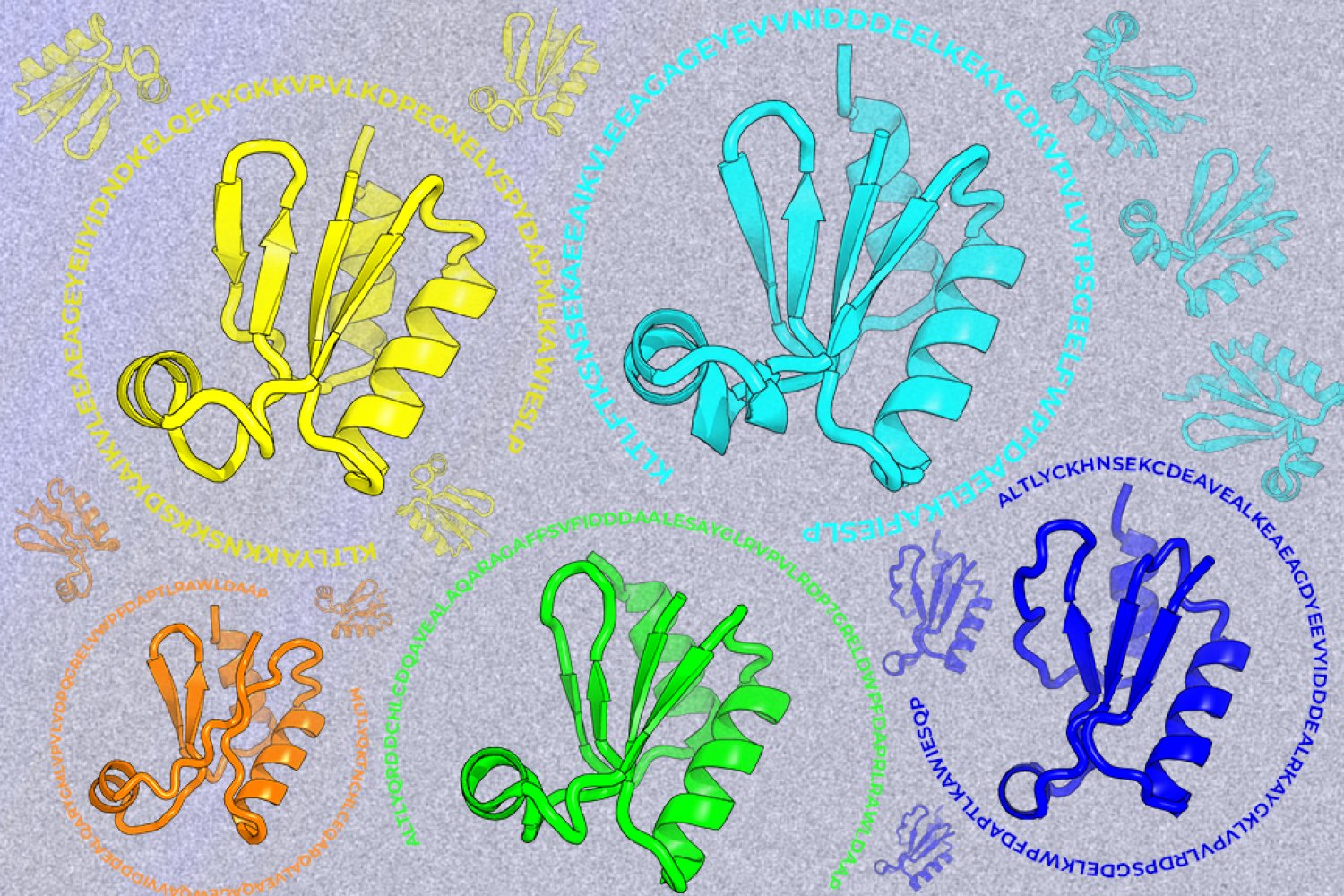
A new machine-learning framework aims to improve the success rate of computational protein design while moving away from results that reproduce sequences found in nature.