The Cognitive Propagation Score (CPS) is introduced, an interpretable post-hoc auxiliary score computed from psychologically motivated, text-derived cues capturing argument complexity, emotional intensity, and content-derived virality potential, to support diffusion-risk reasoning when engagement ground truth is incomplete or unavailable.
Abstract
This paper presents a multi-branch fusion framework for detecting and characterising the propagation of health misinformation in online social networks (OSNs). Grounded in the Elaboration Likelihood Model (ELM) and the Theory of Planned Behaviour (TPB), the model fuses transformer-based semantics with rhetorical cues, stance representations, and psychologically motivated proxies in a unified multi-task architecture. In addition to binary classification, we introduce the Cognitive Propagation Score (CPS), an interpretable post-hoc auxiliary score computed from psychologically motivated, text-derived cues capturing argument complexity, emotional intensity, and content-derived virality potential, to support diffusion-risk reasoning when engagement ground truth is incomplete or unavailable. Experiments on three benchmark datasets, Constraint, COVID--19\_FNIR, and Monkeypox, show strong classification performance, achieving ROC--AUC up to 0.9999 on COVID--19\_FNIR, while propagation-oriented ranking achieves near-perfect agreement when engagement-derived supervision is available (Monkeypox, Spearman's $\rho = 0.9952$) and similarly high ranking alignment under proxy-based supervision on COVID--19\_FNIR ($\rho = 0.9954$). Compared with representative literature baselines, the fusion model improves detection on Constraint and COVID--19\_FNIR, while Monkeypox remains more challenging, reflecting domain- and signal-specific differences. Ablation analysis further indicates that psychological and rhetorical branches provide complementary gains beyond semantic embeddings. Overall, the framework bridges cognitive theory and neural modelling to improve transparency and to support scalable misinformation monitoring, with future work required to validate CPS against human-centred diffusion judgements.
Identifying mental health risk on social media is high-stakes, demanding low false negative rates (FNRs) and calibrated, trustworthy predictions. Prior work typically fuses linguistic and semantic signals without psycholinguistic grounding or disentanglement, lacks integrated calibration, prioritizes standard metrics o...
Anshumala Rakesh, A. Rao· IEEE Transactions on Computa...· 0 citations
An automated classification system capable of accurately and efficiently categorizing human psychological distress in a lightweight, web-deployable format is proposed, deployed as a research prototype for prioritizing human review of written text, not as a diagnostic or standalone screening tool.
Ayaan Goswami, C. Greenberg· International Journal of Sec...· 0 citations
This study evaluates an explainable ensemble in which Convolutional Neural Network and Bidirectional Long Short-Term Memory feature extractors feed a Random Forest classifier, applied under one architectural template to two independent tasks: labelling Ebola-related tweets as symptom-bearing warning signals and labelli...
F. O. Muhammed, M. Suleiman, S. Abdullahi et al.· Journal of the Nigerian Soci...· 0 citations
A comprehensive framework for cyberbullying detection that integrates two complementary eXplainable Artificial Intelligence techniques based on Large Language Model explanations and a SHAP value–based interpretability is presented, demonstrating the importance of combining complementary XAI techniques to support transp...
G. Loseto, F. Gramegna, A. Pinto et al.· Discover Artificial Intellig...· 0 citations
Mental health support systems are increasingly intertwined with automated systems which need clin-ically-interpreted comprehension of user input. However, the subtleties of emotionally-ladened, non-finely tuned everyday text, present limitations in comparison to generalized NLP models. This study introduces a dual-enco...
H. Para, M. Bhaskar· Adolescência e Saúde· 0 citations
Related blog posts
Microsoft Research Blog· microsoft.comNov 16, 2026
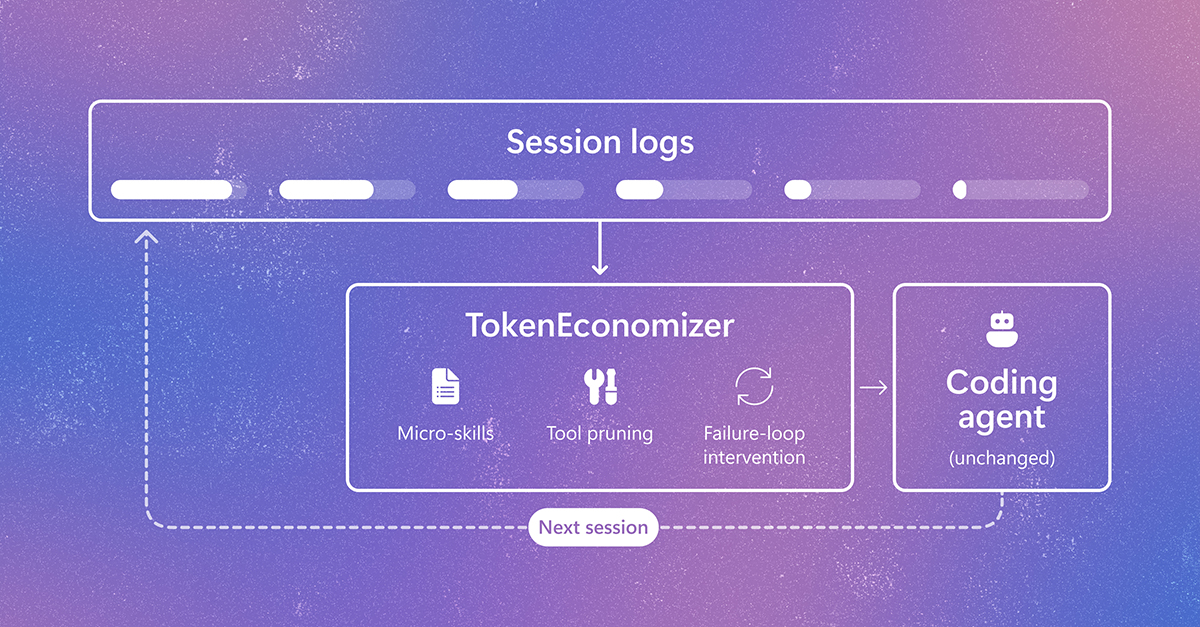
AI coding agents are increasingly help developers fix bugs and build features largely on their own, but every interaction with their models consumes tokens. In each session, an agent sends instructions, tool descriptions, and session history to its model. Most efforts to reduce this cost focus on individual tasks. Yet developers return to the same […] The post TokenEconomizer: Learning from Experience to Make AI Coding Agents More Efficient appeared first on Microsoft Research.
MIT News · Artificial Intelligence· news.mit.eduNov 9, 2026
Assistant Professor Benjamin Lindquist studies how engineers deliberately injected randomness into early AI, giving rise to deep-learning models that sometimes hallucinate.


