Skip to content

Quantum Sparse Autoencoders for Q-Matrix Estimation in Cognitive Diagnosis

Sep 2026 · 0 citations · 28 references
Computer Science

TL;DR

The findings suggest that the principal advancement of QML in this setting is not universal accuracy improvement, but enhanced robustness and capability to explore latent-structure complexity in real datasets.


Abstract

Q-matrices play a central role in cognitive diagnosis within educational data mining (EDM), specifying which latent skills each assessment item requires. Data-driven Q-matrix estimation remains challenging when assessments involve many correlated skills and when real response patterns depart from idealized generative assumptions. We introduce a novel quantum sparse autoencoder (QSAE) for Q-matrix estimation, which, to the best of our knowledge, is the first application of quantum machine learning (QML) to cognitive diagnosis. Overall, the QSAE embeds each student's binary response vector into a quantum circuit using an encoder, compresses it into a sparse latent representation, and maps that representation to the Q-matrix. We benchmark the QSAE against a classical autoencoder (CAE) across 60 simulated datasets and 9 real-world assessment datasets. The results reveal complementary strengths. Although the CAE partially achieves higher average accuracy under several simulation conditions, the QSAE is substantially more stable across replications, exhibiting lower variance in 49 of the 60 conditions. Moreover, on real assessment data, the QSAE outperforms the CAE on 6 of the 9 datasets. These findings suggest that the principal advancement of QML in this setting is not universal accuracy improvement, but enhanced robustness and capability to explore latent-structure complexity in real datasets.
View source

Similar papers

#machine learning Preprint Oct 2026

Learning Disentangled Representations with Quantum Variational Autoencoders

Variational autoencoders are powerful representation learning models that map complex data into low-dimensional latent spaces, enabling the discovery of interpretable and disentangled factors. Such representations can facilitate the interpretation and controllable generation of data describing complex scientific system...

Gao-Yuan Wang, Jerry Tan, M. Gerstein · 0 citations

High-Dimensional Simulation-Based Inference in Latent Spaces

This work describes the conditions under which latent-space inference recovers the desired target posterior and systematically study its empirical trade-offs, comparing latent and standard estimators while controlling for network capacity, regularization, optimization, and training compute.

L. Kühmichel, Stefan T. Radev, B. Koppolu et al. · 0 citations
#artificial intelligence Preprint Oct 2026

Inference and learning in sparse autoencoders as natural gradient flow

Sparse autoencoders are widely used to uncover interpretable features in neural networks, yet reliable recovery remains difficult when features overlap or activate infrequently. These challenges involve both inferring which features explain an input and learning the dictionary that represents them. Here, we unify infer...

Hadi Vafaii, Tejas Rao, David Chanin et al. · 0 citations
Open access Aug 2026

A Copula-Tensor Neural Network Framework for High-Dimensional Causal Inference

It is suggested that copula-based feature representations combined with deep learning provide a flexible approach for heterogeneous treatment effect estimation, particularly in high-dimensional settings with complex covariate dependence.

Jong-Min Kim · 0 citations
#machine learning Preprint Sep 2026

LILA: Calibration-Free Structured Pruning of Large Language Models via Latent Spectral Geometry

Extending LILA to dynamically allocate sparsity budgets via KS-scores yields state-of-the-art generative preservation at moderate compression, while uncovering fundamental single-layer architectural bottlenecks at higher compression regimes.

Sankar Behera, Dhruv Singh, Anshika Agnihotri et al. · 1 citation

Related blog posts

MIT News · Artificial Intelligence Nov 17, 2026

Learning the language of machine learning

By studying the computational foundations of language learning, Associate Professor Jacob Andreas builds intelligent systems that can communicate effectively with humans.

Microsoft Research Blog Nov 16, 2026

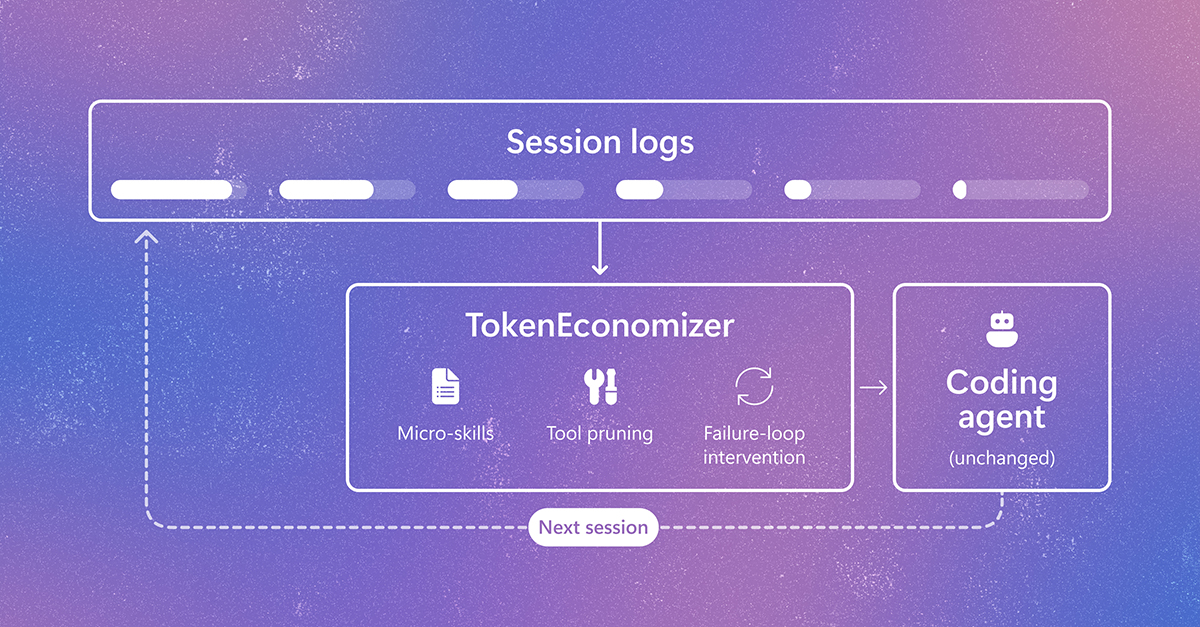
TokenEconomizer: Learning from Experience to Make AI Coding Agents More Efficient

AI coding agents are increasingly help developers fix bugs and build features largely on their own, but every interaction with their models consumes tokens. In each session, an agent sends instructions, tool descriptions, and session history to its model. Most efforts to reduce this cost focus on individual tasks. Yet developers return to the same […] The post TokenEconomizer: Learning from Experience to Make AI Coding Agents More Efficient appeared first on Microsoft Research.

We use cookies to run the site and, with your consent, for analytics and to show ads. See our Cookie Policy.