May 2026· arXiv.org· Vol abs/2605.27284· 4 citations· 28 references
Computer Science
TL;DR
FineVLA, an open framework for action-aligned fine-grained VLA supervision, is introduced and the largest real-world gains appear on pose, color, and approach direction, and approach direction--factors where goal-level instructions provide no guidance.
Abstract
Vision-Language-Action (VLA) models are increasingly expected to not only complete robot tasks, but also follow human instructions about how those tasks should be executed. However, existing robot datasets usually pair trajectories with coarse goal-level language, leaving execution-critical details such as active arm, approach direction, and contact region unspecified. This limits steerable policy learning and robotic video understanding. We introduce FineVLA, an open framework for action-aligned fine-grained VLA supervision. The framework includes: (1) a data construction tool that unifies 972,247 trajectories across 85K tasks from 10 open-source robot datasets and builds FineVLA-Data, a human-verified dataset of 47,159 fine-grained trajectories; (2) a held-out benchmark with 500 videos, 11,631 atomic facts, and 1,030 VQA questions; (3) a robotics-specialized VLM annotator for scalable fine-grained annotation; and (4) a steerable VLA policy trained with controlled mixtures of fine-grained and raw goal-level instructions. Our experiments yield three findings. First, fine-grained supervision does not sacrifice goal-level success: FG-only improves over Raw-only by +1.4 to +8.1 success-rate points across settings. Second, fine-grained and raw instructions are complementary, following a consistent inverted-U trend peaking at FG:Raw = 1:2 to 1:1. The best mixed setting reaches 86.8%/82.5% in RoboTwin simulation and 62.7/100 in real-world dual-arm manipulation (vs. 49.9 Raw-only). Third, fine-grained supervision improves steerable control: the largest real-world gains appear on pose (+23), color (+18), and approach direction (+18)--factors where goal-level instructions provide no guidance. Overall, fine-grained language should augment goal-level instructions: specifying how to execute alongside what to achieve. Project page: https://finevla.xlang.ai/
Robots operating in real-world environments must often execute complex, multi-step bimanual tasks over long horizons rather than single, isolated actions. Current manipulation datasets struggle to support this capability: although single-arm datasets reach hundreds of thousands of trajectories, they typically provide o...
Jade Choghari, Pepijn Kooijmans, Mansi Agarwal et al.· 0 citations
Vision-language-action (VLA) models have advanced robotic manipulation, but their zero-shot generalization in new tasks and environments remains limited, and their reliance on specialized training keeps them from benefiting directly from rapidly advancing general-purpose vision-language models (VLMs). In parallel, rece...
Bing-Xuan Li, Si-Qi Song, Yi-Zhuo Wu et al.· 0 citations
Collecting high-quality robot data remains a fundamental challenge for training robot foundation models. Task and motion planning (TAMP) offers a scalable way to generate demonstrations, but our experiments show that raw TAMP trajectories provide surprisingly little benefit when used to fine-tune pretrained vision-lang...
Samrat Sahoo, Yi-Xuan Huang, Tom Silver· 1 citation· ⚡1
The real-robot benchmark demonstrates that StellaVLA can use both human/robot demos and human-to-robot (XR) demos as in-context structured demonstration to help VLA model adapt to OOD tasks.
Siyu Xu, Yun-Ke Wang, Zi-Jian Wang et al.· 1 citation
Vision-Language-Action (VLA) policies commonly run Vision-Language Model (VLM) backbones with billions of parameters at every policy inference, which costs latency and energy. We revisit a decoupled alternative for multi-task manipulation: separate vision and language encoders whose representations condition a compact...
Xia-Tao Sun, Chen Liang, Zi-Yao Zeng et al.· 2 citations
TemporalFlow-VLA provides a compact, physically grounded interface for exploiting ordered execution history without explicit motion estimation or geometric processing at deployment, and shows its clearest advantage over prior methods on longer-horizon, multi-stage manipulation.
Jia-Rui Yang, Ye-Hao Lu, Yu-Ning Su et al.· 1 citation
Related blog posts
MIT News · Artificial Intelligence· news.mit.eduJul 30, 2026
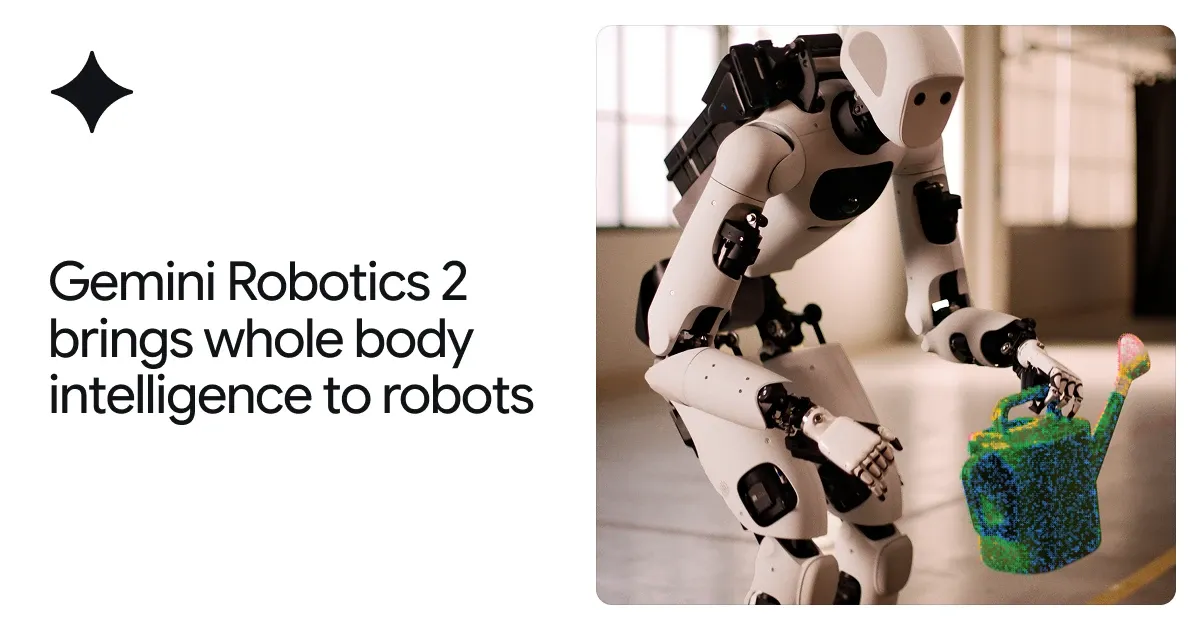
From feet to fingertips — we are teaching robots intelligent whole-body control, fine dexterity, and teamwork to complete a broad range of complex tasks.
With $2.1 million funding from Google.org, the open-source Public Transit Intelligence Hub will unify public transit monitoring, operations, and passenger communication.
We use cookies to run the site and, with your consent, for analytics and to show ads.
See our Cookie Policy.