This work proposes lightweight multi-secret-key protocols for private average aggregation based on RLWE-based Homomorphic Encryption, which substantially reduces ciphertext expansion and online cost, while preserving practical homomorphic aggregation performance.
Abstract
Federated Learning enables multiple clients to train a shared model while keeping their local datasets isolated. However, the exchanged model updates may still leak sensitive information, making private aggregation a central building block in practical deployments, especially in the cross-silo setting. Homomorphic Encryption naturally fits the client--aggregator communication pattern of Federated Learning, but conventional single-key deployments rely on strong non-collusion assumptions. Multiparty Homomorphic Encryption removes this limitation, although recent attacks under restricted decryption access require large-variance smudging noise during collaborative decryption, which significantly increases ciphertext size and implementation complexity. In this work, we propose lightweight multi-secret-key protocols for private average aggregation based on RLWE-based Homomorphic Encryption. Our construction departs from the usual multiparty blueprint by avoiding the generation of a collective public key. Instead, each client encrypts its update under its own secret key, while the resulting ciphertexts remain compatible with homomorphic aggregation and collaborative decryption. By explicitly tracking and cancelling the ciphertext noise during decryption, the protocol removes the need for large $\lambda$-dependent smudging noise. We instantiate the construction with both exact BFV-based and approximate CKKS-based variants, prove its security in the semi-honest model against an adversary corrupting the aggregator and up to $L-1$ clients, and compare its communication and runtime performance with state-of-the-art MHE-based aggregation. Our results show that the proposed approach substantially reduces ciphertext expansion and online cost, while preserving practical homomorphic aggregation performance.
This paper proposes DMSA-FL as a practical and robust FL framework leveraging double-masked secure aggregation integrated with multiparty homomorphic encryption, and designs a strategy that encrypts only low-dimensional mask seeds rather than high-dimensional gradients.
Wen-Hao Liu, Xu-An Wang, Wei-Wei Jiang et al.· Journal of King Saud Univers...· 0 citations
Encrypted communication protects sensitive user data but can facilitate harmful or unlawful exchanges, creating a trade-off between detecting dangerous messages and preserving end-user privacy. To address this, we propose SEEK, a practical and efficient encrypted keyword-search protocol for privacy-preserving messaging...
Anonymity infrastructures such as mix networks, anonymous storage, and privacy-preserving replication rely on public re-randomization: any party holding only public information can transform a ciphertext into a fresh-looking encryption of the same plaintext, hiding the linkage between the two. Classical ElGamal-based s...
D. Vodenicarevic, Andrei Fleiser, Pierre Seznec et al.· Journal of Cryptographic Eng...· 1 citation
Dynamic Searchable Symmetric Encryption (DSSE) enables efficient searches over encrypted data but often suffers from search pattern leakage, allowing adversaries to infer sensitive information. While schemes using Oblivious RAM (ORAM) mitigate leakage, their high cost hinders large-scale applications. Dory adopts a mul...
Man-Yue Hu, Cong Zuo, Shu-Jie Cui et al.· IEEE Transactions on Informa...· 0 citations
Federated Learning (FL) facilitates collaborative training of models without exchanging any data, thereby ensuring data locality. However, the exchange of local model updates is still susceptible to attacks such as gradient inference, model reconstruction, man-in-the-middle, replay, and tampering, which create consider...
V. Naresh, Sivaranjani Reddi, M. H. M. Krishna Prasad· Journal of King Saud Univers...· 0 citations
Federated learning faces three critical challenges in enabling cross-institutional collaboration: privacy leakage, poisoning by malicious clients, and unverifiable aggregation results. To address these issues in a unified manner, we propose PVeriFL—a federated learning framework that integrates privacy preservation, By...
Martin Trust Center Managing Director Bill Aulet introduces Dear Dreamer, a free platform for middle and high school students who want to learn about entrepreneurship.
Microsoft Research Blog· microsoft.comSep 30, 2026
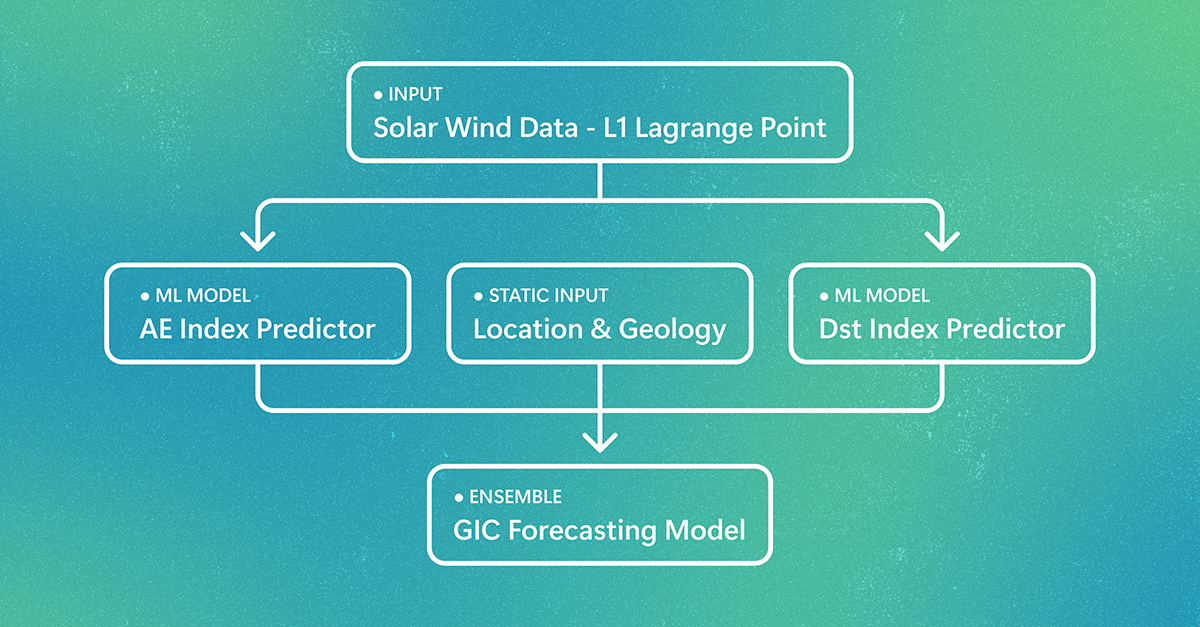
Extreme space-weather events can damage power systems on Earth and degrade GPS accuracy and satellite operations. A new machine learning system can predict where damage is likely to occur 30-60 minutes before a storm arrives. The post Forecasting space weather risks on power grids appeared first on Microsoft Research.
We use cookies to run the site and, with your consent, for analytics and to show ads.
See our Cookie Policy.