Skip to content

Conditional Diffusion Posterior Alignment for Sparse-View CT Reconstruction

Apr 2026 · arXiv.org · Vol abs/2604.21960 · 0 citations · 35 references
Engineering Computer Science

TL;DR

This work proposes Conditional Diffusion Posterior Alignment (CDPA) to enable scalable 3D sparse-view CT reconstruction to large 3D volumes by combining conditional diffusion with explicit data consistency, and shows that the same principles also strengthen fast denoising U-Nets, yielding near-diffusion quality at a fraction of the computational cost.


Abstract

Computed Tomography (CT) is a widely used imaging modality in medical and industrial applications. To limit radiation exposure and measurement time, there is a growing interest in sparse-view CT, where the number of projection views is significantly reduced. Deep neural networks have shown great promise in improving reconstruction quality in sparse-view CT, especially generative diffusion models. However, these methods struggle to scale to large 3D volumes due to several reasons: (i) the high memory and computational requirements of 3D models, (ii) the lack of large 3D training datasets, and (iii) the inconsistencies across slices when using 2D models independently on each slice. We overcome these limitations and scale diffusion-based sparse-view CT reconstruction to large 3D volumes by combining conditional diffusion with explicit data consistency. We propose Conditional Diffusion Posterior Alignment (CDPA) to enable scalable 3D sparse-view CT reconstruction. A 2D U-Net diffusion model is conditioned on an initial 3D reconstruction to improve inter-slice consistency, combined with data-consistency alignment to match measured projections. Experiments on synthetic and real Cone Beam CT (CBCT) data show state-of-the-art performance, with ablations that confirm the synergistic effects of the proposed pipeline. Finally, we show that the same principles also strengthen fast denoising U-Nets, yielding near-diffusion quality at a fraction of the computational cost.

View source

Similar papers

Sep 2026

Efficient 3D Medical Reconstruction From Sparse Views via 2D Diffusion Models With Curvature Priors

Reconstructing medical images from partial measurements is a critical inverse problem in computed tomography (CT) and magnetic resonance imaging (MRI). While diffusion models excel in 2D medical imaging, their extension to 3D reconstruction remains challenging due to high computational costs. In this work, we achieve e...

Qing Zhou, Ming Li, Xiang-Yu Xu et al. · 0 citations
#artificial intelligence Preprint Aug 2026

Physics-Guided Flow Matching for CT Image Reconstruction

Experimental results across several CT inverse problem settings show that Flow Matching-based approaches consistently outperform diffusion-based methods in terms of PSNR, SSIM, and perceptual quality, while requiring fewer sampling steps.

Davide Evangelista · 1 citation
Preprint Aug 2026

Feed-Forward Hierarchical Gaussian Diffusion for Extreme CT Reconstruction

HiGDiff is proposed, a feed-forward hierarchical Gaussian diffusion framework that decomposes reconstruction both spatially and from structure to detail in three distinct CT benchmark datasets.

Yuezhe Yang, Liang Cheng · 0 citations
Preprint Aug 2026

Toward a Foundation Plug-and-Play Prior for Computed Tomography Reconstruction via a Multimodal Diffusion Model

This work investigates whether a single diffusion model trained across several imaging domains can instead serve as a prior for many CT problems simultaneously, and proposes a frozen model that out-performs analytic reconstructions in all three cases.

Haley Duba-Sullivan, Patxi Fernandez-Zelaia, Obaidullah Rahman et al. · 0 citations
Preprint Sep 2026

Informed Sinogram Interpolation for Sparse View Reconstruction

This paper proposes an interpolation method that effectively interpolates secondary scans from limited observations that is based on a continuous mathematical model describing the secondary sinogram only with information from the projection space.

Yue-Jie Liu, Alessandro Lupoli, D. Gallo et al. · 0 citations
Open access Sep 2026

Enhanced sparse view CT reconstruction using ordered subset expectation maximization and asymptotic non-local means algorithms

This study proposes the Ordered Subset Expectation Maximization–Asymptotic Non-local Means (OSEM-ANLM) algorithm for sparse-view Computed Tomography (CT) reconstruction under limited-data conditions and evaluates its performance across different acquisition settings. The algorithms were evaluated using a digital phanto...

Sayna Jamaati, S. A. Hosseini, P. Sharifian et al. · 0 citations

Related blog posts

MIT News · Artificial Intelligence Oct 28, 2026

Making machines that can listen

Professor Paris Smaragdis develops computers with superhuman hearing for applications like speech recognition, music understanding, and environmental monitoring.

Microsoft Research Blog Aug 11, 2026

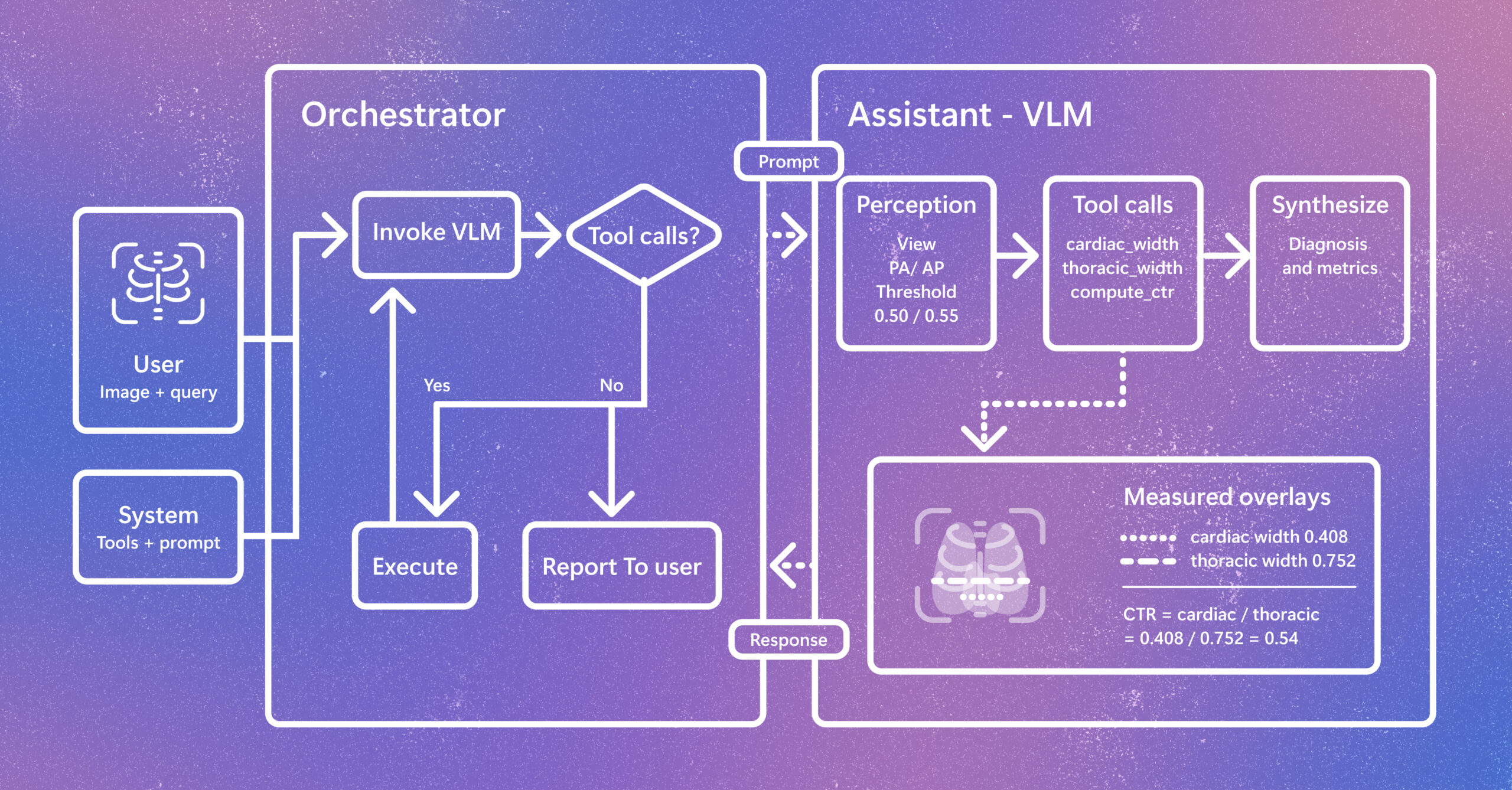
Introducing CARE-X: Towards Clinically Useful Radiology VLMs with Auxiliary Supervision, Reward-Aligned Learning, and Tool-Augmented Measurement

Radiology AI is evolving beyond report generation. CARE-X explores a unified approach that combines flexible reasoning, calibrated predictions, and measurement-based tools for chest X-ray interpretation. The post Introducing CARE-X: Towards Clinically Useful Radiology VLMs with Auxiliary Supervision, Reward-Aligned Learning, and Tool-Augmented Measurement appeared first on Microsoft Research.

We use cookies to run the site and, with your consent, for analytics and to show ads. See our Cookie Policy.