Let $\mu(d x)\propto e^{-U(x)} d x$ on $\R^d$, where $U$ is $m$-strongly convex and $L$-smooth, and denote by $\kappa=L/m$ the condition number. We consider windowed thinning, an exact simulation method for the bouncy particle sampler and the coordinate Zigzag process. The method divides a trajectory into deterministic windows and uses a gradient evaluation at the beginning of each window to construct a tractable local envelope for the event rate. Combining this construction with quantitative mixing estimates and finite-time bounds on the expected numbers of bounces and flips yields query complexity guarantees from a Gaussian cold start. For total-variation error $\varepsilon$, the expected query counts are $O(\kappa^{1/2}d\,(d\log\kappa+\log\frac1\varepsilon))$ gradient queries for the bouncy particle sampler and $O(\kappa d^{1/4}(d\log\kappa+\log\frac1\varepsilon))$ full-gradient equivalents for Zigzag, where $d$ coordinate-partial queries count as one equivalent.
We study the problem of sampling from $\mu(\mathrm{d}x)\propto e^{-V(x)}\,\mathrm{d}x$ on $\mathbb{R}^d$, where $V$ is $\alpha$-strongly convex and $\beta$-smooth, and write $\kappa:=\beta/\alpha$. We design and analyze the Proximal Bouncy Particle Sampler (Proximal BPS), a new sampler that combines ideas from the prox...
Fan Chen, Sinho Chewi, Jian-Feng Lu et al.· 0 citations
Let $\pi(\mathrm{d} x)\propto e^{-U(x)}\, \mathrm{d} x$ on $\mathbb{R}^d$, where $U$ is continuously differentiable and $m$-strongly convex with a globally $L$-Lipschitz gradient, $0<m\leq L<\infty$, and $\kappa=L/m$. Fixed-step Metropolis-adjusted Langevin algorithm (MALA) has known warm-start mixing-time upper bounds...
Let $K\subset\mathbb{R}^n$ be an isotropic convex body. We prove that the hit-and-run walk, started from any $M$-warm distribution, reaches total-variation distance $\varepsilon$ from the uniform distribution on $K$ in $O\!\left(n^2\psi_n^{-2}\log^3(M/\varepsilon)\right)$ steps, where $\psi_n^{-1}$ is the Kannan-Lov\'a...
We study the problem of sampling from a continuous density $\pi\propto \exp(-V)$ on $\mathbb R^d$, where $V\in C^2(\mathbb R^d)$ has a $\beta$-Lipschitz gradient and $\pi$ satisfies a logarithmic Sobolev inequality with constant $\alpha^{-1}$, and write $\kappa = \beta/\alpha$. We introduce the Gaussian cloud sampler,...
Fan Chen, Sinho Chewi, Jian-Feng Lu et al.· 0 citations
Let $\mathsf{d}\geq1$, $0<\mathsf{s}<\mathsf{d}$, and $N\geq1$. We prove that the optimal fixed-particle-number constant $\Lambda_N(\mathsf{s},\mathsf{d})$ in the Riesz Lieb--Oxford inequality is attained and that these constants are strictly increasing in $N$. The proof combines grand-canonical concentration--compactn...
For every fixed activity $\lambda>0$, we establish three results for the monomer--dimer model on an $n$-vertex simple graph $G$ with $m\ge1$ edges and maximum degree $\Delta$. 1. Near-linear mixing and sampling. Single-edge Glauber dynamics has mixing time $O_\lambda(m[\log^2 n+\log(1/\varepsilon)])$, giving a near-lin...
Tian-Shun Miao, Yi-Tong Yin· 0 citations
Related blog posts
MIT News · Artificial Intelligence· news.mit.eduOct 2, 2026
Martin Trust Center Managing Director Bill Aulet introduces Dear Dreamer, a free platform for middle and high school students who want to learn about entrepreneurship.
Microsoft Research Blog· microsoft.comSep 30, 2026
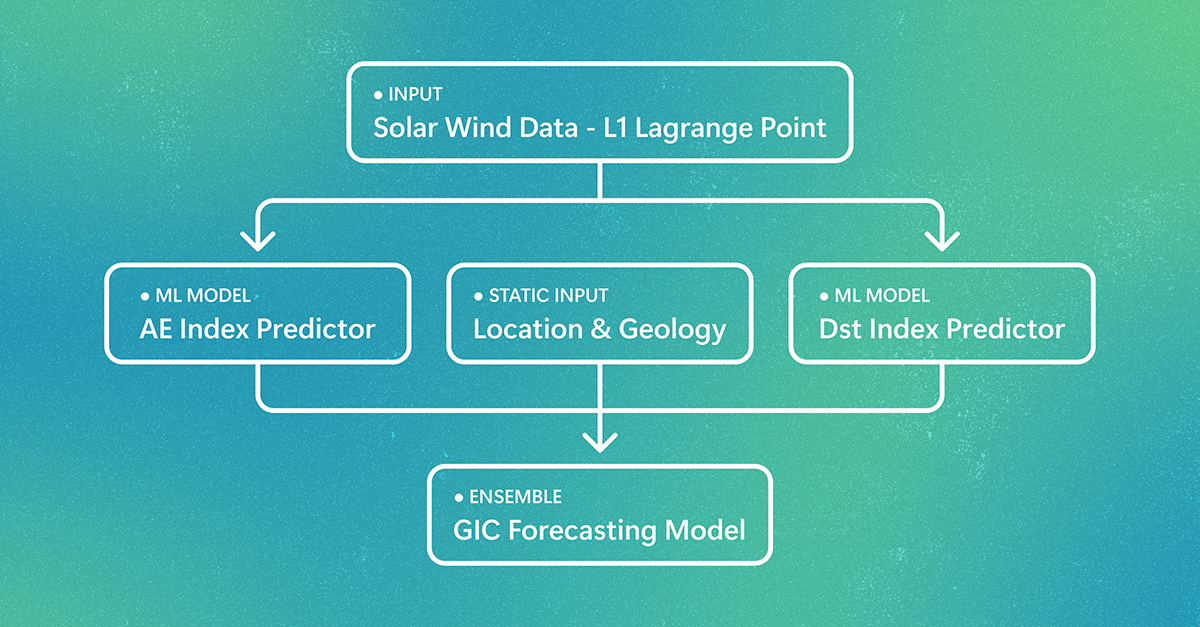
Extreme space-weather events can damage power systems on Earth and degrade GPS accuracy and satellite operations. A new machine learning system can predict where damage is likely to occur 30-60 minutes before a storm arrives. The post Forecasting space weather risks on power grids appeared first on Microsoft Research.
We use cookies to run the site and, with your consent, for analytics and to show ads.
See our Cookie Policy.