Skip to content

Efficient Constant Optimization for Symbolic Regression with GPU-Accelerated Tree-Based Genetic Programming

Sep 2026 · 0 citations · 27 references
Computer Science

TL;DR

A GPU-resident, batched Levenberg--Marquardt solver that optimizes constants across a structurally heterogeneous population of expression trees using a fixed number of population-wide CUDA launches per iteration.

Abstract

Constant optimization refines the numerical coefficients of candidate expressions in tree-based genetic programming for symbolic regression. But its per-generation cost has led modern GPU-accelerated frameworks to omit it or restrict it to lightweight forms. We present a GPU-resident, batched Levenberg--Marquardt solver that optimizes constants across a structurally heterogeneous population of expression trees using a fixed number of population-wide CUDA launches per iteration. Reverse-mode automatic differentiation assembles the per-tree Jacobian in one backward sweep, making the dominant per-iteration cost independent of the number of constants per tree, and a double-precision delivery guard guarantees that returned constants are never worse than their initial values. On early-generation populations, the solver sustains up to $5.1{\times}10^{5}$ trees per second on an NVIDIA A100; at a GPU-saturated benchmark configuration it delivers roughly $9.9{\times}$ the throughput of Operon running on a 64-core EPYC 7763, while matching fp64-reference quality. Integrated in-process into EvoGP, the solver enables end-to-end search to recover governing equations on $10$ of $18$ constructed problems versus 0 for stock EvoGP. Our code is at https://github.com/TensorConv/CuSR.
View source

Similar papers

Preprint Sep 2026

Accelerating Branch MPC with Two-Level Parallel Direct Solves on GPUs

Branch model predictive control optimizes multiple future trajectories coupled through shared decisions, with computational demands increasing as the number of scenarios and prediction horizon grow. We present a GPU-accelerated direct linear solver for branch MPC formulations in which all trajectories share a single ro...

Feng-Long Song, Lu-Yao Zhang, Liang Wu et al. · 0 citations
#machine learning Preprint Sep 2026

GPU-Enabled Large-Scale Optimization Using Randomized Linear Algebra

This paper introduces rlaopt, a PyTorch-based package for large-scale optimization and scientific computing using randomized numerical linear algebra (RandNLA). Despite substantial progress in RandNLA-based algorithms, few implementations combine GPU acceleration with a simple interface for specifying optimization prob...

Pratik Rathore, Zachary Frangella, P. Nobel et al. · 0 citations
Preprint Sep 2026

Evaluation of portability and performance of an OpenMP5 offloaded Quantum-Inspired Evolutionary Optimization Across the GPU Ecosystem

Quantum-inspired evolutionary optimization (QIEO) is a new class of population-based metaheuristic optimization algorithms which represents design variables as a set of qubits and searches a continuous, multi-dimensional landscape through rotation of the qubit's amplitude pair. Every generation rotates those amplitudes...

Kasturi Srikanth, Ashish Singh, F. Bosco et al. · 0 citations
Preprint Sep 2026

Enhancing the Power of Polyhedral-Based Optimizations with Coordinate-Based Hill Climbing

This paper describes our experience extending the polyhedral compiler Pluto with a lightweight, coordinate-wise hill-climbing tuner that adjusts numeric transformation parameters, such as tile sizes and thread-block dimensions, after Pluto selects the kernel's loop structure. To ensure fast convergence and escape local...

Gaurav Verma, Michael Canesche, Fernando Magno Quintão Pereira · 0 citations
Preprint Aug 2026

Accelerated Genetic Programming Hyper-Heuristics for Simulation-Based Scheduling via Agentic AI

Python is widely used in scientific research because it enables rapid development and provides rich ecosystems for data analysis, artificial intelligence (AI), and machine learning. However, customized research code can become prohibitively slow as experiments scale. This challenge is particularly acute in discrete-eve...

H. Li, A. Pletzer, Yuan Tian et al. · 0 citations
Preprint Aug 2026

ExaModels.jl: an Algebraic Modeling System for Nonlinear Programming on GPUs

Large-scale nonlinear programs almost always exhibit partially separable and repetitive structure, yet most existing algebraic modeling systems do not take advantage of it. A nonlinear optimization solver queries the objective, the constraints, and their derivatives at every iteration, so the speed of these evaluations...

Sung-Ho Shin, Michel Schanen, F. Pacaud et al. · 0 citations

Related blog posts

Microsoft Research Blog Sep 30, 2026

Forecasting space weather risks on power grids

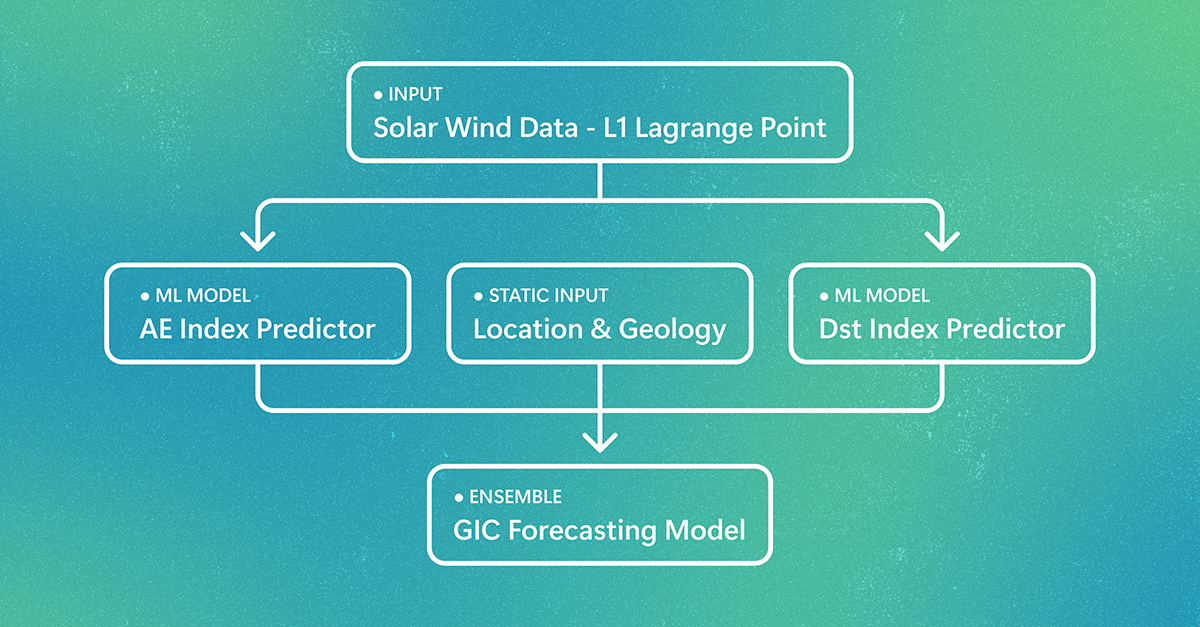
Extreme space-weather events can damage power systems on Earth and degrade GPS accuracy and satellite operations. A new machine learning system can predict where damage is likely to occur 30-60 minutes before a storm arrives. The post Forecasting space weather risks on power grids appeared first on Microsoft Research.

We use cookies to run the site and, with your consent, for analytics and to show ads. See our Cookie Policy.