RL-ADA (Reinforcement Learning with Adversarial Dialogue Agents), a co-evolutionary training framework that eliminates this bottleneck by replacing human labels with consequence-based reward signals derived directly from measurable interaction outcomes, is presented.
Abstract
Deploying task-oriented dialogue agents in enterprise customer support faces a persistent annotation bottleneck: robust training requires labelled interaction data at scale, yet enterprise conversational logs are privacy-sensitive and expensive to annotate, while user behaviour evolves faster than labelling pipelines can keep pace. We present RL-ADA (Reinforcement Learning with Adversarial Dialogue Agents), a co-evolutionary training framework that eliminates this bottleneck by replacing human labels with \emph{world feedback}: consequence-based reward signals derived directly from measurable interaction outcomes. A Customer Support Agent (DA, 3B parameters) and an Adversarial Customer Agent (CA, 7B parameters) co-evolve in an adversarial arena guided by a fixed automated judge: the DA is rewarded for correctly handling multi-turn customer conversations to successful resolution, while the CA is rewarded for producing realistic, intent-concealing utterances that cause misroutes, creating asymmetric adversarial pressure through opposing but independently structured rewards. An isolation gym iteratively retrains the weaker agent on prior-failure transcripts, requiring no human annotation at any stage. In a banking customer support proof of concept, tool-routing errors are eliminated and the strict end-to-end PASS rate doubles over five co-evolutionary cycles, driven solely by automated arena reward with no labelled data. We additionally observe the emergence of \textbf{Contextual Camouflage}, an adversarial strategy in which the CA learns to embed intent within dense realistic customer detail purely from reward pressure, with direct implications for enterprise red-teaming and robustness evaluation.

Large language models deployed as personalized assistants must reason over long, evolving interaction histories. However, in long-term dialogue reasoning, relevant evidence is scattered across sessions, preferences may be revised over time, and standard long-context training fails to address these challenges under data...
Na-En Xu, Wan-Qing Cui, Yi-Bo Hu et al.· 0 citations
Although reinforcement learning (RL) post-training repairs the localized segmental errors of zero-shot text-to-speech (TTS), arriving at a working recipe still relies on tedious manual tuning, and whether LLM agents can take over this research pipeline is unclear. We investigate this question with AgenticTTS-Forge, a c...
Xuan-Jun Chen, Zi-Xiong Su, Hao Shi et al.· 0 citations
This work proposes the first framework to equip a single compact judge with multi-agent panel deliberation capability at single-model inference cost, and introduces AdaReward, an adaptive multi-reward RL algorithm that dynamically rebalances reward component weights as different objectives saturate at different rates d...
Yi-Yue Qian, Shi-Nan Zhang, Huan Song et al.· 0 citations
VoiceLongMemEval (VLME) benchmark, where every answer depends on paralinguistic metadata attached to conversational turns, which is otherwise unrecoverable from the words alone, is presented.
Task-oriented dialogue (TOD) systems conventionally rely on supervised fine-tuning over large datasets, an approach that is both resource-intensive and difficult to generalize across domains. We investigate whether large language models (LLMs) can serve as effective TOD agents without any fine-tuning, relying solely on...
Henry Gao, Jinho D. Choi· SIGDIAL Conferences· 0 citations
UnifiedPlayers, a cooperative framework comprising a Planning Player that generates tasks, an Execution Player that produces multi-turn trajectories with Python tool calls, and an Evaluation Player that constructs executable verifiers, highlights cooperation among specialized players as a promising path toward self-enh...
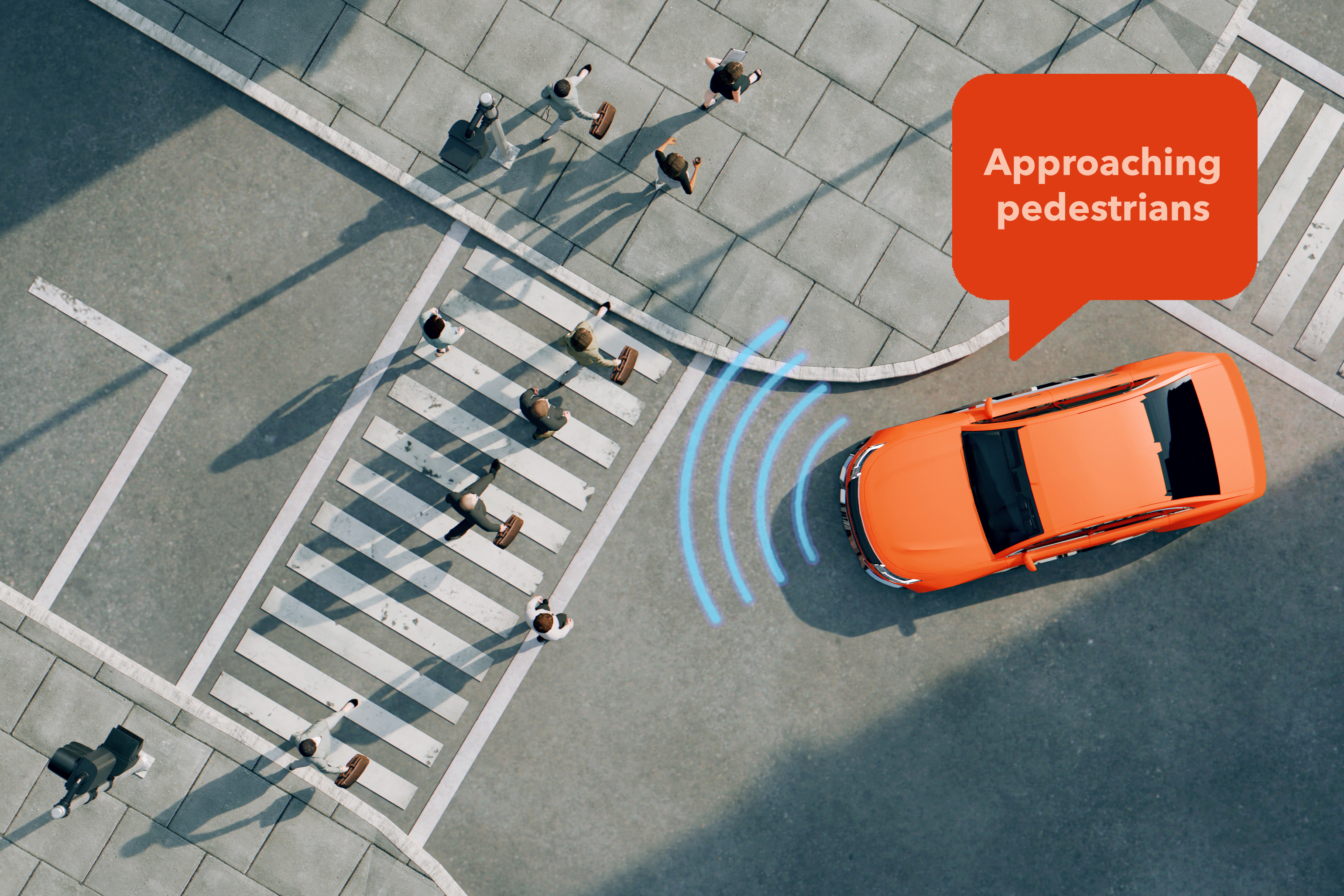
A new method, called CW-Net, translates the reasoning process of an autonomous vehicle’s AI system into understandable concepts that explain its behavior.
We use cookies to run the site and, with your consent, for analytics and to show ads.
See our Cookie Policy.