Skip to content
#explainable ai Review Open access

Artificial Intelligence for Anomaly Detection in Cyber Defense: A Critical Review of Methodological Trends, Datasets, and Explainability

Sep 2026 · Algorithms · 0 citations · 61 references
Network Security and Intrusion Detection

TL;DR

This approach revealed that AI development for cyber defense is highly heterogenous, and that the available datasets strongly influence the algorithm of choice, rather than the models being chosen methodologically based on proven performance.

Abstract

The increase in the number and complexity of interconnected systems requires new methods to identify potential threats in today’s hyperconnected world. This trend affects systems ranging from smart homes and Internet of Things (IoT) devices to critical infrastructure which must be equipped with the corresponding cyber defense methods. Given the new landscape, it is more difficult for classical cybersecurity systems to stay up to date with novel threats, as well as to keep track of all interconnected devices defined by various protocols and behaviors. Artificial intelligence (AI) represents a strong candidate to complement traditional cyber defense methods due to its adaptability to variation and capability to identify complex data patterns, which has led researchers to develop state-of-the-art anomaly detection systems. The current critical review aims to analyze the scientific literature on three dimensions including used algorithms and datasets, domain challenges hindering AI deployment in productive environments, and the capability of explainable artificial intelligence (XAI) to support cyber security experts with insights into the model’s inner workings and decision rationale. Compared to existing scientific reviews, this paper moves beyond algorithmic comparison by providing a methodological interpretation of AI anomaly detection landscape, demonstrating how data availability, learning paradigms, and explainability collectively influence the evolution of cyber defense research towards operational deployment. This approach revealed that AI development for cyber defense is highly heterogenous, and that the available datasets strongly influence the algorithm of choice, rather than the models being chosen methodologically based on proven performance. The analysis further indicates that operational deployment remains challenging, as the literature continues to report substantial limitations related to data quality, computational requirements, and model interpretability.

Read PDF

Similar papers

#generative ai Review Open access Aug 2026

Artificial Intelligence for Real-Time Cyber Threat Classification and Emerging Threat Detection: A Structured Review of Methods, Datasets, Challenges, and Research Directions

The reviewed literature indicates that AI-based methodologies often demonstrate superior detection capabilities for intricate and previously unseen attack patterns compared to traditional methods; however, direct performance comparisons are complicated due to discrepancies in datasets, experimental designs, and evaluat...

Jaswanth Garugu · 0 citations
Open access Sep 2026

AI-Driven Vulnerability Management Framework for the Internet of Things

This study proposes an AI driven vulnerability management framework that integrates anomaly detection techniques using machine learning to enhance proactive threat identification and mitigation in IoT ecosystems, and demonstrates that AI based models significantly outperform traditional methods in detecting previously...

Daniel Nafisatu Mshelbila · 0 citations
#federated learning Review Open access Sep 2026

AI-driven cybersecurity for industrial internet of things: architectures, challenges, datasets, and future research directions

This review critically analyzes the cybersecurity research published over the past few years on cyber threats across the various layers of the IIoT architecture, publicly available cybersecurity datasets, evaluation practices, and AI-based intrusion detection methods to provide a pathway toward resilient, adaptive, and...

Siddhartha Singhal, Kakelli Anil Kumar · 1 citation
Review Open access Sep 2026

Review of Machine Learning Intrusion Detection Systems in Internet of Things Environment

The analysis demonstrates that using machine learning enables to detect a variety of cyber-attacks and anomalies, and there are some barriers, such as imbalanced and small-size database, feature redundancy, computational constraints, false positives, and identification of new attacks.

Mustafa Mohammed Jasim, Firas Mohammed Adress, A. Fadhil · 0 citations
#explainable ai Review Open access Sep 2026

Explainable AI-Based Intrusion Detection Systems for IoT Environments: A Systematic Literature Review

This paper aims to provide a foundational resource to guide future research on reliable, explainable, and practical IoT intrusion detection systems by identifying the problems addressed in current research and highlighting the limitations in the literature.

Murat Varol, Aykut Karakaya · 0 citations
Open access Sep 2026

Intelligent models for cybersecurity risk assessment in distributed systems

This paper introduces an intelligent cybersecurity risk assessment framework combining machine learning and hybrid analytical techniques that unifies data preparation, feature engineering, anomaly detection, threat classification, and risk evaluation into a single automated pipeline.

O. Suprun, А. П. Волівач, S. Zybin et al. · 0 citations

Related blog posts

Microsoft Research Blog Nov 5, 2026

Formally verifying agent-written full-stack web apps with PDD Kit

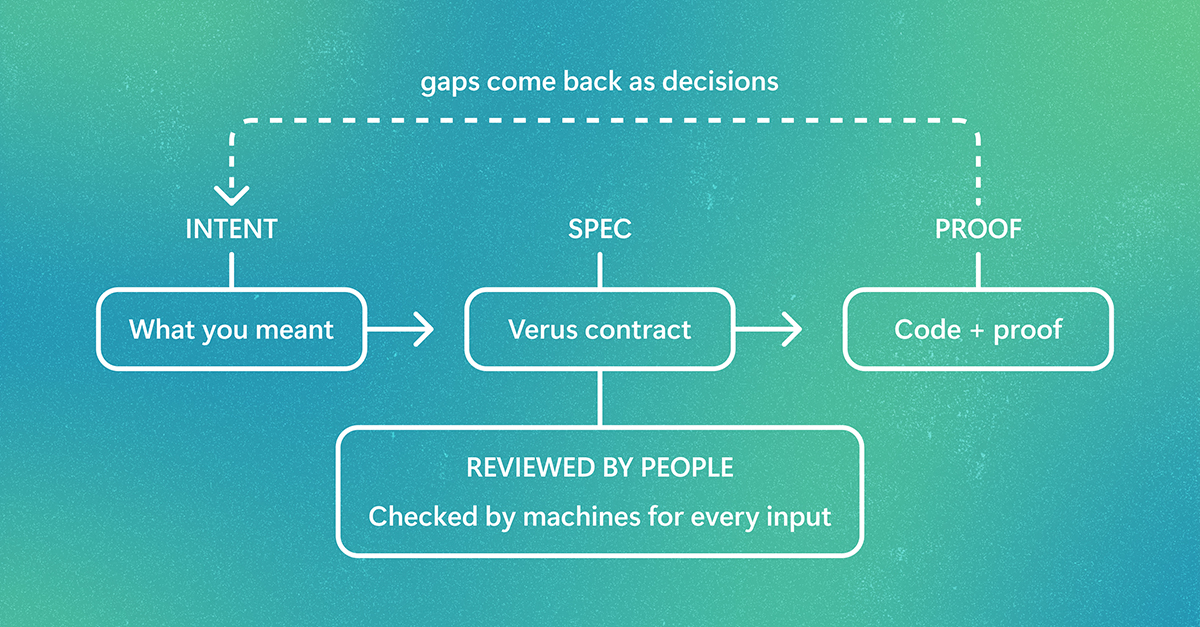
AI agents can generate code at a scale that’s hard for humans to review line-by-line. PDD Kit helps ensure the code is doing what the developer intended by creating formal specifications and testing against them. It converts developer intent into a Verus specification, proves AI-generated code meets it for every input, and uses tests where proofs aren't practical. Developers review intent, not every line. The post Formally verifying agent-written full-stack web apps with PDD Kit appeared first o…

Microsoft Research Blog Nov 3, 2026

Learn the rules: The hacker mindset

Research Manager Mike Walker reflects on a career spanning hacker culture, cybersecurity, and AI, sharing lessons about trust, teamwork, leadership, and why solving difficult problems requires curiosity, judgment, agility—and an understanding of the rules. The post Learn the rules: The hacker mindset appeared first on Microsoft Research.

We use cookies to run the site and, with your consent, for analytics and to show ads. See our Cookie Policy.