Skip to content
#federated learning Open access

A robust privacy-preserving federated framework for kidney CT image classification using transfer learning models

Sep 2026 · Frontiers in Artificial Intelligence · Vol 9 · 0 citations · 51 references
Medicine

Abstract

Introduction Kidney abnormalities, including cysts, tumors, and stones, are the most common renal disorders that can lead to severe complications such as chronic kidney disease or renal failure. Deep learning-based medical image analysis offers an effective approach for the accurate classification of kidney abnormalities, aiding the early diagnosis of renal disorders. However, its centralized training leads to inadequate privacy protection. Methods Considering the importance of ensuring individuals' data privacy, this study proposes a novel federated transfer learning framework for accurate classification of renal abnormalities using 12,446 kidney CT scan images and simultaneously preserves data privacy. CT scan images were preprocessed by resizing and normalization, followed by data augmentation techniques, including random rotations (±30°), horizontal flips, and color jitter, to address class imbalance and improve model generalization. Five pre-trained deep learning models such as MobileNetV2, EfficientNetV2-S, ResNet50, DenseNet121, and InceptionResNetV2 were trained across seven federated clients. Federated weighted averaging was employed for aggregation, and AES-256 encryption in CBC mode was applied to all model parameter transmissions between clients and the server. Results MobileNetV2 achieved the best performance, attaining 99.48% accuracy, 99.29% precision, 99.32% recall, 99.3% F1-score, 0.9999 AUC-ROC, and log loss of 0.0247. Cross-client validation produced an average accuracy of 98.85% with a generalization gap of only −0.0063, indicating strong generalization across client datasets. Discussion The proposed framework provides an effective balance between privacy preservation and communication efficiency, highlighting its potential for deployment in distributed clinical environments for kidney disease diagnosis.
Read PDF

Similar papers

#machine learning Review Open access Oct 2014

Software development in startup companies: A systematic mapping study

The results indicate that software engineering work practices are chosen opportunistically, adapted and configured to provide value under the constrains imposed by the startup context.

Nicolò Paternoster, Carmine Giardino, M. Unterkalmsteiner et al. · 394 citations · ⚡54
#machine learning Review Open access Jun 2014

Why Early-Stage Software Startups Fail: A Behavioral Framework

This state-of-practice investigation was performed using a literature review followed by a multiple-case study approach and presents how inconsistency between managerial strategies and execution can lead to failure by means of a behavioral framework.

Carmine Giardino, Xiaofeng Wang, P. Abrahamsson · 175 citations · ⚡19
#machine learning Review Open access Oct 2016

“Failures” to be celebrated: an analysis of major pivots of software startups

This study conducts a case survey study based on the secondary data of the major pivots happened in 49 software startups, and demonstrates that customer need pivot is the most common among all pivot types.

Sohaib Shahid Bajwa, Xiaofeng Wang, Anh Nguyen-Duc et al. · 127 citations · ⚡15
#machine learning Review Open access May 2016

Key Challenges in Software Startups Across Life Cycle Stages

It is found that what perceived as biggest challenges by software startups do vary across different life cycle stages, even though its significance decreases when the learning focuses of the startups move from problem to solution and their products mature.

Xiaofeng Wang, Henry Edison, Sohaib Shahid Bajwa et al. · 62 citations · ⚡6

Related blog posts

Microsoft Research Blog Sep 30, 2026

Forecasting space weather risks on power grids

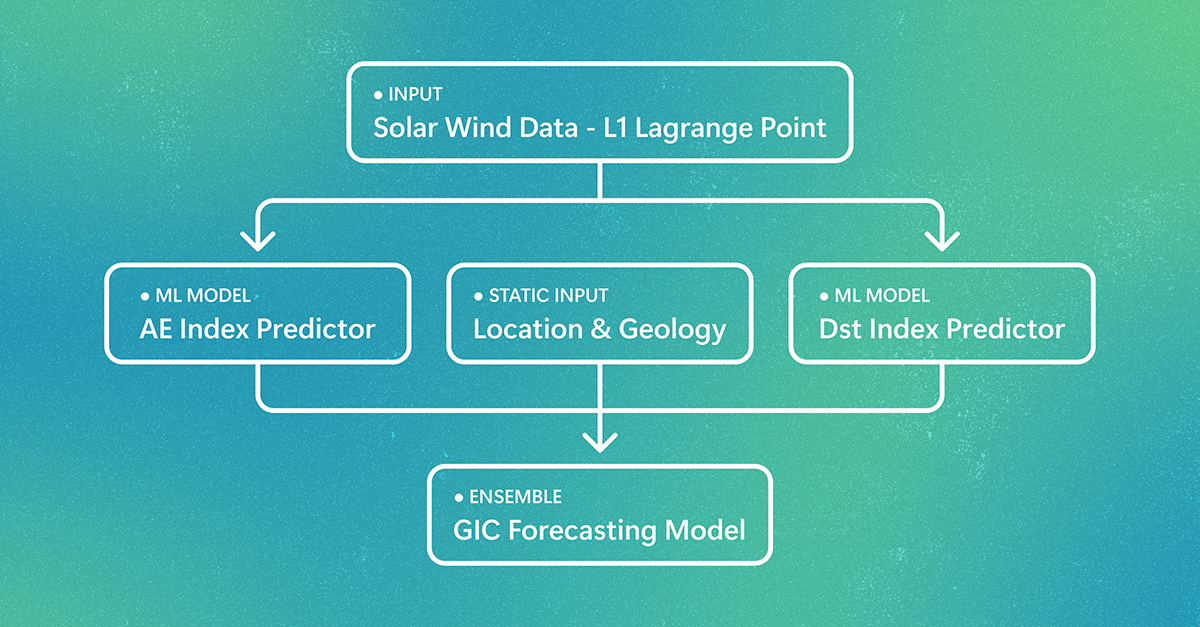
Extreme space-weather events can damage power systems on Earth and degrade GPS accuracy and satellite operations. A new machine learning system can predict where damage is likely to occur 30-60 minutes before a storm arrives. The post Forecasting space weather risks on power grids appeared first on Microsoft Research.

We use cookies to run the site and, with your consent, for analytics and to show ads. See our Cookie Policy.