The findings indicate that the competencies of teachers for artificial intelligence should be viewed as a multidimensional basis for further research, improvement of teaching practice, and planning of professional development in the field of application of AI in education.
Abstract
The increasing integration of AI in education imposes the need to examine the competencies of teachers for its pedagogically meaningful, safe, and responsible application. The goal of this research was to examine the self-assessments of teachers’ AI-related competencies, as well as to determine whether there were statistically significant differences regarding the subject area and years of teaching experience. The research was conducted on a sample of 165 primary and secondary school teachers in the Republic of Serbia. Data were collected using the Serbian-language version of the original Teacher Artificial Intelligence Competence Self-Efficacy (TAICS) Scale. The reliability and factor structure of the instrument were checked using Cronbach’s alpha coefficient, Kaiser–Meyer–Olkin (KMO) indicator, Bartlett’s test of sphericity, and exploratory factor analysis using principal axis factoring with Varimax rotation, while one-way analysis of variance (ANOVA) was used to examine differences. The results showed high internal consistency of the scale (Cronbach’s α = 0.972) and an interpretable three-factor solution explaining 71.202% of the total variance. The following factors were extracted: pedagogical–evaluative AI competencies, ethical–safety AI competencies, and operational–technical AI competencies. No statistically significant differences in pedagogical–evaluative or ethical–safety AI competencies were found according to subject area or years of teaching experience. For operational–technical AI competencies, an unadjusted difference was observed according to teaching experience; however, this finding did not remain statistically significant after the Bonferroni correction for multiple testing. These findings should be interpreted as preliminary and require replication in larger and more representative samples. The findings indicate that the competencies of teachers for artificial intelligence should be viewed as a multidimensional basis for further research, improvement of teaching practice, and planning of professional development in the field of application of AI in education.
This study extends to teachers an instrument previously validated with students and grounded in Functional Behavior Analysis and the Interbehavioral Model of Didactic Performance an instrument previously validated with students and grounded in Functional Behavior Analysis.
Rodrigo Narváez, M. A. Rivera-Navarro, L. Medina-Gual· Education sciences· 0 citations
The study aimed to develop and validate a structural model of higher education teachers’ readiness for pedagogical integration of artificial intelligence, which consisted of six interrelated components: digital competence, pedagogical attitudes towards AI, self-efficacy, real practices of using AI, institutional suppor...
S. Yashanov, D. Trobiuk, N. Lazirko et al.· Revista Eduweb· 0 citations
The rapid development of the concept of artificial intelligence (AI) has increasingly encouraged its integration into higher education. Choices regarding the adoption of AI should consider also the perspectives of students, as primary beneficiaries of academic training. This study reports the findings of a survey based...
V. Zichil, Venera-Mihaela Cojocariu, Cristina Cîrtiţă-Buzoianu· Revista Romaneasca pentru Ed...· 0 citations
Integration of AI in learning environments is fast becoming an avenue for personalized learning, intelligent testing,
and instructional support using technology. However, successful implementation of AI in such settings depends on
elementary school children's digital skills and readiness when interacting with AI techno...
J. Garay, Edgar Froilán Damián Nuñez, Manuel Jesus Arista Huaco et al.· International Academic Journ...· 0 citations
The findings highlight the central role of ethical governance and professional readiness in shaping in-service and pre-service educators’ evaluations of GAI and point to the importance of targeted professional development and institutional support for context-appropriate integration of GAI in educational practice.
Danimir Mandić, Gordana Miščević, Ivica Radovanović et al.· Frontiers in Education· 0 citations
The findings reveal a gap between instrumental competencies and critical and ethical competencies, highlighting the need to strengthen formative processes aimed at understanding AI limitations, evaluating its outputs, and using it responsibly in academic contexts.
Enforcing physics-based constraints prevents AI models from generating unreliable predictions for complex nonlinear systems in weather, climate, and turbulent flows.
MIT News · Artificial Intelligence· news.mit.eduNov 20, 2026
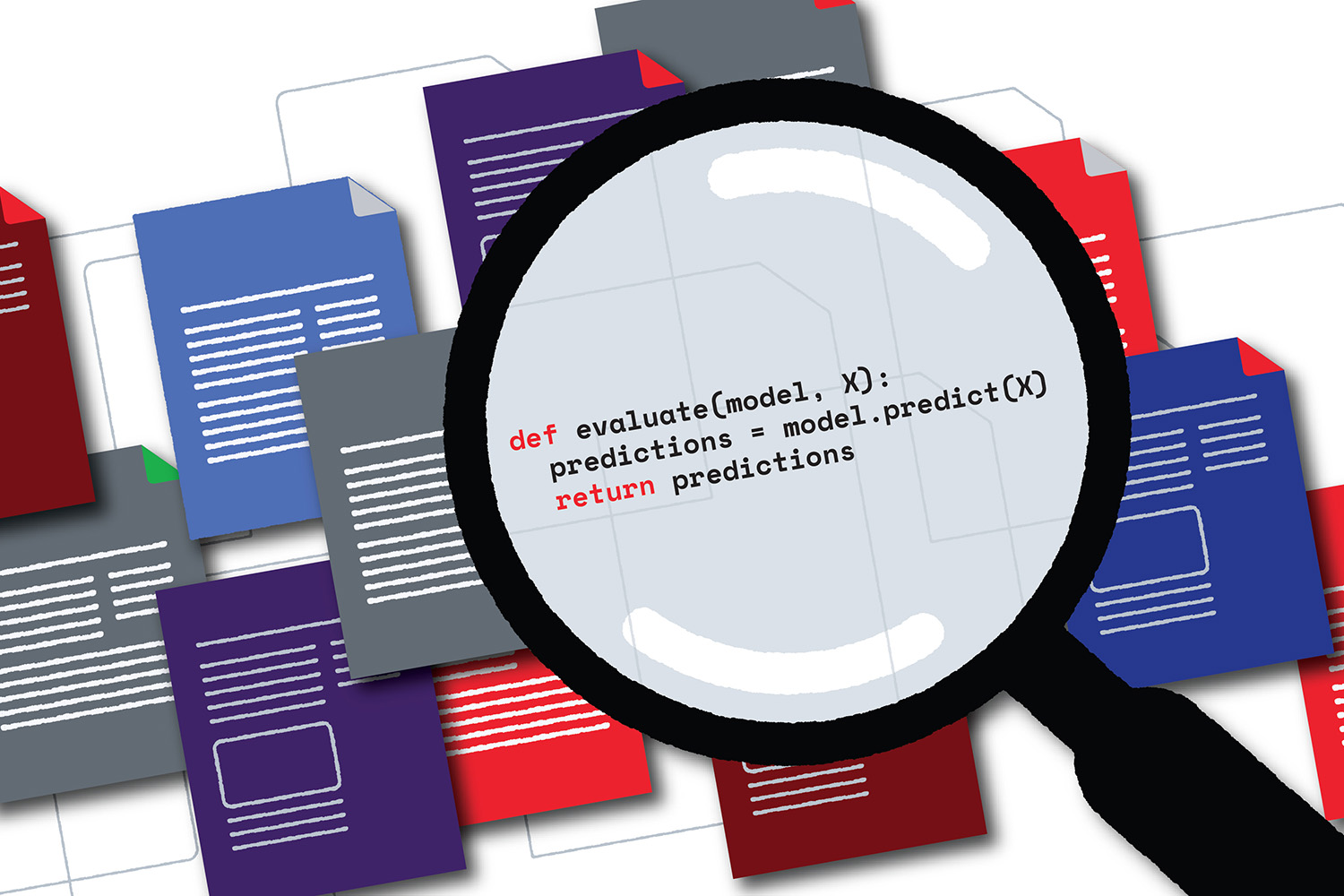
An MIT and Dana-Farber Institute-led team used large language models to examine nearly 4,000 studies and hundreds of code repositories, revealing gaps in the information needed to scrutinize and reuse published research.
We use cookies to run the site and, with your consent, for analytics and to show ads.
See our Cookie Policy.