Skip to content
#small language model Review Open access

Evaluating LLM-Based Retrieval-Augmented Generation for Soil Science Question Answering

Sep 2026 · Information · 0 citations · 10 references
Topic Modeling Information Retrieval and Search Behavior

Abstract

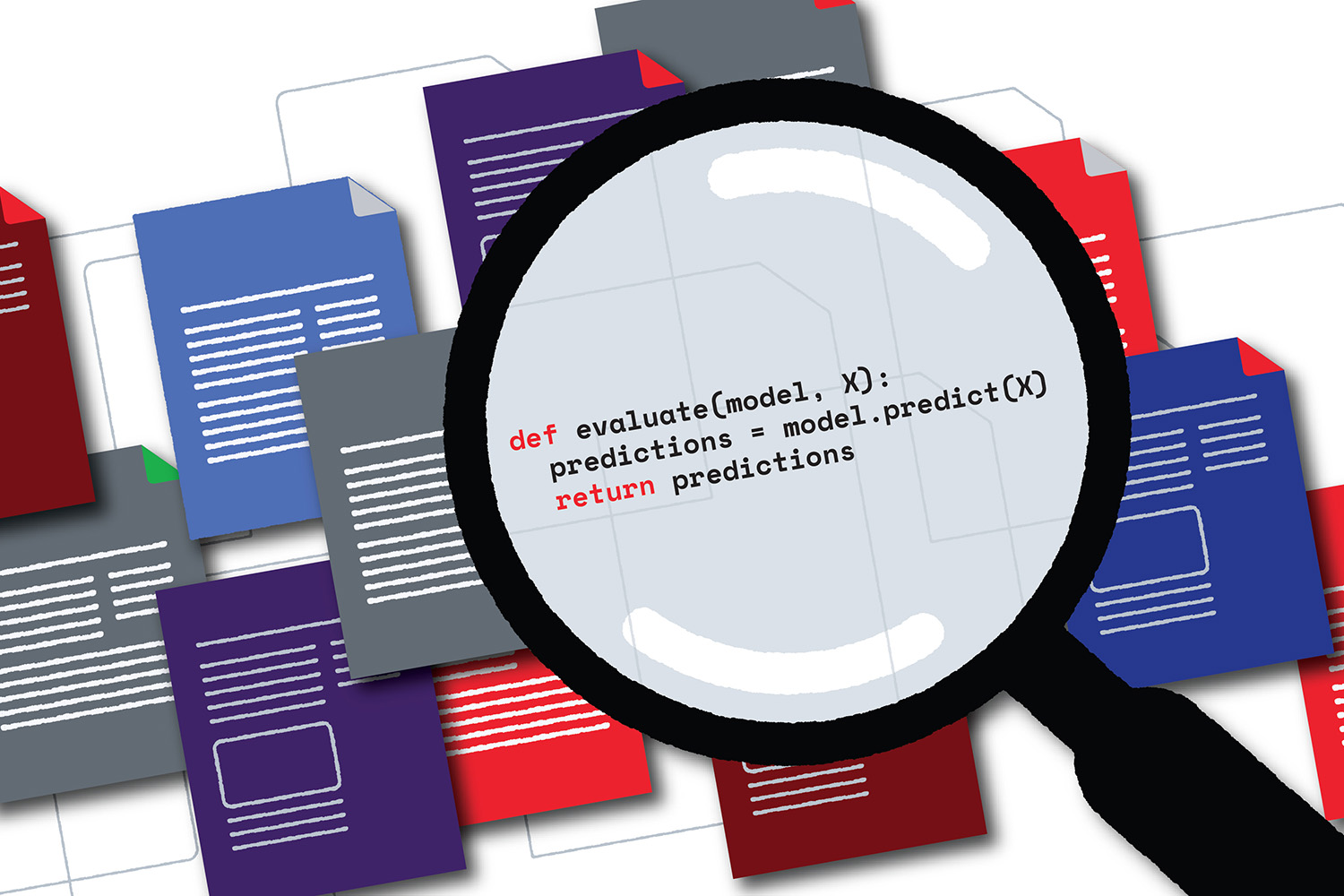
Retrieval-augmented generation (RAG) systems for scientific literature require evidence-based choices of document segmentation, representation, retrieval, and generation components, particularly when the source collection varies in topical specificity and document structure. This study addresses the lack of an end-to-end, component-level comparison of these choices for soil science question answering. A three-stage evaluation was conducted across general, domain-specific, and geospatial soil science corpora. The corpus combines foundational soil science books, peer-reviewed research articles, European soil monitoring material, and geospatial mapping publications, thereby covering both broad disciplinary concepts and specialized scientific evidence. The study compares four chunking strategies, three embedding models, five retrieval methods, and five large language models. In Experiment 1, semantic chunking with text-embedding-3-large achieved the highest aggregate retrieval scores (recall@1 = 0.824; MRR = 0.819), whereas text-embedding-3-small delivered practically comparable performance at lower cost. In Experiment 2, hybrid reciprocal rank fusion achieved recall@5 values of 0.957, 0.960, and 0.647 for the general, domain-specific, and geospatial corpora, respectively; the cross-encoder reranker showed weaker rank quality on scientific content. In Experiment 3, model responses attained BERTScore values of 0.909–0.927 and faithfulness of at least 0.993; these automated measures indicate low contradiction with retrieved context but do not establish answer completeness or human-perceived correctness. The study provides a reproducible component-level evaluation design, characterizes the effect of corpus specificity on RAG retrieval, and identifies a practical configuration for soil science literature retrieval. Among the models retained for direct aggregate comparison, Llama 3.1 8B offered the most favorable observed balance of answer quality, latency, cost, and model openness.
Read PDF

Similar papers

#small language model Dataset Open access Oct 2026

Socratic guiding questions in synthetic arithmetic data: matched LoRA runs (revision v2)

Supporting data, adapters, predictions and code for the article *Low-Cost LoRA Fine-Tuning of Small Language Models for Multi-Step Arithmetic Reasoning* by Jake O'Grady, Asena Isik Gürhan, Chee Fong Ting and Effirul Ramlan (University of Galway). We generated 20,000 GSM8K-derived arithmetic problems with step-by-step s...

O'Grady, Jake, Gürhan, Asena Isik, Chee, Fong Ting et al. · 465 citations
#computer vision Open access Jun 2016

Software Development in Startup Companies: The Greenfield Startup Model

The results are packaged in the Greenfield Startup Model (GSM), which explains the priority of startups to release the product as quickly as possible, and the need to shorten time-to-market, by speeding up the development through low-precision engineering activities.

Carmine Giardino, Nicolò Paternoster, M. Unterkalmsteiner et al. · 178 citations · ⚡14
#computer vision Open access Oct 2016

Software Startups - A Research Agenda

Software startup companies develop innovative, software-intensive products within limited timeframes and with few resources, searching for sustainable and scalable business models.

M. Unterkalmsteiner, P. Abrahamsson, Xiaofeng Wang et al. · 157 citations · ⚡17
#machine learning Review Open access Oct 2016

“Failures” to be celebrated: an analysis of major pivots of software startups

This study conducts a case survey study based on the secondary data of the major pivots happened in 49 software startups, and demonstrates that customer need pivot is the most common among all pivot types.

Sohaib Shahid Bajwa, Xiaofeng Wang, Anh Nguyen-Duc et al. · 127 citations · ⚡15
#computer vision Review Open access May 2015

A survey study on major technical barriers affecting the decision to adopt cloud services

The comparison of adopter and non-adopter sample reveals three potential adoption inhibitor, security, data privacy, and portability, which underlines the importance of the technical and security perspectives for research investigating the adoption of technology.

Nattakarn Phaphoom, Xiaofeng Wang, S. Samuel et al. · 111 citations · ⚡8
#large language models Review Open access Nov 2020

Status of the WHO recommended timing and frequency of antenatal care visits in Northern Bangladesh

Objective There is dearth of information on the timeliness of antenatal care (ANC) uptake. This study aimed to determine the timely ANC uptake by a medically trained provider (MTP) as per the World Health Organization (WHO) recommendations and the country guideline. Methods Cross-sectional survey was done with 2,731 wo...

B. Sarker, Musfikur Rahman, T. Rahman et al. · 89 citations · ⚡7

Related blog posts

Google DeepMind Blog Nov 18, 2026

Genie 4 is now available

We are rolling out a new Project Genie experience to eligible Google AI Ultra subscribers, opening access to our new Genie 4 world model.

We use cookies to run the site and, with your consent, for analytics and to show ads. See our Cookie Policy.