Three-dimensional molecular generative models have emerged that produce de novo molecules both unconditionally and conditionally, e.g., within protein pockets. However, steering those models in a specific region of the chemical space that satisfies a set of desired properties remains challenging. In this study, we introduce a flexible reinforcement learning method for flow-matching based generative models, allowing the velocity field to be refined according to a user-defined reward function. In contrast to a pure conditional generation setup, where the set of conditions must be decided a priori, this framework allows fine-tuning of any unconditional or conditional model, reflecting a more realistic scenario where the target properties to be optimized often vary and are typically case-specific. This also enables joint optimization of continuous and discrete features in flow-matching models for the first time. Through extensive experiments across diverse optimization scenarios, we demonstrate that models trained with this strategy (agents) consistently outperform baseline approaches (priors) when evaluated against the target design criteria. Three-dimensional molecular generative models can design novel molecules but guiding them to meet specific property requirements remains challenging. Here, the authors introduce a flexible reinforcement learning method for flow-matching generative models, enabling dynamic fine-tuning and joint optimization of features, outperforming baseline approaches in diverse optimization scenarios.
The results indicate that software engineering work practices are chosen opportunistically, adapted and configured to provide value under the constrains imposed by the startup context.
Nicolò Paternoster, Carmine Giardino, M. Unterkalmsteiner et al.· Information and Software Tec...· 394 citations· ⚡54
This state-of-practice investigation was performed using a literature review followed by a multiple-case study approach and presents how inconsistency between managerial strategies and execution can lead to failure by means of a behavioral framework.
Carmine Giardino, Xiaofeng Wang, P. Abrahamsson· International Conference on...· 175 citations· ⚡19
This study conducts a case survey study based on the secondary data of the major pivots happened in 49 software startups, and demonstrates that customer need pivot is the most common among all pivot types.
Sohaib Shahid Bajwa, Xiaofeng Wang, Anh Nguyen-Duc et al.· Empirical Software Engineeri...· 127 citations· ⚡15
It is found that roles of MVPs in startups were not fully aware by entrepreneurs, and entrepreneurs should consider a systematic approach to fully explore the value of MVP, as a multiple facet product (MFP).
Anh Nguyen-Duc, P. Abrahamsson· International Conference on...· 93 citations· ⚡9
It is found that what perceived as biggest challenges by software startups do vary across different life cycle stages, even though its significance decreases when the learning focuses of the startups move from problem to solution and their products mature.
Xiaofeng Wang, Henry Edison, Sohaib Shahid Bajwa et al.· International Conference on...· 62 citations· ⚡6
A comprehensive overview of how enhanced sampling methods are reshaping the field, with a particular focus on the data-driven construction of collective variables, is provided.
Kai Zhu, Enrico Trizio, Jintu Zhang et al.· Chemical Reviews· 58 citations
Related blog posts
MIT News · Artificial Intelligence· news.mit.eduOct 2, 2026
Martin Trust Center Managing Director Bill Aulet introduces Dear Dreamer, a free platform for middle and high school students who want to learn about entrepreneurship.
Microsoft Research Blog· microsoft.comSep 30, 2026
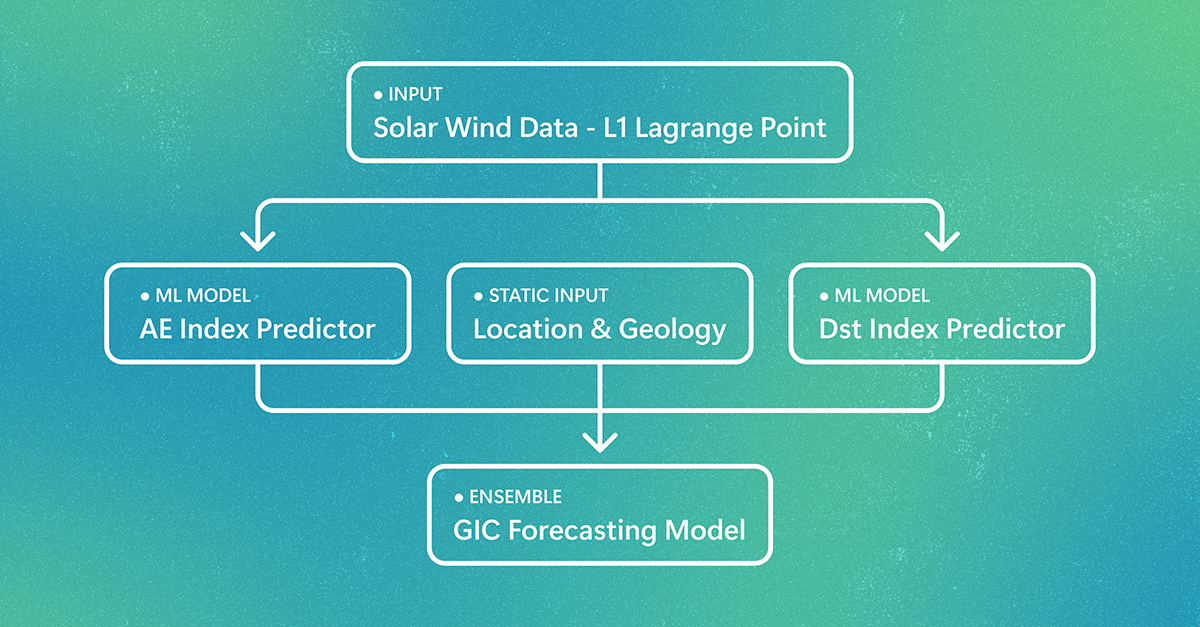
Extreme space-weather events can damage power systems on Earth and degrade GPS accuracy and satellite operations. A new machine learning system can predict where damage is likely to occur 30-60 minutes before a storm arrives. The post Forecasting space weather risks on power grids appeared first on Microsoft Research.
We use cookies to run the site and, with your consent, for analytics and to show ads.
See our Cookie Policy.