A semantic model for scientific evidence with three core classes is introduced, specialize it for genetics, align it structurally to FHIR Evidence with a SEPIO-anchored credibility decomposition, and attach a compact dimensional vocabulary whose conditional-activation rules are validated by a SHACL schema for the implemented constraints.
Abstract
Scientific and clinical decision-making depends on evidence from the primary literature, but existing standards for representing that evidence (FHIR Evidence, ECO, SEPIO, and the GA4GH Genomic Knowledge Standards) are oriented toward clinical-trial workflows, evidence codes, or single-variant assertions, and do not capture the fine-grained, domain-specific structure of claims in basic and pre-clinical research. We introduce a semantic model for scientific evidence with three core classes, specialize it for genetics, align it structurally to FHIR Evidence with a SEPIO-anchored credibility decomposition, and attach a compact dimensional vocabulary whose conditional-activation rules are validated by a SHACL schema for the implemented constraints. Using clinical variant interpretation as the driving use case, we evaluate the model through a human-AI annotation pilot over six genetics papers, yielding 28 evidence items and 95 source-anchored assertions, with a workflow that keeps curator-authored reference annotations distinct from AI-drafted annotations. Treating the pilot as a feasibility study rather than a benchmark, we argue that the model is a useful increment toward trustworthy, AI-ready infrastructure for variant interpretation: a reference data model and validation schema for representing genetic evidence.

Biomedical artificial intelligence is moving from literature retrieval toward evidence synthesis for knowledge graphs, clinical decision support, and computational models. Yet most information-extraction systems still represent findings as simple relations, discarding the quantitative and contextual detail needed for i...
N. S. Babaiha, Stefan Geißler, Marie-Christine Simon et al.· 0 citations
These findings show that knowledge graphs support hypothesis generation in two ways: they identify biological endpoint pairs absent from the literature, and their mechanistic paths guide how LLMs reason between them.
Dominic Okonkwo, Adetayo Okunoye, I. B. Arpinar· 0 citations
This work outlines a framework for plausibility-aware AI that treats extracted claims not as final answers but as auditable evidence objects, making clear what was measured, how much it changed, in which setting, with what uncertainty, and from which source.
N. S. Babaiha, Stefan Geißler, Marie-Christine Simon et al.· 0 citations
Background Accessing large-scale clinical and biomedical databases remains a significant barrier for clinicians and researchers, requiring substantial computational expertise. Agentic artificial intelligence frameworks, in which large language models (LLMs) orchestrate multi-step reasoning and query execution under int...
Gianmarco Bellucci, W. Gu, Peter W. Rose et al.· Frontiers in Artificial Inte...· 0 citations
Most clinical prediction systems learn patient-variable-outcome associations; we investigate a training-free diagnostic paradigm mapping patient observations to explicit medical knowledge. CKG Reasoner integrates candidate-specific Evidence Feature Nodes, patient-reference matching, a bounded Information Gate, knowledg...
A conceptual framework and roadmap for addressing four interrelated translational failure domains through rigorous validation, uncertainty-aware methods, interoperable infrastructures, regulatory alignment, and human oversight across the AI lifecycle is proposed.
Bahar Ilgen, Yiannos S. Tolias, Denise Kühnert et al.· 0 citations
With $2.1 million funding from Google.org, the open-source Public Transit Intelligence Hub will unify public transit monitoring, operations, and passenger communication.
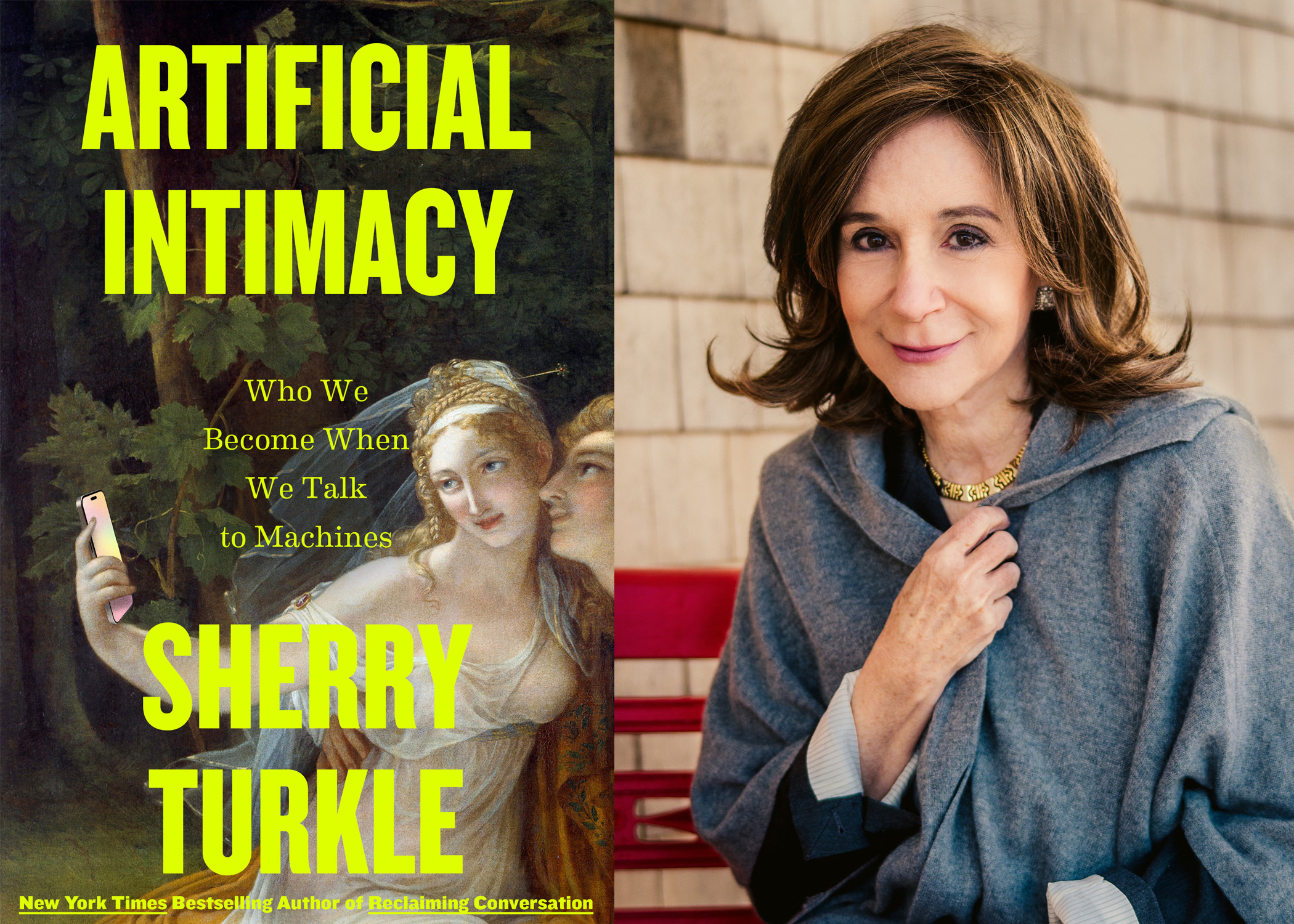
Professor Sherry Turkle’s new book, “Artificial Intimacy,” offers a withering critique of chatbots and the antisocial dynamics she believes they encourage.
We use cookies to run the site and, with your consent, for analytics and to show ads.
See our Cookie Policy.