Skip to content

Nested Inductive Bias Framework for SPD Manifold Learning

Sep 2026 · 0 citations · 16 references
Computer Science

TL;DR

This work introduces a Nested Inductive Bias framework that utilizes a two-stage diffeomorphic composition to formally pull back non-Euclidean target geometries onto the SPD manifold, and proposes the Rational Conformal Metric (RCM), designed to establish state-of-the-art geometric robustness against outliers by bounding the representation space.
Abstract

In Geometric Deep Learning, inductive biases serve two primary functions: enforcing manifold constraints and embedding relational priors. Currently, representation learning on SPD manifolds frequently relies on pullback Euclidean metrics, such as the Log-Euclidean Metric, to satisfy the former. While computationally efficient in avoiding domain boundary violations, these metrics induce a flat geometry that may fail to capture the intrinsic relational priors of datasets. While metrics such as the Poincar\'e metric are widely utilized to induce domain-aligned relational priors, generalizing them from standard vector representations to the SPD manifold has remained a challenge. To bridge this gap, we introduce a Nested Inductive Bias framework that utilizes a two-stage diffeomorphic composition to formally pull back non-Euclidean target geometries onto the SPD manifold. This framework enables the construction of curvature-aligned Riemannian classifiers that simultaneously respect matrix constraints and the latent relational geometry of the data. Empirical evaluations on kinematic and signal processing benchmarks, together with synthetic experiments, demonstrate that deep manifold networks experience degradation in class separability unless the metric curvature aligns with the intrinsic data distribution. Furthermore, for standard vectorized architectures, we propose the Rational Conformal Metric (RCM), designed to establish state-of-the-art geometric robustness against outliers by bounding the representation space.

View source

Similar papers

Open access Sep 2026

Mixture of Lie-Group Kernels for Equivariance-Inspired Feature Learning.

Deep visual models typically achieve robustness to geometric transformations through extensive data augmentation or increased model capacity, yet these empirical strategies do not guarantee explicitly equivariant or structurally constrained representations. While group-equivariant CNNs provide principled mechanisms for...

Yao-Xian Yang, Guipeng Lan, Shuai Xiao et al. · 0 citations
Preprint Aug 2026

Equivariant Covariance Tensors: Guaranteed SPD Uncertainty for Tensor-Valued Geometric Learning

A framework for E(3)-equivariant UQ is introduced, modeling the full predictive distribution where both mean and covariance preserve rotational symmetry, and a Log-Euclidean Equivariant Scoring Objective (LE-ESO) is formulated, a robust surrogate loss based on the Multivariate Laplace distribution providing robustness...

Rui-Han Liu, Yun-Ting Ji, Jian-Bo Yu et al. · 0 citations
Preprint Aug 2026

Dual-Manifold Geometry Guided Representation Learning: Adaptive Coupling between Kernel and Data Spaces

Deep representation learning has primarily focused on how features evolve across network layers, while largely overlooking the structured geometry embedded in network parameters. We introduce a dual-manifold perspective in which each convolutional layer contains two coupled geometric spaces: a Kernel Manifold induced b...

Wencong Zhang, Yue Zhang, Meiyan Huang et al. · 0 citations
#machine learning Preprint Sep 2026

Geometry-Aware Bayesian Parameter-Efficient Fine-Tuning on the Stiefel Manifold via Stein Variational Gradient Descent

This paper builds on the singular value decomposition factorization of adapters to develop a framework based on Stein variational gradient descent (SVGD), which delivers strong model calibration and attains higher prediction accuracy than SVGD and related uncertainty estimation methods that are formulated in Euclidean...

Quang-Duy Tran, Trung Le, Bao Duong et al. · 0 citations
Preprint Aug 2026

MAGIC-SSCIL: Manifold Anchoring and Geometric Incremental Calibration for Semi-Supervised Class Incremental Learning

Semi-supervised Class Incremental Learning (SSCIL) is a severe challenge for neural networks, and it is hardest in the exemplar-free setting where no past data may be stored. Existing methods forget catastrophically due to feature drift, and their pseudo-labels become increasingly unreliable as the label space grows. I...

Yousef Abdi, Mohammad Asadpour, Y. Seyfari · 0 citations
#artificial intelligence Preprint Sep 2026

Building Transformation Layers for Riemannian Neural Networks

Recently, deep neural networks on manifold-valued representations have garnered significant attention across various machine learning applications. One recent focus is the generalization of Euclidean fully connected (FC) and convolutional layers to non-Euclidean geometries. However, previous approaches typically focus...

Zi-Heng Chen · 1 citation

Related blog posts

Microsoft Research Blog Sep 30, 2026

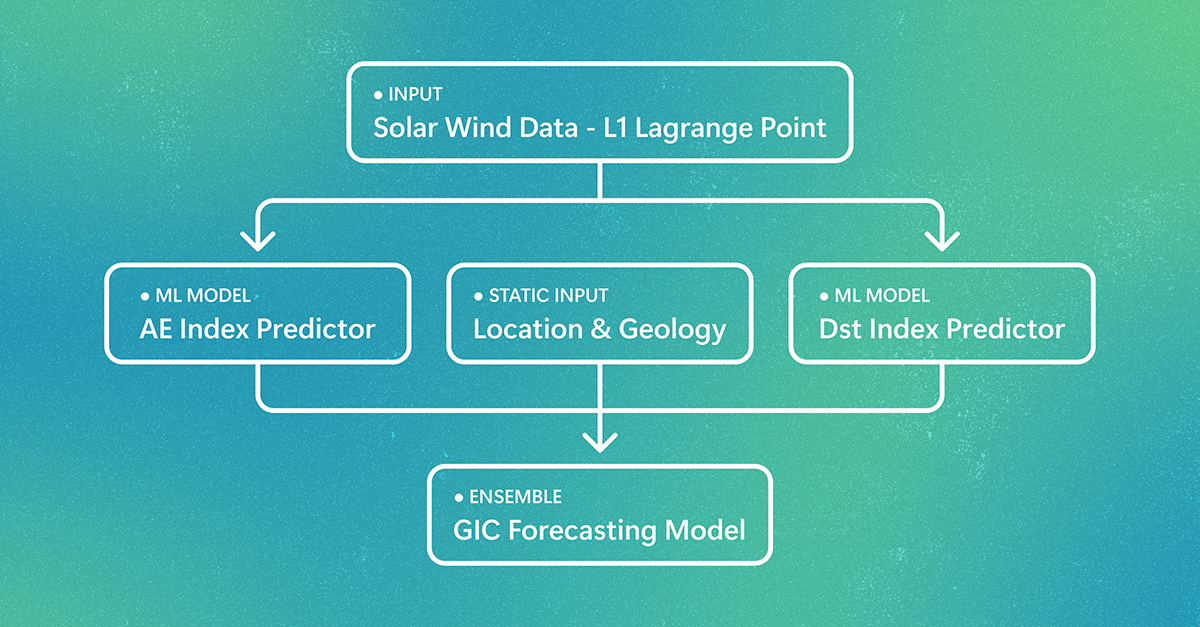
Forecasting space weather risks on power grids

Extreme space-weather events can damage power systems on Earth and degrade GPS accuracy and satellite operations. A new machine learning system can predict where damage is likely to occur 30-60 minutes before a storm arrives. The post Forecasting space weather risks on power grids appeared first on Microsoft Research.

We use cookies to run the site and, with your consent, for analytics and to show ads. See our Cookie Policy.