Skip to content

Beyond Edge Cuts: Activity-Weighted Multicast Hypergraph Mapping for Spiking Neural Networks on Mesh NoCs

Aug 2026 · 0 citations · 15 references
Computer Science

TL;DR

M-HySMap is presented, a route-aware, activity-weighted multicast hypergraph mapping framework that optimizes distinct destination-core fanout, the union of deterministic mesh routes, and link congestion, and exposes this combinatorial structure in detail, derive a conservative placement lower bound, and describes a portfolio of partition and placement neighborhoods that preserves the best incumbent.

Abstract

Mapping spiking neural networks (SNNs) onto neuromorphic many-core platforms is often formulated with graph partitioning and pairwise placement costs. That abstraction is convenient, but it does not match the physical communication event: one spike from a source neuron is delivered to a set of postsynaptic destinations, and routes to several destinations can share mesh links. We present M-HySMap, a route-aware, activity-weighted multicast hypergraph mapping framework. Each source neuron induces a directed hyperedge to its postsynaptic fanout, weighted by profiled activity. The mapper starts from strong activity-aware graph/QAP seeds and then optimizes distinct destination-core fanout, the union of deterministic mesh routes, and link congestion. The central algorithmic observation is locality: moving one neuron can change only its own source-rooted hyperedge and the hyperedges of its predecessors. This permits exact incremental gain evaluation while caching every unaffected route contribution. We expose this combinatorial structure in detail, derive a conservative placement lower bound, and describe a portfolio of partition and placement neighborhoods that preserves the best incumbent. Across a 115-job evidence suite on Potjans-inspired recurrent SNNs and mesh NoCs from 4 x 4 to 6 x 6, plus a 7 x 7 stress case, M-HySMap reduces routed multicast hops by 10.6-19.6% over Activity+QAP and 19.7-41.1% over Edge+QAP. Incremental updates accelerate refinement by 4.7-12.7x while matching full recomputation to numerical precision.

View source

Similar papers

Preprint Sep 2026

GPU-Accelerated Hypergraph Partitioning and Placement to Map SNNs on Neuromorphic Hardware

A GPU-accelerated pipeline for SNN mapping is proposed: a multi-level partitioning scheme is devised around hardware constraints, while placement is initialized through recursive bisection, followed by refinement pulling together strongly connected cores through repeated swaps.

Marco Ronzani, C. Silvano · 0 citations
Aug 2026

Structure-Adaptive Threshold Learning via sparse representation for Spiking Graph Neural Network

Experimental results validate the effectiveness of the structure-adaptive threshold mechanism for low-power spiking graph learning and design an alternating soft-fusion-hard-grouping training strategy that decouples structure-aware threshold generation from pattern-specific threshold optimization.

Zehan Li, Yingyi Li, Juntao Zhang et al. · 0 citations
Sep 2026

Communication-Cost-Aware Task-to-Core Mapping for 2D Concentrated-Mesh NoC-Based Neural Network Accelerators

Task placement strongly affects the on-chip communication overhead of Network-on-Chip (NoC)-based deep-neural network (DNN) accelerators. This work addresses task-to-core mapping on two-dimensional (2D) Concentrated Mesh (CMesh) NoCs with the explicit objective of minimizing communication cost, defined as the traffic-w...

Alperen Cakin, Selma Dilek, S. Tosun et al. · 0 citations
Open access Sep 2026

How sparse can a fly-brain model be? Connection strength, wiring placement, network state and task jointly determine function-preserving compression of the Drosophila connectome

Whole-brain connectomes are increasingly used as wiring diagrams for spiking simulations and as structural priors for artificial networks, usually after an ad hoc synapse-count threshold whose effect on validated function has never been measured. We define function-preserving sparsification—removing edges under a fixed...

Dong-Gun An · 0 citations
Preprint Aug 2026

Small-World Communication Fabrics for Neuromorphic Multicore-SoCs

This work compares two recent multicore neuromorphic systems implemented in the same 22-nm FDSOI technology and explicitly optimized for inter-core event communication, and discusses routing-aware training as a means of jointly optimizing neural connectivity, task performance, and hardware mappability.

Sebastian Billaudelle, Christian Metzner, Jimmy Weber et al. · 1 citation
#reinforcement learning Review Open access Sep 2026

Learning to Route On-Chip: A Survey of Machine Learning-Based Routing in Networks-on-Chip and Its Hardware Overheads

This survey reviews machine-learning-based NoC routing across a 48-study evidence base, and identifies three recurring gaps: limited scalability beyond small meshes, missing deadlock-freedom guarantees for learned policies, and over-reliance on synthetic traffic.

Bernardo Ibarra Infante, Remberto Sandoval Aréchiga, Víktor Iván Rodríguez Abdalá et al. · 0 citations

Related blog posts

Microsoft Research Blog Jul 13, 2026

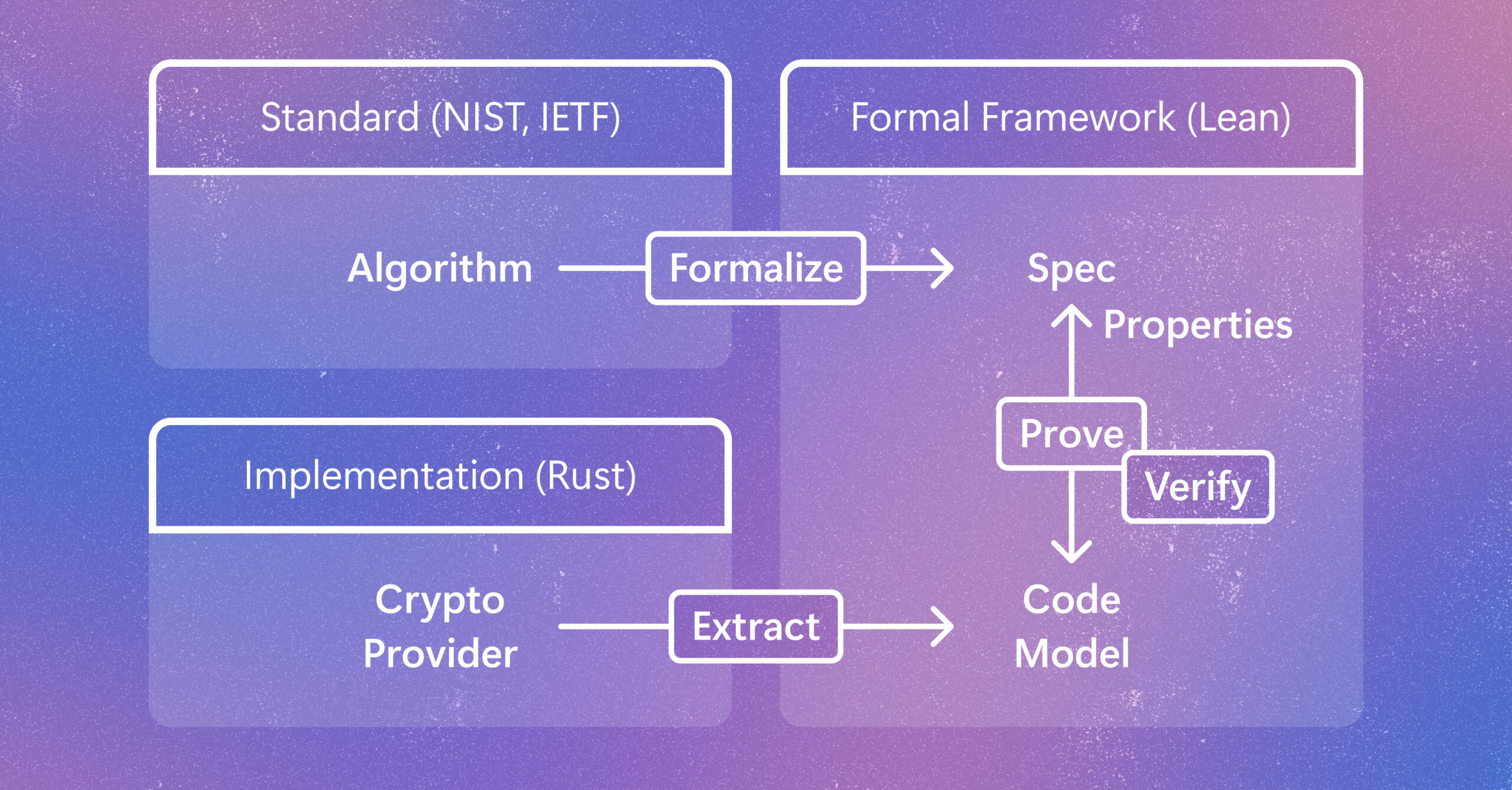
Verifying Rust cryptography in SymCrypt, from standards to code

Cryptographic code supports vital protections in modern computing systems. Learn how a new method helps verify code as developers write it while preserving speed and adaptability as it gets implemented and evolves. The post Verifying Rust cryptography in SymCrypt, from standards to code appeared first on Microsoft Research.

We use cookies to run the site and, with your consent, for analytics and to show ads. See our Cookie Policy.