A novel data anonymization framework based on federated learning and adaptive differential privacy for privacy-preserving IoT healthcare data management while achieving an improved balance between data utility, computational efficiency, and privacy protection is proposed.
Abstract
The rapid growth of Internet of Things (IoT)-based healthcare systems has raised significant concerns regarding data privacy and security. Ensuring privacy while maintaining the utility of healthcare data remains a major challenge in IoT-enabled healthcare environments. This article proposes a novel data anonymization framework based on federated learning and adaptive differential privacy. Initially, IoT healthcare data are processed using a residual bidirectional gated recurrent unit (Res-BiGRU) model to capture contextual and privacy-related features. Subsequently, an adaptive differential privacy mechanism is applied to minimize information loss while ensuring strong privacy protection. To improve optimization performance, a modified Resilient Adaptive Apiary Organizational Optimization Algorithm (RAOOA) incorporating a fitness-based adaptive factor is introduced to enhance convergence stability and solution quality. The effectiveness of the proposed framework is evaluated using a healthcare dataset. The proposed approach demonstrates superior performance compared with existing methods in terms of computation time, information loss, and privacy risk. The results indicate that the proposed framework provides an efficient and scalable solution for privacy-preserving IoT healthcare data management while achieving an improved balance between data utility, computational efficiency, and privacy protection.
FL-EZTF, a privacy-preserving, Federated Deep Learning and Enhanced Zero Trust Framework, is presented, which combines federated learning, Enhanced Zero Trust Architecture (E-ZTA), and Secure Access Service Edge (SASE).
Unknown authors· International Journal of Eng...· 0 citations
The Internet of Medical Things (IoMT) has been quickly adopted in the intelligent healthcare industry, introducing more and more medical data to be analysed at the network edge, which requires medical information analytics to be secure, privacy-preserving, and low-latency. When deployed in the heterogeneous edge enviro...
H. R. Gantla, Tejaswini Mallavarapu, Harika B et al.· 2026 International Conferenc...· 0 citations
The Internet of Medical Things (IoMT) enables continuous collection and transmission of healthcare data through interconnected networks of patient wearables and other devices. This capability transforms traditional healthcare systems into data-rich environments. However, this data-rich environment also brings privacy c...
The widespread adoption of wearable healthcare devices has transformed chronic disease management by enabling continuous monitoring and real-time collection of physiological data. However, Traditional centralized deep learning methods need sensitive medical information to be transmitted to remote servers, leading to co...
Shairy, Rachit Garg· 2026 International Conferenc...· 0 citations
Related blog posts
MIT News · Artificial Intelligence· news.mit.eduOct 2, 2026
Martin Trust Center Managing Director Bill Aulet introduces Dear Dreamer, a free platform for middle and high school students who want to learn about entrepreneurship.
Microsoft Research Blog· microsoft.comSep 30, 2026
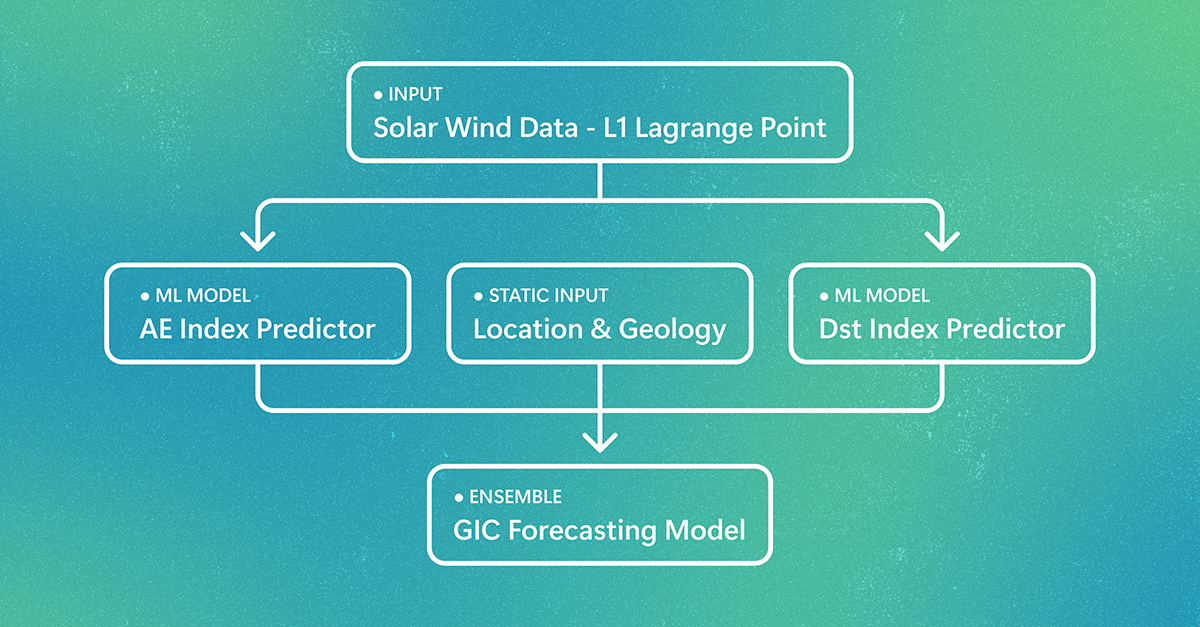
Extreme space-weather events can damage power systems on Earth and degrade GPS accuracy and satellite operations. A new machine learning system can predict where damage is likely to occur 30-60 minutes before a storm arrives. The post Forecasting space weather risks on power grids appeared first on Microsoft Research.
We use cookies to run the site and, with your consent, for analytics and to show ads.
See our Cookie Policy.