Lymphocyte Mimicry Correction via Region-Level Tissue Reasoning and Unbalanced Optimal Transport
Xiang LiYuqi WangCasey C. HeirmanJihye HeoKyle J. Lafata
Aug 2026
Machine LearningComputer Vision
Abstract
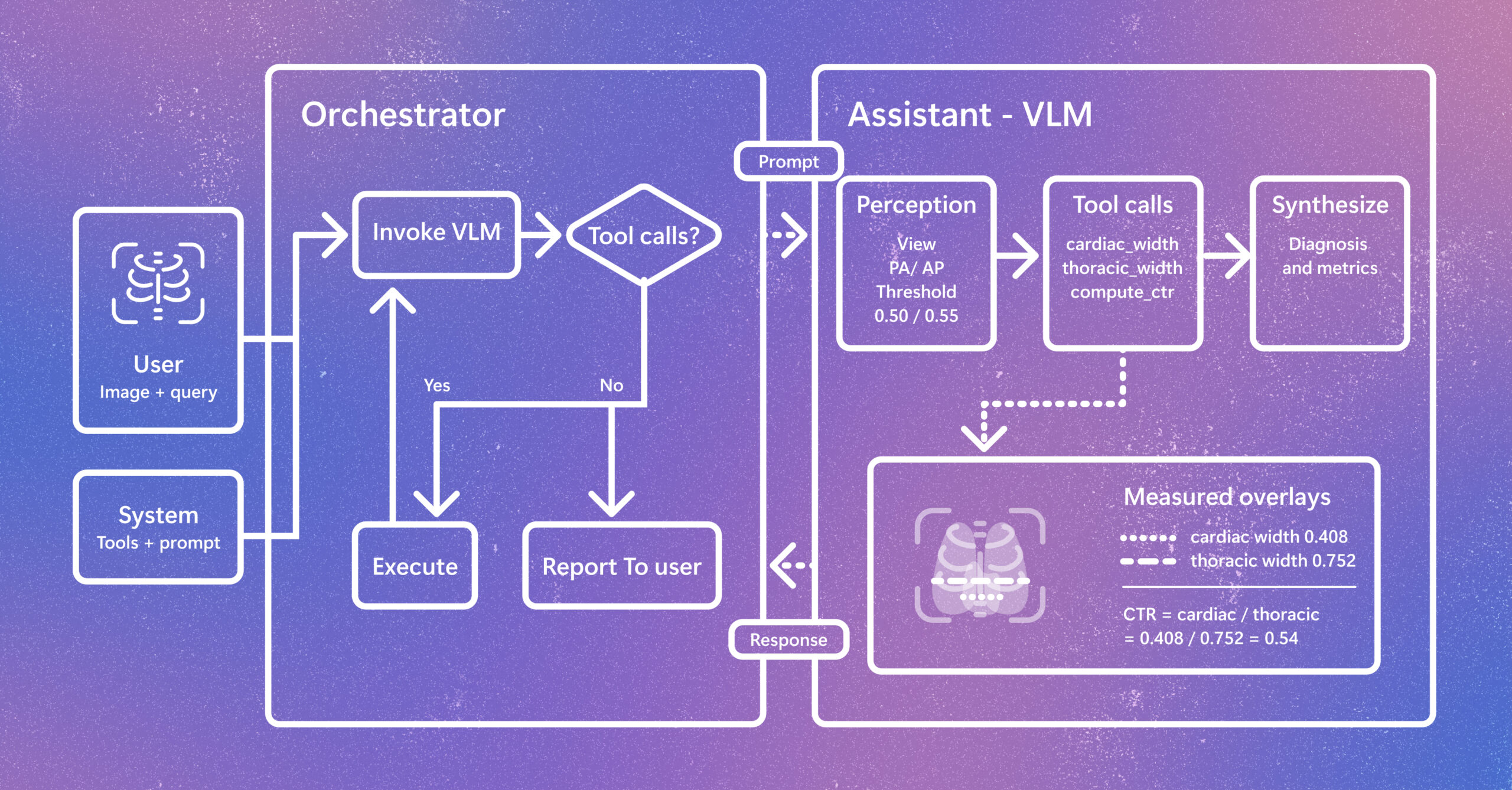
Cell mimicry arises when different cell types appear morphologically similar. Human pathologists resolve this ambiguity using surrounding tissue context, whereas current vision models either lack contextual reasoning (cell foundation models) or cannot operate at the cell level (pathology MLLMs). We present Loki-OT, which propagates region-level tissue reasoning to individual cell predictions via Unbalanced Optimal Transport, using MLLM-derived density priors as soft guidance for ambiguous cell reassignment. Loki-OT is motivated by the observation that pretrained cell foundation model features already encode discriminative information, including tissue context, but standard cell-level supervision fails to use tissue context effectively. The resulting transport plan is distilled into a lightweight student MLP classifier that learns context-aware decision boundaries within the pretrained feature space. On the independent TCGA-BRCA cohort, Loki-OT achieved lower patient-level MAE than the fully supervised in-domain PanopTILs classifier and improved F1 in epithelium-rich mimicry tissues, using 278 weak region-level MLLM estimates built on a general-domain cell foundation model. Code: https://github.com/xiangli980/Lymphocyte_Mimicry_Correction_via_Loki_OT

This article investigates several physics-informed and hybrid machine learning strategies that incorporate physics knowledge in experimental data-driven deep-learning models for predicting the bond quality and porosity of fused filament fabrication (FFF) parts. Three types of strategies are explored to incorporate physics constraints and multi-physics FFF simulation results into a deep neural network (DNN), thus ensuring consistency with physical laws: (1) incorporate physics constraints within the loss function of the DNN, (2) use physics model outputs as additional inputs to the DNN model, and (3) pre-train a DNN model with physics model input-output and then update it with experimental data. These strategies help to enforce a physically consistent relationship between bond quality and tensile strength, thus making porosity predictions physically meaningful. Eight different combinations of the above strategies are investigated. The results show how the combination of multiple strategies produces accurate machine learning models even with limited experimental data.
B. Kapusuzoglu, S. Mahadevan· JOM· 79 citations· ⚡2
This work introduces a pioneering exploration of Self-Supervised Learning (SSL) within the SNN, and proposes a novel Spiking Self-Attention (SSA) and Spiking Transformer (Spikformer) that achieves 80+% accuracy on ImageNet.
Zhaokun Zhou, Kaiwei Che, Wei Fang et al.· arXiv.org· 69 citations· ⚡10
This paper considers global sensitivity analysis (GSA) for situations where both a physics-based model and experimental observations are available, and investigates physics-informed machine learning strategies to effectively combine the two sources of information in order to maximize the accuracy of the sensitivity estimate.
B. Kapusuzoglu, S. Mahadevan· Reliability Engineering & Sy...· 45 citations
EquiPocket is proposed, an E(3)-equivariant Graph Neural Network for binding site prediction, which comprises three modules: the first one to extract local geometric information for each surface atom, the second one to model both the chemical and spatial structure of protein and the last one to capture the geometry of the surface via equivariant message passing over the surface atoms.
Yang Zhang, Wenbing Huang, Zhewei Wei et al.· International Conference on...· 43 citations· ⚡4
An adaptive surrogate modeling method for problems with very high-dimensional spatio-temporal outputs is developed that combines exploration and exploitation to improve the surrogate model accuracy with the fewest possible runs of the expensive physics-based model.
B. Kapusuzoglu, S. Mahadevan, Shunsaku Matsumoto et al.· Structural And Multidiscipli...· 17 citations
An improved variant of nearest neighbors (NN) for estimation with missing data in latent factor models that provides a (near-)quadratic improvement in the non-asymptotic error and admits a significantly narrower asymptotic confidence interval when compared to both unit-unit or time-time NN.
A new machine-learning framework aims to improve the success rate of computational protein design while moving away from results that reproduce sequences found in nature.