Skip to content

Broken on Arrival: Silently Defective LLM Artifacts in Public Model Registries and How to Catch Them

Sep 2026 · 0 citations · 37 references
Computer Science

TL;DR

The audit dataset, the quantcheck acceptance-testing tool, and disclosure reports for every confirmed defect are released, and it is argued that model registries need the acceptance gate that package registries already run.

Abstract

Developers increasingly run large language models locally by pulling quantized GGUF artifacts from public registries, yet nothing in the distribution pipeline functionally tests these conversions before they reach users. We executed 327 quantized code-capable model artifacts: 305 from the official Ollama library, spanning 15 model lines at every eligible quantization level at or under 8 GB, and 22 from the most-downloaded community repositories on HuggingFace. Each ran a 15-task smoke suite calibrated so that healthy artifacts pass while a known-broken one fails; suspects then faced full 164-task evaluation, a second inference backend, an independent distributor's conversion of the same model and quantization as referee, and, for community files, re-testing under the artifact's own template. The official library carries five silently defective artifacts, a batch of four Qwen2.5-Coder-3B conversions and one phi3.5-mini conversion, that solve zero of 164 tasks and zero of the smoke suite on both backends while independent conversions of the same models work: 1.6% of official artifacts, 2 of 29 model-and-size conversion groups. The adjudication chain cleared small-model artifacts that a naive threshold would condemn as broken when they are merely collapsed by extreme quantization, and it exposed two older community conversions that degrade badly on CUDA yet pass on Metal: not defective files but backend-dependent failures, a third phenomenon no registry currently tests for. Two confirmed defects produce output whose surface statistics sit inside the healthy range, invisible to any low-noise heuristic short of execution. We release the audit dataset, the quantcheck acceptance-testing tool, and disclosure reports for every confirmed defect (https://github.com/aditi-p31/quantcheck), and argue that model registries need the acceptance gate that package registries already run.

View source

Similar papers

#artificial intelligence Preprint Sep 2026

From Dead Code and Static Requirements to Working Engines: Software Revival with Coding Agents

Can coding agents restore software that no longer runs while preserving its underlying methods, and reconstruct industrial software engines from open specifications? Here we introduce ReviveBench, a benchmark with two task families evaluated by hidden verifiers calibrated against native execution environments, establis...

Tian-Yu Liu, Ding-Yuan Dai, Yu-Fan Du et al. · 0 citations
#human-computer interacti... Preprint Aug 2026

Visible but Not Yet Curatable: Characterizing the Curatability of Compact and Derived Open LLM Artifacts

A minimal seven-field curatable record is derived and complementary responsibilities for model hubs, scholarly indexes, and digital libraries are derived, providing practical guidance for improving the preservation and bibliographic control of open LLM artifacts.

Yi-Yi Lu, Yi-Lai Qian, Yu-Cheng Jin · 0 citations
#artificial intelligence Preprint Aug 2026

Probing the Prefill: Detecting Code Vulnerabilities via Latent Activations

LLM-based code generation is now embedded in mission-critical pipelines, but defenses against vulnerable output remain post-hoc -- static analyzers, fine-tuned classifiers, or an LLM judge that screen completed code, ignoring the generating model's own internal state. We test a narrower, directly measurable question: w...

Alizishaan Khatri · 0 citations
#machine learning Review Sep 2026

Robustness of LLM-Generated SystemVerilog Assertions to Semantics-Preserving RTL Transformations

Large language models (LLMs) are increasingly being explored for automating SystemVerilog Assertion (SVA) generation, yet most evaluations report correctness on a single syntactic representation of an input. Such point accuracy does not reveal whether a model's correct output is stable when the same RTL behavior is wri...

Fnu Aditi · 1 citation
#artificial intelligence Preprint Aug 2026

Compared to What? A Human-Anchored Security Benchmark for LLM-Generated Infrastructure-as-Code

GenIaC-SecBench is introduced, a benchmark of 100 deployment scenarios stratified by architectural complexity, evaluated across 12 model configurations from four vendors, producing 1,196 IaC artifacts scanned by three independent policy engines (Checkov, Trivy, KICS).

Animesh Shaw · 0 citations
Preprint Aug 2026

NoTB: Oracle-Free Triage of LLM-Generated RTL via Cross-Model Formal Consensus

NoTB is introduced, an oracle-free triage framework that infers correctness from cross-model formal consensus and demonstrates that formal cross-model agreement provides a reliable basis for high-confidence triage without model-dependent oracles.

Elisavet Lydia Alvanaki, Je Yang, Biruk B. Seyoum et al. · 0 citations

Related blog posts

GPT-Lab Sep 3, 2026

Adaptive AI Agents in Construction Workflows

Adaptive AI agents can help make BIM data more machine-readable by navigating IFC models, interpreting inconsistent information, and mapping it to defined standards. In this blog, Alok Rawat shares findings from a real-world pilot in construction workflows. The post Adaptive AI Agents in Construction Workflows appeared first on GPT-Lab.

GPT-Lab Aug 28, 2026

We built an AI factory for HVAC control

What does it take to trust AI-driven HVAC optimization? Our AI Model Factory combines agents, machine learning, reinforcement learning and deterministic checks in a governed workflow designed for messy, real-world building data. The post We built an AI factory for HVAC control appeared first on GPT-Lab.

Microsoft Research Blog Jul 30, 2026

EvoLib: Turning experience into evolving knowledge

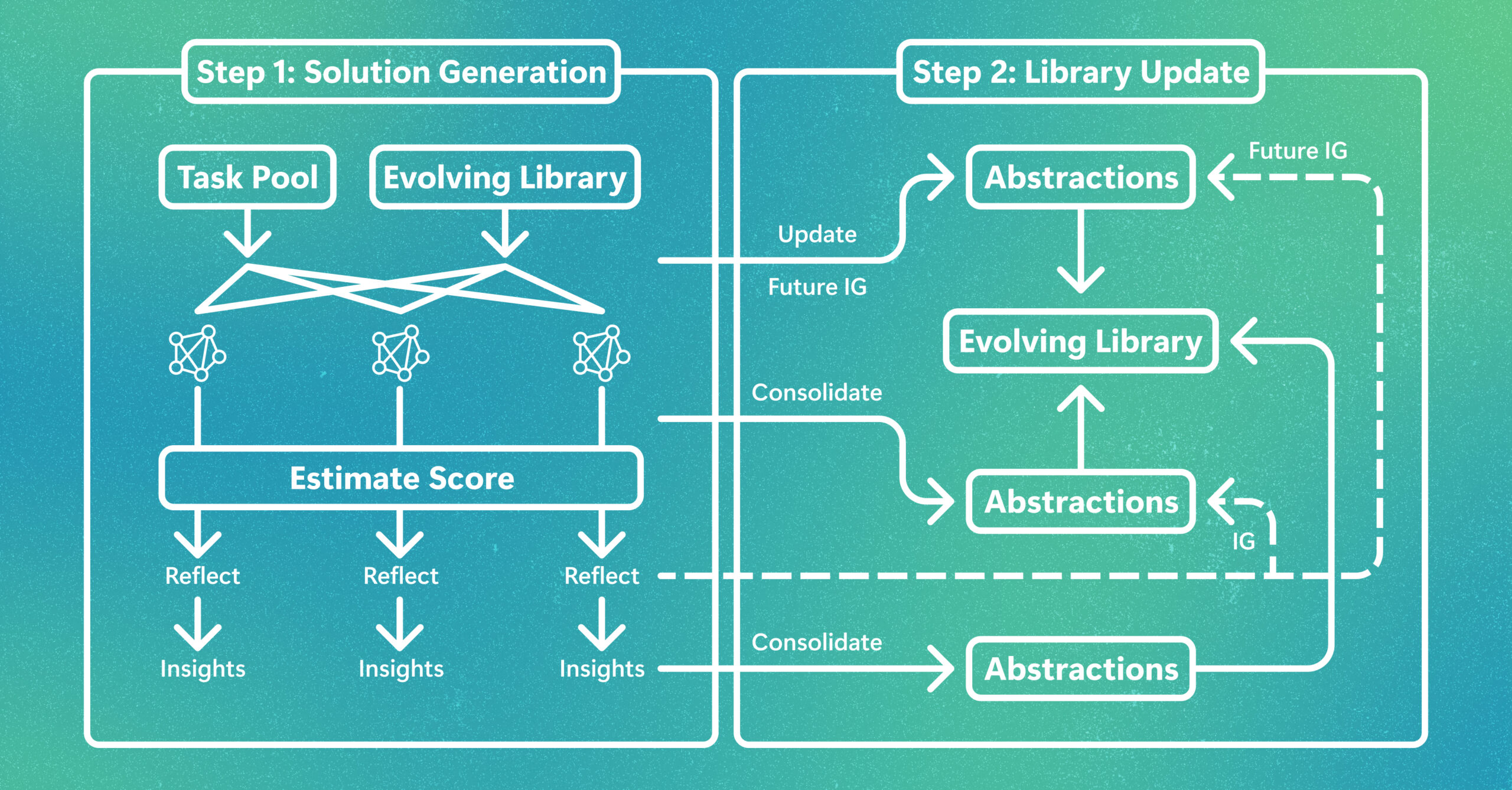
LLMs do not get smarter just by remembering more. EvoLib turns experience into evolving knowledge, taking reusable skills and insights that help models learn and adapt across tasks long after deployment. The post EvoLib: Turning experience into evolving knowledge appeared first on Microsoft Research.

We use cookies to run the site and, with your consent, for analytics and to show ads. See our Cookie Policy.