TimeRLM, an RLM formulation for time-series that sequentially manipulates the signal using code and vision capabilities, and AnomalyXL, a synthetic long-context anomaly localization benchmark with programmatically injected anomalies that require precise retrieval.
Abstract
Precise anomaly localization over long-context time series is a crucial task in monitoring applications across clinical care, industrial operations, financial services, and logistics, where brief evidence may hide inside long spans of high-frequency data. Time-Series Language Models (TSLMs) are able to ingest time series data and verbalize findings on anomalies in natural language; however, recent benchmarks report a decrease in retrieval performance at long contexts, mirroring failure modes in text, vision, and audio. In the text domain, Recursive Language Models (RLMs) can recover much of this lost performance by keeping context external to the large language model (LLM), allowing the model to query it through code. We present TimeRLM, an RLM formulation for time-series that sequentially manipulates the signal using code and vision capabilities. We further introduce AnomalyXL, a synthetic long-context anomaly localization benchmark with programmatically injected anomalies that require precise retrieval. We implement five different task categories and two variants: AnomalyXL-MCQ and AnomalyXL-Localize. TimeRLM outperforms every evaluated TSLM and single-pass baseline on four of the five AnomalyXL-Localize tasks, reaching 0.682 IoU on localization and 0.745 on classify-with-evidence, versus at most 0.329 and 0.072 across all baselines. We post-train TimeRLM using reinforcement learning. The resulting model further improves performance and requires approximately one-third as many agent interaction turns as its untrained base model to produce a final answer. On unseen real-world ECG, sleep and software observability recordings, the post-trained TimeRLM retains or improves performance, surpassing TSLMs despite being trained exclusively on synthetic data. Our findings suggest recursive interaction with time-series is an effective approach for long-horizon retrieval.
Time-series anomaly detection trades off predictive accuracy, computational efficiency, and interpretability. We use a large language model not as the detector but as the author of one: an autonomous research loop in which the model repeatedly edits a single short NumPy program under a leakage-free objective, keeping t...
Time-series language models provide a shared natural-language interface across temporal tasks, but plausible text does not guarantee reliable task outputs. Responses may appear reasonable while hallucinating the required object: numerical sequences can violate shape, scale, channel order, or temporal alignment, and tex...
Jia-Hui Chen, Bing-Ke Zhu, Hong-Yu Pan et al.· 0 citations
Reconstruction errors in multivariate time-series anomaly detection may not reliably distinguish abnormal behavior from benign deviations. Language-derived semantics offer complementary context, but existing multimodal approaches may rely on time-associated paired textual information that is difficult to obtain consist...
Jahyeob Koo, Kio Yun, Byoung-Mo Koo et al.· 0 citations
This paper proposes CHAIN (long-Context History-supervised Anomaly detectIoN), a novel framework that explicitly captures long-term historical contexts under anomaly simulation and supervises current-window anomaly detection via masked cross-attention fusion.
Real-world time-series applications increasingly require models that can handle time series forecasting, context-conditioned prediction, and language-based temporal reasoning. Yet current time-series foundation models remain fragmented across these capabilities: numerical specialists often provide the strongest forecas...
Tony Chen, Timo Stoffregen, Maxwell A. Xu et al.· 0 citations
LLM-Detector is proposed, a framework that utilizes the in-context learning capacity of LLMs for structured, prompt-conditioned scoring synthesis, enabling LLMs to derive anomaly detection logic from structured normal-state knowledge.
Tu Nguyen, Dang Nguyen, T. D. Le et al.· 0 citations
Related blog posts
MIT News · Artificial Intelligence· news.mit.eduOct 2, 2026
Martin Trust Center Managing Director Bill Aulet introduces Dear Dreamer, a free platform for middle and high school students who want to learn about entrepreneurship.
Microsoft Research Blog· microsoft.comSep 30, 2026
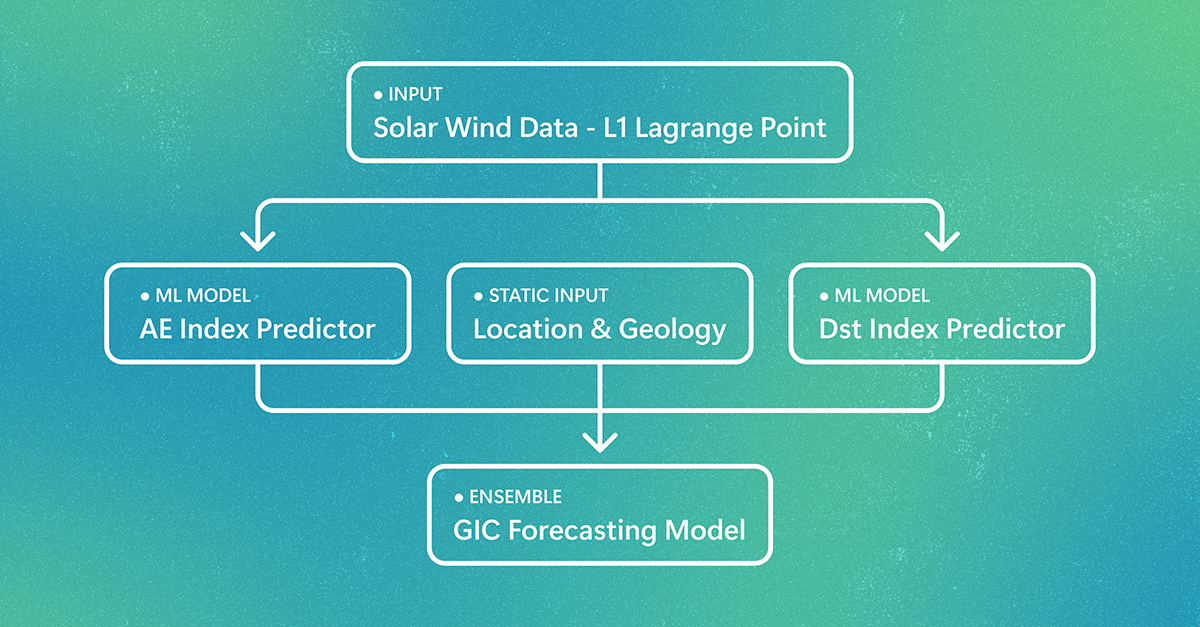
Extreme space-weather events can damage power systems on Earth and degrade GPS accuracy and satellite operations. A new machine learning system can predict where damage is likely to occur 30-60 minutes before a storm arrives. The post Forecasting space weather risks on power grids appeared first on Microsoft Research.
We use cookies to run the site and, with your consent, for analytics and to show ads.
See our Cookie Policy.