May 2024· Applied Network Science· 3 citations· 79 references
PhysicsComputer Science
TL;DR
The robustness of shallow graph embedding methods for community detection in the face of network perturbations is found to be influenced by factors such as network size, initial community partition strength, and the type of perturbation.
Abstract
This study investigates the robustness of shallow graph embedding methods for community detection in the face of network perturbations, specifically node deletions. Graph embedding techniques, which represent nodes as low-dimensional vectors, are widely used for various graph machine learning tasks due to their ability to capture structural properties of networks effectively. However, the impact of perturbations on the performance of these methods remains relatively understudied. The research considers state-of-the-art shallow graph embedding methods from two families: matrix factorization (e.g., LE, LLE, HOPE, M-NMF) and random walk-based (e.g., DeepWalk, LINE, node2vec). Through experiments conducted on both synthetic and real-world networks, the study reveals varying degrees of robustness within each family of shallow graph embedding methods. The robustness is found to be influenced by factors such as network size, initial community partition strength, and the type of perturbation. Notably, node2vec and LLE consistently demonstrate higher robustness for community detection across different scenarios, including networks with degree and community size heterogeneity. These findings highlight the importance of selecting an appropriate shallow graph embedding method based on the specific characteristics of the network and the task at hand, particularly in scenarios where robustness to perturbations is crucial.
This work introduces a graph generation method that incorporates graph-theoretic principles into the learning process and preserves both global and local characteristics of the input graph while correcting the degree distribution to avoid duplicating the original topology.
Yuliang Ji, Jie Chen, Yuan-Zhe Xi· Research in the Mathematical...· 0 citations
Experiments on synthetic and real-world datasets show that GraphK outperforms existing methods, accurately learns graph structures, and generates synthetic graphs without explicit definitions.
Resul Tugay, Eren Olug, Elif Ak et al.· 0 citations
This work shows that informative embeddings can be derived without complicated model design and gradient-based training, and suggests that informative graph embeddings can arise from carefully chosen topological transformations before any learning operation is applied.
Meng Qin, Jin-Qiang Cui, Hong-Wei Zheng et al.· 0 citations
Deep graph clustering (DGC) aims to partition graph nodes into distinct clusters in an unsupervised manner. Despite rapid advancements in this field, DGC remains inherently challenging due to the absence of ground-truth, which complicates the design of effective algorithms and impedes the establishment of standardized...
Ben-Yu Wu, Yue Liu, Qiaoyu Tan et al.· Neural Information Processin...· 4 citations
The latent community structures in the social networks have now become a cornerstone problem in the scientific study of networks, and has extensive implications in recommendation systems, epidemiology, fraud detection, and social behavior studies. The conventional community detection algorithms, most of which are based...
M. Rekha, Aaquib Hussain Ganai· Discover Artificial Intellig...· 0 citations
Related blog posts
MIT News · Artificial Intelligence· news.mit.eduOct 2, 2026
Martin Trust Center Managing Director Bill Aulet introduces Dear Dreamer, a free platform for middle and high school students who want to learn about entrepreneurship.
Microsoft Research Blog· microsoft.comSep 30, 2026
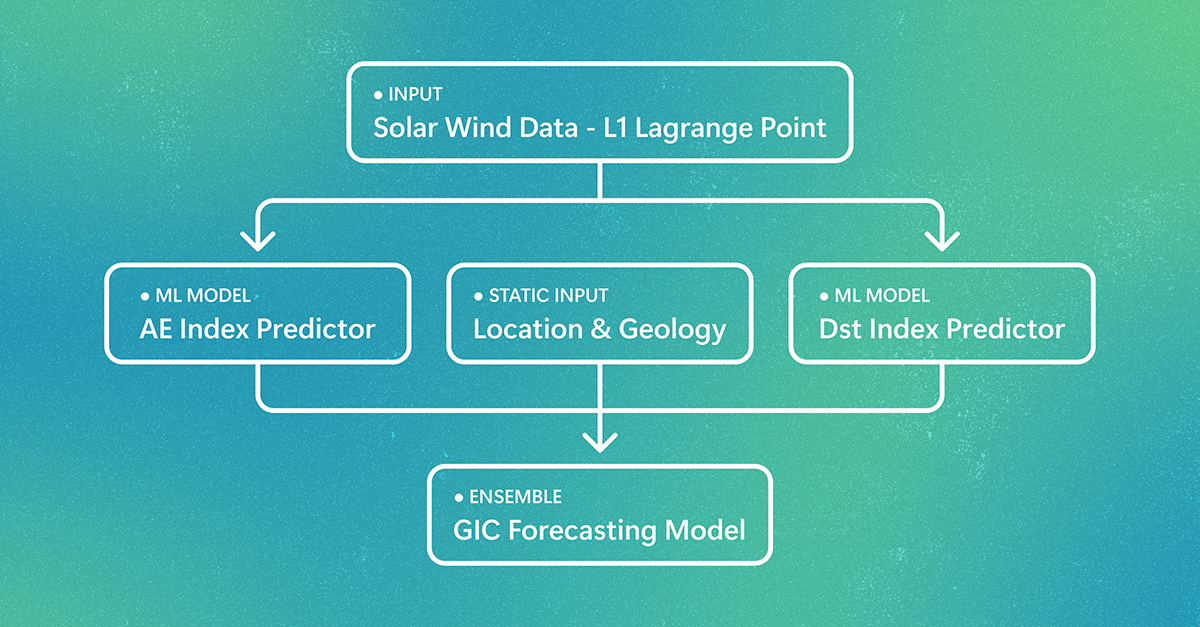
Extreme space-weather events can damage power systems on Earth and degrade GPS accuracy and satellite operations. A new machine learning system can predict where damage is likely to occur 30-60 minutes before a storm arrives. The post Forecasting space weather risks on power grids appeared first on Microsoft Research.
We use cookies to run the site and, with your consent, for analytics and to show ads.
See our Cookie Policy.