The spectral residual is characterized as a useful but domain-sensitive inductive bias for structural connectivity screening, andarse scaling extends to 20,000 nodes and separates one-time spectral setup from amortized screening cost.
Abstract
Rapid evaluation of many simultaneous road-link disruptions requires a practical compromise between exact spectral recomputation and local approximation. We estimate relative algebraic-connectivity loss after multi-edge deletion using graph neural networks (GNNs) that learn a bounded correction to a first-order Fiedler sensitivity. The study considers independent, spatially clustered, and edge-betweenness-targeted failures, with graph-disjoint synthetic splits and zero-shot transfer to 13 OpenStreetMap (OSM) areas in six countries. GCN, GraphSAGE, and edge-aware MPNN backbones are compared with analytical baselines. In expanded OSM tests, residual GCN improves spatial-failure MAE by 0.0391 (95% hierarchical interval 0.0151-0.0662), while residual GraphSAGE improves targeted-failure MAE by 0.0257 (0.0095-0.0446). Second-order perturbation improves first-order MAE by only 0.0028-0.0053. Correction slopes decrease under targeted transfer, indicating residual shrinkage around systematic prior error. Leave-one-country-out OSM-to-OSM transfer is mixed: residual GCN improves targeted-failure MAE by 0.0622 (0.0169-0.1153) but worsens the spatial point estimate. Sparse scaling extends to 20,000 nodes and separates one-time spectral setup from amortized screening cost. These results characterize the spectral residual as a useful but domain-sensitive inductive bias for structural connectivity screening. Code, cached networks, and reproducibility artifacts are archived at doi:10.5281/zenodo.22307723.
This study develops a framework for preserving network-wide traffic information while reconstructing flow and density at unobserved links and the macroscopic fundamental diagram, enabling a broad range of sensor budgets in large-scale networks without strict limits on the number of sensors.
Ying Zhang, F. Fakhrmoosavi, Arash E. Zaghi· 0 citations
A deeply fused GraphSAGE-GRU cell that embeds independent inductive GraphSAGE(SAmple and aggreGatE) encoders directly into each GRU gate, enabling simultaneous spatio-temporal feature extraction at every time step while remaining topology-agnostic.
Xuran Chen· Poster Volume 0008 The 2026...· 0 citations
Graph Neural Networks (GNNs) have achieved strong performance in node classification, yet their performance often drops when facing graph distribution shifts between training and testing nodes. Existing methods have been explored to improve generalization under such shifts. However, many of them either rely on environm...
Jia-Xing Li, Jia-Shuo Liu, Wei-Huang Zheng et al.· IEEE Transactions on Pattern...· 0 citations
DynaSTar is proposed, a Dynamic Spatio-Temporal Graph Invariant Learning model designed for reliable out-of-time (OOT) traffic prediction under evolving topologies, which employs a dynamic probabilistic graph structure, which is continuously refined through momentum-based updates and differentiable sparse sampling to m...
Xinyan Hao, Huai-Yu Wan, S. Guo et al.· Proceedings of the Thirty-Fi...· 0 citations
Experiments on PeMS03, PeMS04, and PeMS08 show that CausalST achieves the lowest MAPE among all compared methods while remaining competitive in MAE and RMSE, and ablation results reveal non-additive interactions between directed weighting and delayed aggregation.
Sparsifying large road-network graphs by removing a fraction of their edges is a common way to reduce storage and accelerate spatial queries, but the choice of which edges to remove can quietly degrade the network that remains. We compare three edge-importance criteria for deciding what to prune, namely uniform random...
Jian-Ru Shen· 0 citations
Related blog posts
MIT News · Artificial Intelligence· news.mit.eduOct 2, 2026
Martin Trust Center Managing Director Bill Aulet introduces Dear Dreamer, a free platform for middle and high school students who want to learn about entrepreneurship.
Microsoft Research Blog· microsoft.comSep 30, 2026
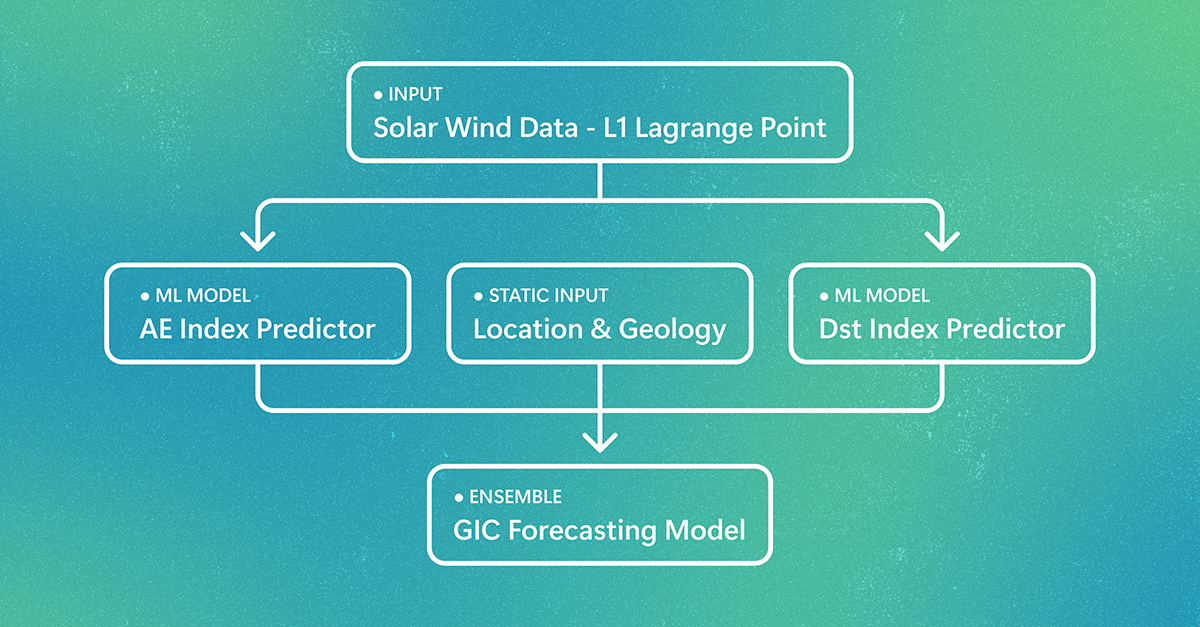
Extreme space-weather events can damage power systems on Earth and degrade GPS accuracy and satellite operations. A new machine learning system can predict where damage is likely to occur 30-60 minutes before a storm arrives. The post Forecasting space weather risks on power grids appeared first on Microsoft Research.
We use cookies to run the site and, with your consent, for analytics and to show ads.
See our Cookie Policy.