This work describes an automatic criterion for full-state rejuvenation of the Gibbs sampler, derived from the Gelman-Rubin statistic, which plays a key role in speeding up learning convergence.
Abstract
Generative Marginalization Models (MaMs) have been recently introduced as efficient neural sampling models for any-order autoregressive modelling of discrete distributions. By learning both the marginal and conditional probabilities of a persistent-block Gibbs sampler, MaMs enable fast posterior evaluation with a single neural network forward pass. While prior work has considered MaMs to be distinct from Generative Flow Networks (GFlowNets), a well-established paradigm for inference in discrete stochastic models, we show that they are equivalent. Then, we also extend MaMs'sampling strategy to non-autoregressive generative processes. In particular, we describe an automatic criterion for full-state rejuvenation of the Gibbs sampler, derived from the Gelman-Rubin statistic, which plays a key role in speeding up learning convergence. Our experiments show that our method, called Particle GFlowNets, markedly accelerates training in large combinatorial spaces.
We consider the problem of sampling compositional and discrete objects from a given unnormalized posterior distribution. Notably, recent studies have shown that this problem can be efficiently solved by learning a deterministic Markov Decision Process (MDP) that progressively builds each object in proportion to the pos...
Tiago da Silva, Esmeralda S. Whitammer, S. Lahlou· 0 citations
In this work, we explore particle learning strategies for the joint estimation of static parameters and latent states within conditional sequential Monte Carlo (CSMC) algorithms. Building on this idea, we propose the p(parameter)-CSMC algorithm, which incorporates both parameter learning and ancestor sampling, leading...
Generative models have found great success as data-driven methods of solving inverse problems. Two popular approaches work either by combining a pretrained generative prior with a known degradation model, or by training a conditional generative model directly from paired data. We target a setting that spans both regime...
Rostislav Makarov, Tal Peer, Danilo de Oliveira et al.· 0 citations
Motivated by LLMs, which generate outputs by iteratively sampling from next-token distributions, we introduce a PAC-learning model for binary stochastic autoregressive learning. This generalizes the deterministic autoregressive learning framework of Joshi et al., COLT 2025. In our model, one fixed generator assigns a B...
Ilan Doron-Arad, Idan Mehalel, Elchanan Mossel· 1 citation
Sequential inference estimates latent states from noisy and incomplete observations. Particle Filters (PFs), a class of Monte Carlo methods based on importance sampling, provide a flexible framework for this task, but often suffer from poor sample efficiency and unfavorable scaling with dimension, partly due to subopti...
A new paradigm that has recently emerged at the interface of machine learning and computational statistical physics: the use of generative models as tools for sampling through flexible probabilistic models that can assist the sampling of distributions known only up to a normalization constant is explored.
M. Gabrié· 0 citations
Related blog posts
MIT News · Artificial Intelligence· news.mit.eduOct 2, 2026
Martin Trust Center Managing Director Bill Aulet introduces Dear Dreamer, a free platform for middle and high school students who want to learn about entrepreneurship.
Microsoft Research Blog· microsoft.comSep 30, 2026
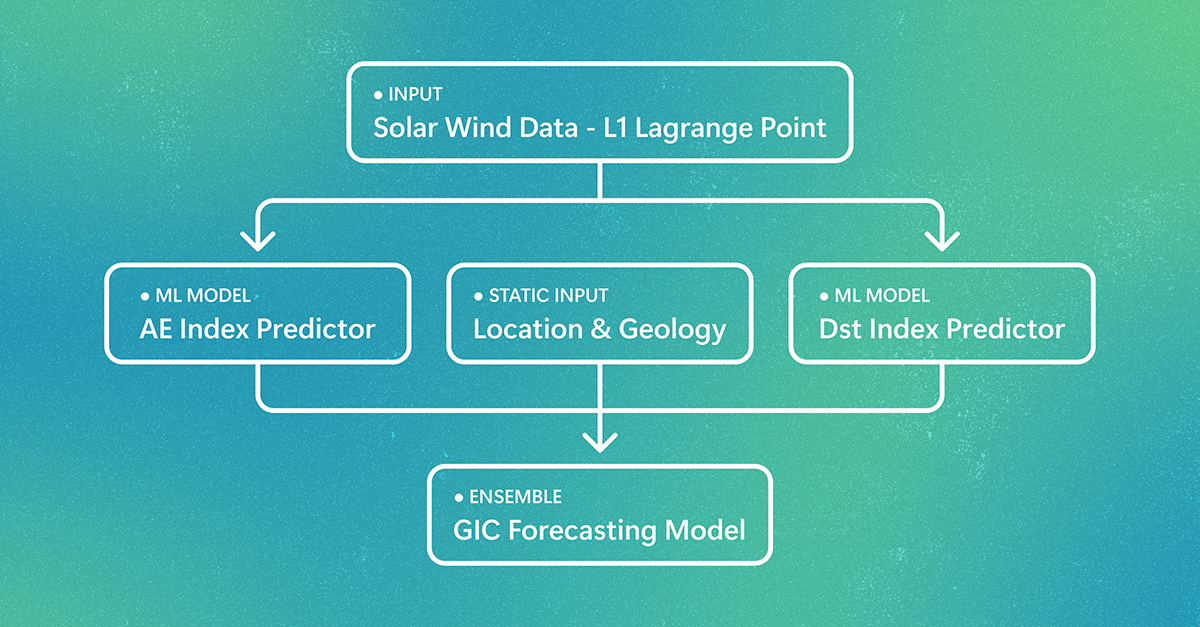
Extreme space-weather events can damage power systems on Earth and degrade GPS accuracy and satellite operations. A new machine learning system can predict where damage is likely to occur 30-60 minutes before a storm arrives. The post Forecasting space weather risks on power grids appeared first on Microsoft Research.
We use cookies to run the site and, with your consent, for analytics and to show ads.
See our Cookie Policy.