Skip to content

Musec: MomentUm SpEctral Clipping for Stable Muon-type Training

Zhuanghua Liu Menglian Wang Luo Luo
Sep 2026 · 0 citations · 46 references
Computer Science

Abstract

Muon has emerged as a highly effective optimizer for large language model training, often achieving superior convergence and performance compared with the widely adopted Adam and AdamW optimizers. Nevertheless, Muon is prone to training instability due to its spectral flattening, manifested by loss spikes and unbounded growth of model weights. Existing approaches primarily rely on weight or attention-logit clipping, which require architecture-specific modifications and do not directly address instability across all model components. We propose MomentUm SpEctral Clipping (Musec), which replaces Muon's spectral flattening with spectral clipping: rather than setting all singular values of the momentum matrix to approximately one, Musec clips singular values that exceed a threshold while preserving the underlying spectral structure of the momentum. Our strategy provides an optimizer-level, architecture-agnostic mechanism for stabilizing Muon training. We further develop Soft Musec, an efficient implementation that uses a smooth spectral saturation function approximated by coupled Newton-Schulz iterations. Theoretically, we establish convergence guarantees for Musec in nonconvex nonsmooth stochastic optimization. To the best of our knowledge, this is the first convergence guarantee for Muon-type methods in the nonconvex nonsmooth setting. We provide empirical studies to show that Soft Musec consistently improves training stability over existing Muon variants across a wide range of learning rates and model sizes. Notably, Soft Musec remains stable in settings where existing Muon variants diverge, while matching their performance under well-tuned configurations.
View source

Similar papers

#artificial intelligence Preprint Sep 2026

Beyond the Matrix Sign: Quadratic Spectral Descent

Muon emerges as a strong competitor of the AdamW for LLM pretraining, because the matrix-wise update it employs can potentially incur smaller second-order penalty than the once dominating AdamW, which performs coordinate-wise update. However, the spectral flattening procedure in Muon is quite debatable since it discard...

Qiao-Zhe Zhang, Jun Sun, Ying-Zhuang Liu · 0 citations
#small language model Preprint Aug 2026

Spectral Allocation: Why Muon Outperforms Adam, and How to Improve Muon

Spectral-Aware Muon is introduced, which holds the head at the Muon scale and amplifies the bulk using a static spectral prior, and both variants outperform tuned AdamW and Muon (Scion implementation) baselines in all evaluated model-scale and batch-size configurations.

Xiaodong Wu, Wen-Yi Yu, Chao Zhang et al. · 1 citation
#machine learning Preprint Sep 2026

Convergence of Practical Muon

Muon is emerging as a promising alternative to AdamW for large-scale neural network training, yet theoretical understanding of its practical implementation remains incomplete, as existing analyses often simplify or omit two key components: (i) practical Newton--Schulz iterations with empirically tuned polynomial coeffi...

Hao-Nan Wang, Yu Wu, Minghui Liwang et al. · 0 citations
#machine learning Preprint Oct 2026

AF-Muon: An AdamW-Free Muon Optimizer for Tied-Embedding Models

Muon improves large-scale training by applying a spectral-norm steepest-descent update to matrix parameters, but practical models also contain parameter blocks that do not fit dense-matrix geometry. One important case is the tied vocabulary table, which appears in language models and other token generators and can rece...

Arash Lagzian, Paniz Halvachi, Jun-Ming Zhang et al. · 0 citations
Preprint Aug 2026

Scaling Muon for Diffusion Transformers

Periodic Row-wise Muon is introduced, which performs a full NS5 spectral update once every \(K\) steps and applies a low compute and communication cost row-wise constrained update based on the current momentum at the remaining steps to preserve Muon's generative quality advantage while translating it into end-to-end tr...

Chenghao Li, Xiao Han, Xin-Xin Huang et al. · 0 citations

Related blog posts

Microsoft Research Blog Sep 30, 2026

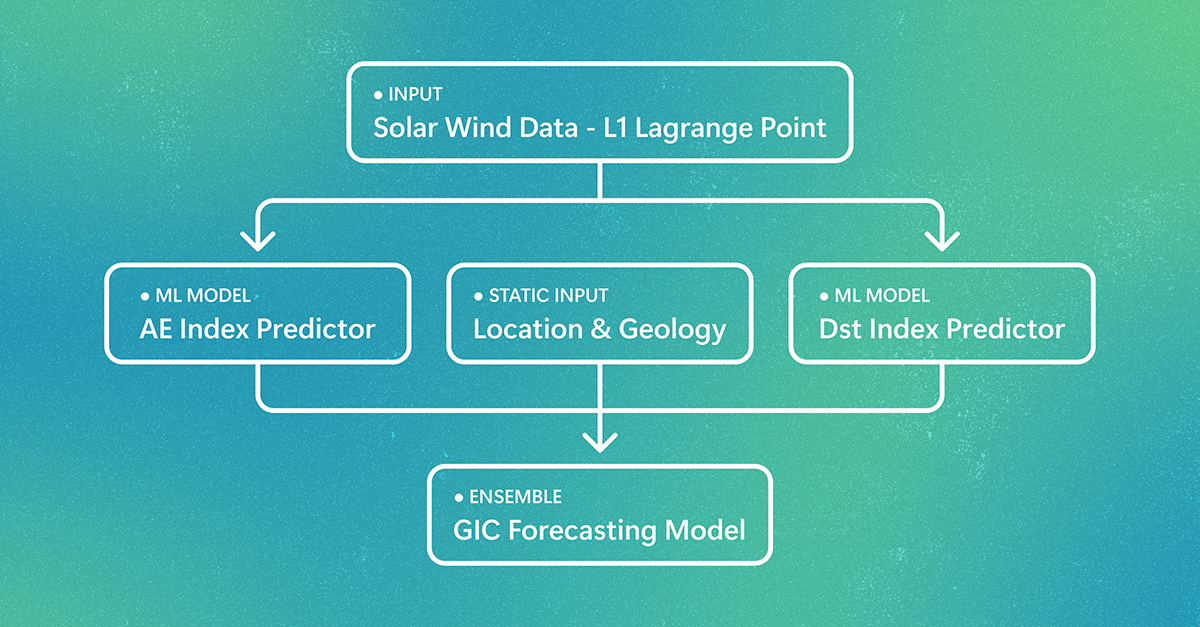
Forecasting space weather risks on power grids

Extreme space-weather events can damage power systems on Earth and degrade GPS accuracy and satellite operations. A new machine learning system can predict where damage is likely to occur 30-60 minutes before a storm arrives. The post Forecasting space weather risks on power grids appeared first on Microsoft Research.

We use cookies to run the site and, with your consent, for analytics and to show ads. See our Cookie Policy.