Skip to content
#federated learning Open access

Deep Learning for Type 2 Diabetes Prediction: A Benchmarking Study Using the PIMA Indians Diabetes Dataset

Sep 2026 · International Journal of Scientific Research in Computer Science Engineering and Information Technology · 0 citations · 15 references
Artificial Intelligence in Healthcare

Abstract

Type 2 diabetes mellitus (T2DM) is a chronic metabolic disorder with a growing global burden, making early and accurate risk prediction a public-health priority. This study develops and evaluates a deep neural network (DNN) for T2DM prediction using the PIMA Indian Diabetes dataset (768 records and 8 clinical features). Physiologically implausible zero values in glucose, blood pressure, skin thickness, insulin, and body-mass index were treated as missing and replaced using median imputation. Inputs were then standardized before modelling. The proposed regularized multilayer DNN used batch normalization, dropout, early stopping, and stratified 5-fold cross-validation, followed by evaluation on a held-out 20% test set. We evaluated both models using the same data splits on logistic regression, random forest, and support vector machine models. The DNN achieved an accuracy of 77.27%, 67.27% precision, 68.52% recall, 67.89% F1-score, and an AUC of 83.61% on the independent test set. DNN was also the most discriminative on both datasets. Glucose, BMI, diabetes pedigree function, and age were the dominant predictors. The limitations of this work consist of small size of the dataset used and noisy labels. The next step in future research should be aimed at improving the model's explainability, increasing the number of samples in the cohort, and federated learning.
Read PDF

Similar papers

#machine learning Review Open access Oct 2014

Software development in startup companies: A systematic mapping study

The results indicate that software engineering work practices are chosen opportunistically, adapted and configured to provide value under the constrains imposed by the startup context.

Nicolò Paternoster, Carmine Giardino, M. Unterkalmsteiner et al. · 394 citations · ⚡54
#machine learning Review Open access Jun 2014

Why Early-Stage Software Startups Fail: A Behavioral Framework

This state-of-practice investigation was performed using a literature review followed by a multiple-case study approach and presents how inconsistency between managerial strategies and execution can lead to failure by means of a behavioral framework.

Carmine Giardino, Xiaofeng Wang, P. Abrahamsson · 175 citations · ⚡19
#machine learning Review Open access Oct 2016

“Failures” to be celebrated: an analysis of major pivots of software startups

This study conducts a case survey study based on the secondary data of the major pivots happened in 49 software startups, and demonstrates that customer need pivot is the most common among all pivot types.

Sohaib Shahid Bajwa, Xiaofeng Wang, Anh Nguyen-Duc et al. · 127 citations · ⚡15
#machine learning Review Open access May 2016

Key Challenges in Software Startups Across Life Cycle Stages

It is found that what perceived as biggest challenges by software startups do vary across different life cycle stages, even though its significance decreases when the learning focuses of the startups move from problem to solution and their products mature.

Xiaofeng Wang, Henry Edison, Sohaib Shahid Bajwa et al. · 62 citations · ⚡6

Related blog posts

Microsoft Research Blog Sep 30, 2026

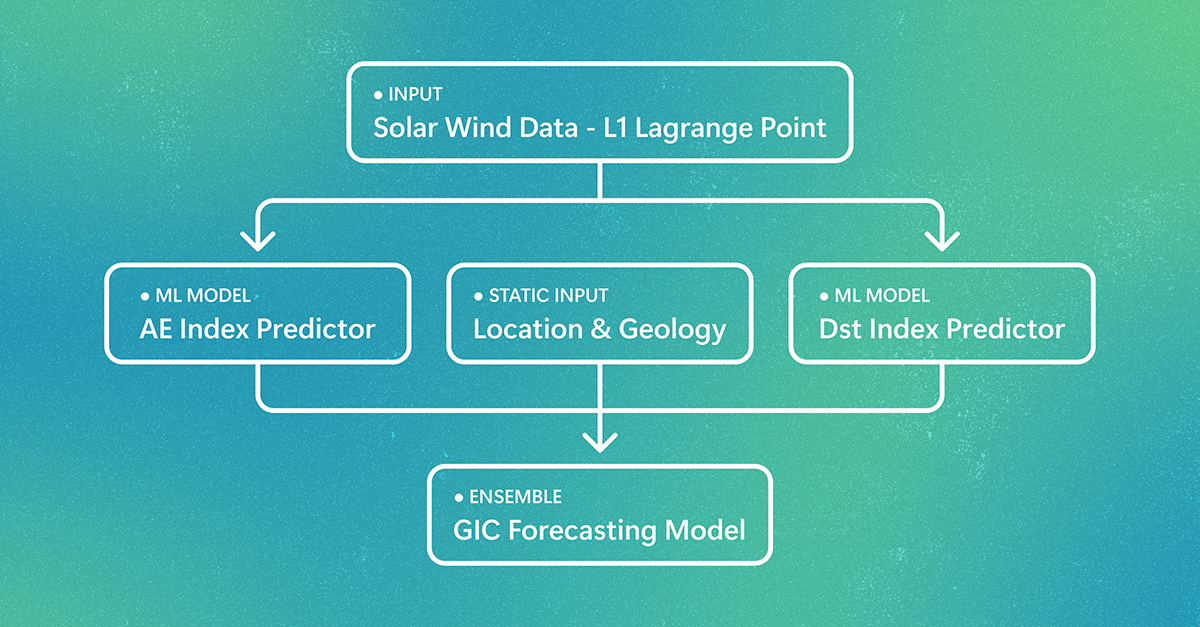
Forecasting space weather risks on power grids

Extreme space-weather events can damage power systems on Earth and degrade GPS accuracy and satellite operations. A new machine learning system can predict where damage is likely to occur 30-60 minutes before a storm arrives. The post Forecasting space weather risks on power grids appeared first on Microsoft Research.

We use cookies to run the site and, with your consent, for analytics and to show ads. See our Cookie Policy.