Skip to content

The Efficiency-Decentralization-Security Trilemma: A Co-Design Framework for Lightweight, Decentralized AI in Cyber-Physical Systems

Sep 2026 · Applied Informatics · 0 citations · 107 references

Abstract

Smart systems, the Industrial Internet of Things, and cyber-physical networks increasingly make decisions on the devices where data is generated, on nodes short of memory, compute, energy, and bandwidth, and exposed to real adversaries. Two research currents have grown to meet this: one makes artificial intelligence small and distributed (quantization, pruning, distillation, TinyML, federated and split learning), the other makes it safe (defenses against poisoning, backdoors, inversion, and evasion). This review argues that the two are entangled rather than parallel. Operators that shrink a model or scatter it across nodes also redraw its attack surface, each carrying a security dividend and a security liability, and because a node’s resources are finite and shared, model capacity and defense strength compete for one multi-dimensional budget. We formalize this as an efficiency-decentralization-security (EDS) design tension, explicitly a tension and not an impossibility, and show with published measurements that the coupling is non-monotonic. Around this thesis we build three artifacts, following an explicit design-science research process: an evidence-graded scoring matrix that separates each operator’s security dividend from its liability across seven axes and reports the direction of every effect separately from the confidence in the evidence behind it; a resource-aware threat model that judges attack and defense feasibility against a tiered device, gateway, network, and server budget with stated units; and a co-design framework whose decision workflow terminates in a defense-selection program and a verification step under adaptive attack. We work the framework through an industrial predictive-maintenance scenario with the resource arithmetic computed line by line, and evaluate it retrospectively against six published edge-AI systems. The result is a decision-support guide for building edge AI that is efficient, decentralized, and secure at once.

Read PDF

Similar papers

#computer vision Review Sep 2017

Agile Software Development Methods: Review and Analysis

This publication proposes a definition and a classification of agile software development approaches and analyses ten software development methods that can be characterized as being "agile" against the defined criterion.

P. Abrahamsson, O. Salo, Jussi Ronkainen et al. · 727 citations · ⚡54
#computer vision Jun 2008

The impact of agile practices on communication in software development

The study shows that agile practices improve both informal and formal communication, but indicates that, in larger development situations involving multiple external stakeholders, a mismatch of adequate communication mechanisms can sometimes even hinder the communication.

M. Pikkarainen, Jukka Haikara, O. Salo et al. · 401 citations · ⚡48
#machine learning Review Open access Oct 2014

Software development in startup companies: A systematic mapping study

The results indicate that software engineering work practices are chosen opportunistically, adapted and configured to provide value under the constrains imposed by the startup context.

Nicolò Paternoster, Carmine Giardino, M. Unterkalmsteiner et al. · 394 citations · ⚡54

Related blog posts

MIT News · Artificial Intelligence Aug 27, 2026

Looking beyond natural sequences

A new machine-learning framework aims to improve the success rate of computational protein design while moving away from results that reproduce sequences found in nature.

Microsoft Research Blog Aug 20, 2026

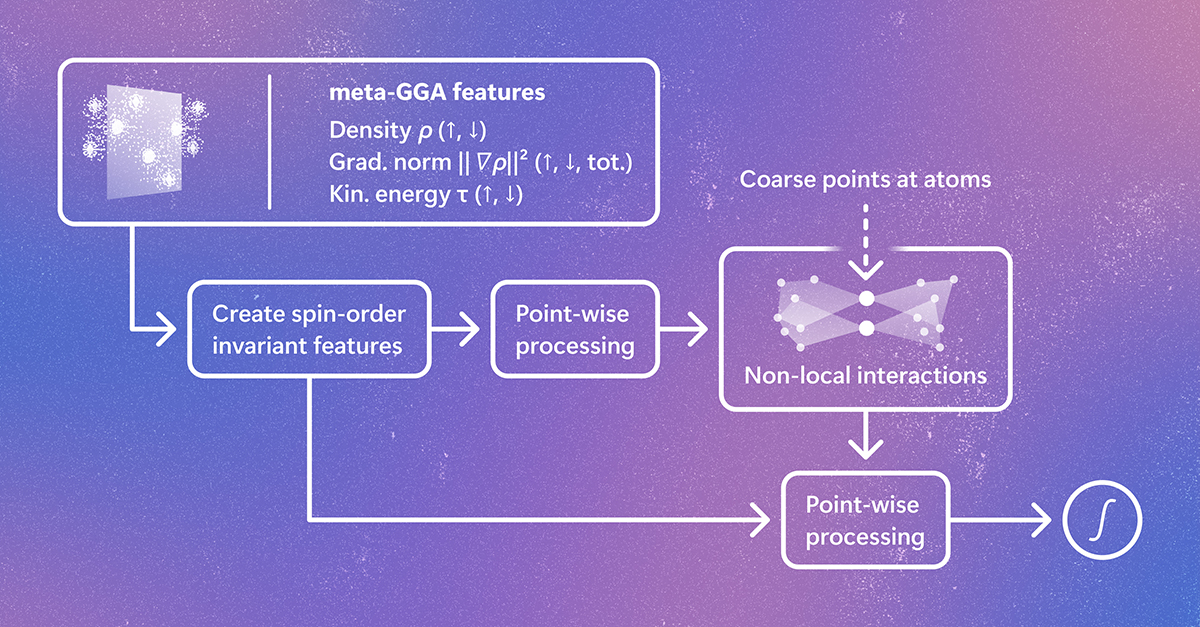
Broadening access to Skala creates a faster path to predictive DFT 

Skala 1.1, the updated deep-learning exchange-correlation functional from Microsoft Research, provides greater accuracy, expanded accessibility across the computational chemistry ecosystem, and a living benchmark to track computational performance. The post Broadening access to Skala creates a faster path to predictive DFT  appeared first on Microsoft Research.

We use cookies to run the site and, with your consent, for analytics and to show ads. See our Cookie Policy.