Skip to content

Chance, Persistent Advantage, and the Generative-AI Era in Open-Source Package Careers

Unknown authors
Sep 2026 · 0 citations · 30 references
Computer Science

TL;DR

It is found that the timing of a career's biggest hit is close to a lottery over their works, with a small, replicable lean toward early career that grows as careers get longer, and on what to expect from generative AI for the careers built on them.

Abstract

Studies of careers in science, film, music, and books report a common pattern. When a person's most successful work arrives is close to a random draw over the works they produce. How large their successes tend to be, in contrast, follows a stable, person-specific factor. We test whether this pattern holds for open-source software careers and whether it changed when generative AI coding tools arrived. From the complete public record of GitHub push events (2015-2025), we reconstruct 102.2M career works by 6.15M contributors, and for the 908k contributors whose repositories publish packages, we measure each work's impact by how many downstream packages come to depend on it. First, we find that the timing of a career's biggest hit is close to a lottery over their works, as in science and the arts, with a small, replicable lean toward early career that grows as careers get longer. Second, some coders reliably produce higher-impact work than others, but this lasting personal factor accounts for only part of why impact persists (about a fifth in our primary specification); the rest behaves like momentum, success feeding on itself for a period of time. Third, within the same contributors, this structure did not change after ChatGPT's release. The stable factor's weight grew by about as much as it grew for an earlier cohort that simply aged, and subtracting the effect of aging from the effect of generative AI puts the shift at +0.03 (95% CI [-0.22, +0.23]), indistinguishable from zero. The success pattern documented in science and the arts therefore describes open-source careers too, and it shows no detectable break across the arrival of generative AI. These results have implications for how track records on open platforms should be read and on what to expect from generative AI for the careers built on them.


View source

Similar papers

#artificial intelligence Preprint Oct 2026

The Winner's Curse in LLM Self-Improvement Loops: Selection Noise, Lock-in, and Acceptance Rules

Self-improving LLM systems propose changes to themselves and keep those that score better on a small evaluation set. We treat this keep-if-better step as selection under measurement noise, model the correlated errors of the candidates in a single decision, and study empirically what happens when the evaluation set is r...

Li-Tao Hu, Yu-Tong Tang · 0 citations
Preprint Sep 2026

AI-Research Agents in the Wild. From GitHub and arXiv to Regularities and Gaps

AI-research agents, or autoresearch systems, combine language models with tools, search, evaluation, and iterative modification of research artifacts. Their public software ecology is hard to compare because repositories, papers, benchmarks, libraries, and companion artifacts are often counted as one population. We con...

Aleksey Komissarov, A. Ustyuzhanin · 0 citations
#artificial intelligence Preprint Aug 2026

Operator Packages, Proposer Strength, and Construction-Family Plateaus in Office-Scale Verified Search

Verified search, in which a language model proposes programs, a hard evaluator scores them, and selection keeps the best, has recently moved mathematical records; controlled ablations of the proposer-side components remain rare. We instrument a minimal FunSearch-style loop at office scale (a 30B local model on a laptop...

Roberto I. Ono · 0 citations
#artificial intelligence Preprint Aug 2026

Test-Time Scaling in the Wild: Why Exploitation, Not Exploration, Is the Bottleneck

The first compute-normalised comparison of five TTS families across five open-ended generation benchmarks spanning medicine, law, finance, general chat, and creative writing is conducted - grounded in a unified framework that decomposes the effectiveness of each method's token budget into exploration and exploitation.

Davide Romano, Kanak Raj, Jerrod Parker et al. · 0 citations
#small language model Review Open access Aug 2026

Generative AI bias against scientific novelty: a cautionary tale from a small-sample evaluation of research proposals

The results raise concerns that LLM-assisted evaluation may under-select proposals that human reviewers identify as highly novel, potentially reflecting the statistical logic of next-token prediction trained on past scientific outputs.

Diogo Machado · 0 citations
#artificial intelligence Preprint Sep 2026

It's the Problem, Not the Path: Budget and Difficulty Confounds in LLM Reasoning Trajectories

Two restart-controlled truncation probes separate when a solution fits the continuation budget from when a prefix carries value that fresh computation cannot buy, and a pre-registered, difficulty-controlled test finds no detectable outcome information in early-window internal signals beyond a problem-difficulty baselin...

Yigit Utku Bulut · 1 citation

Related blog posts

GPT-Lab Nov 3, 2026

Sovereignty Is the Option to Leave

Is your company’s AI sovereign? A practical guide for CIOs on AI vendor lock-in, EU Data Act switching, cloud sovereignty, and testing your exit plan before you need it. The post Sovereignty Is the Option to Leave appeared first on GPT-Lab.

Microsoft Research Blog Oct 30, 2026

From synthetic enterprise data evaluations to real Microsoft Copilot AI confidence

Evaluating Microsoft Copilot at enterprise scale requires test data that captures the full complexity of real organizations, yet real enterprise data contains sensitive information that cannot be used for evaluation under any circumstances. The post From synthetic enterprise data evaluations to real Microsoft Copilot AI confidence appeared first on Microsoft Research.

Microsoft Research Blog Oct 29, 2026

Microsoft Research Focus – Edition #97

Host Sowbhagya Suresh shares some of the latest news and cutting-edge research from across Microsoft—from understanding the challenges facing coding agents to uncovering how people use AI at work and improving extended-range weather forecasting. The post Microsoft Research Focus – Edition #97 appeared first on Microsoft Research.

Microsoft Research Blog Oct 12, 2026

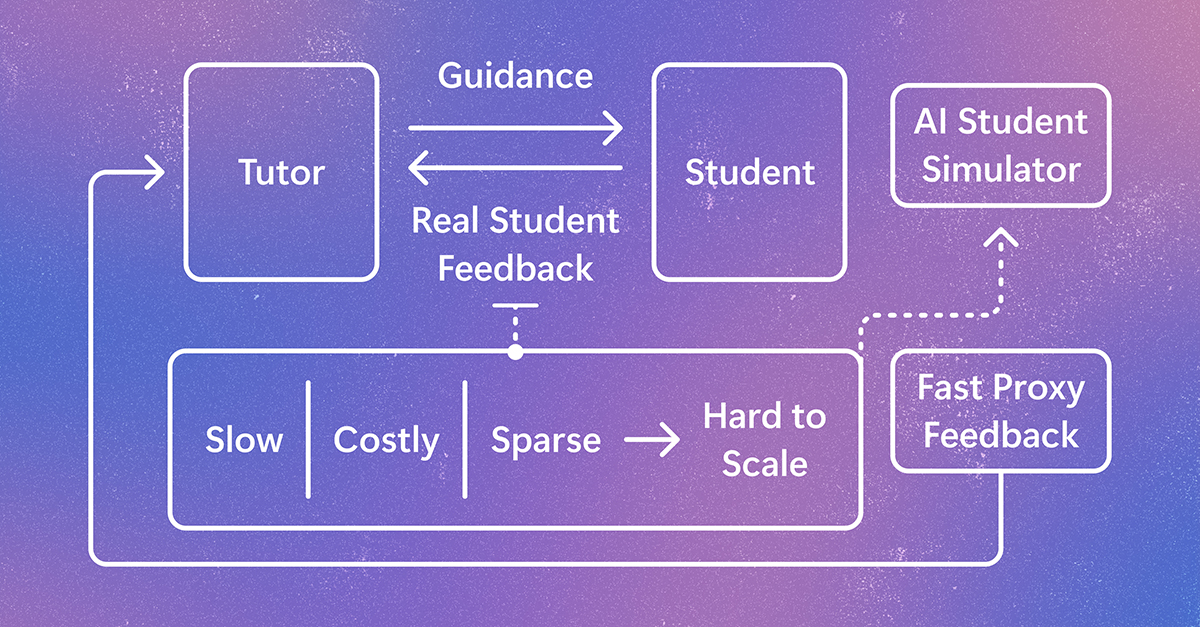
Simulating student learning for better AI tutoring

StudentSim is a research system for evaluating and improving AI tutoring tools before they are tested with learners. It models how individuals may engage with tutors, giving feedback to improve tutor performance across subjects like chess, writing, and mathematics. The post Simulating student learning for better AI tutoring appeared first on Microsoft Research.

We use cookies to run the site and, with your consent, for analytics and to show ads. See our Cookie Policy.