Sep 2026· International Journal of Automotive Science and Technology· 0 citations· 26 references
Abstract
This study introduces a novel and highly applicable torque tracking algorithm as a controller to develop a realistic steering feel in a front steer-by-wire (SbW) architecture. The objective of this study was to propose a self-tuning PI-based controller using a gain scheduling method to mimic the torque generated by a rack and pinion system through the torque produced by a DC motor. To provide the foundation for the torque tracking control strategy, a full car model with 14 degrees of freedom was developed to assess the efficacy of the proposed control scheme in generating the steering feel. Based on the Newton’s second law, the SbW model was developed and verified using a step input signal in two extreme conditions. The performance of the proposed controller and its robustness were validated through two vehicle dynamic tests based on ISO standard, the Double Lane Change (DLC) and Slalom (SL) tests under varying vehicle speeds and extreme maneuvers. This robustness assessment demonstrates that the gain-scheduling proportional-integral (GS-PI) controller performs significantly well in tracking the desired steering wheel torque, compared to the results from the CarSim software, which served as a benchmark. Additionally, the results indicated that the proposed controller was capable of replicating the steering feel of a conventional steering system with a mean absolute error (MAE) of less than 1.90. This study prepares a platform for practical applications in developing realistic steering feel in future SbW systems. Furthermore, the control proposed in this study provides a practical control system approach suitable for hardware implementation.

To address the problems of poor steering smoothness and handling stability for four-wheel independent steering (4WIS) vehicles, this paper presents an adaptive nonlinear model predictive control (ANMPC) strategy based on variable steering ratio (VSR). First, a two-degree-of-freedom (2-DOF) vehicle and reference model a...
Yu-Xing Bai, Wei-Xin Zhang, Wei-Yi Kong et al.· Actuators· 0 citations
A control strategy combining the novel variable steering ratio (NVSR) and yaw moment control is proposed to address the stability issues in steer-by-wire (SBW) vehicles. The NVSR is designed based on variable yaw rate gains and incorporates a convolution smoothing algorithm. This ensures that the system meets the respo...
Suo-Jun Hou, Qi-Chang Xie, Zhu-An Zheng et al.· World Electric Vehicle Journ...· 0 citations
In distributed vehicles with corner modules, independent wheel steering improves chassis motion freedom but weakens mechanical constraints and increases reliance on the X-by-wire feedback chain. This makes wheel-end steering more sensitive to kingpin disturbances and time delays. Existing studies on disturbance rejec...
Zi-Hong Li, Hang-Yu Lu, Ning Zhang et al.· Journal of Vibration and Con...· 0 citations
Independently rotating wheelsets (IRWs) are increasingly adopted in low-floor urban rail vehicles because they enable compact bogie layouts and improved curving performance. However, their limited natural self-centering capability can lead to lateral offset from the track centerline, increased flange contact, and degra...
To address the insufficient control accuracy of traditional vehicle stability control methods under nonlinear conditions, this paper proposes a combined stability control strategy for distributed-drive electric vehicles based on the phase plane method. A two-degree-of-freedom vehicle dynamics model incorporating the Ma...
Xiangyu Zheng, Tong Han· World Electric Vehicle Journ...· 0 citations
This paper presents a universal, model-independent Adaptive PI (A-PI) control framework using multiple Recursive Least Squares (RLS) algorithms, primarily focused on the longitudinal velocity control of autonomous vehicles. To overcome the limitations of fixed-gain controllers, the proposed system self-tunes control pa...
Evaluating Microsoft Copilot at enterprise scale requires test data that captures the full complexity of real organizations, yet real enterprise data contains sensitive information that cannot be used for evaluation under any circumstances. The post From synthetic enterprise data evaluations to real Microsoft Copilot AI confidence appeared first on Microsoft Research.
Microsoft Research Blog· microsoft.comOct 29, 2026
Host Sowbhagya Suresh shares some of the latest news and cutting-edge research from across Microsoft—from understanding the challenges facing coding agents to uncovering how people use AI at work and improving extended-range weather forecasting. The post Microsoft Research Focus – Edition #97 appeared first on Microsoft Research.
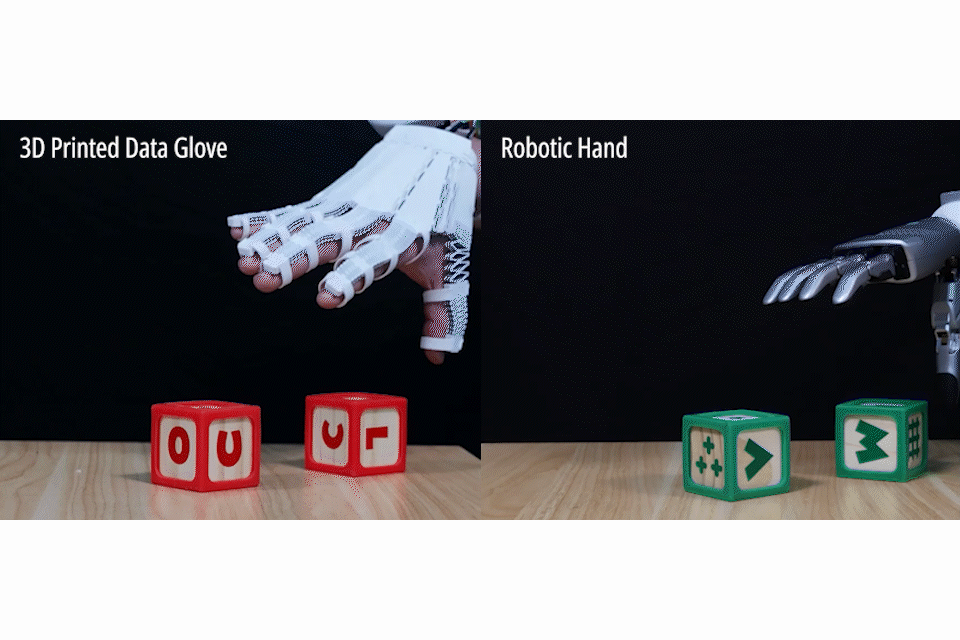
“X-Hinges” helps design and 3D print items like lamps and gloves with an interactive twist: automatically embedded sensors that perceive and adaptively respond to human contact.
We use cookies to run the site and, with your consent, for analytics and to show ads.
See our Cookie Policy.