Sep 2026· Data Science for Transportation· Vol 8· 1 citation· 37 references
TL;DR
Results confirm that explicitly coupling traffic prediction with online trajectory replanning enables more adaptive and efficient navigation under time-varying traffic conditions.
Abstract
Traditional trajectory planning systems in navigation applications generate routes based on the current traffic conditions at the time of departure. However, urban traffic dynamics are highly time varying, and routes that are initially optimal may become congested during the trip, leading to increased travel times and inefficient routing decisions. This paper proposes a dynamic trajectory planning framework that integrates short-term traffic prediction into the routing process using deep learning-based time series models. Recurrent neural networks and long short-term memory networks are employed to forecast future traffic densities, which are then embedded into a rolling-horizon dynamic search to continuously update edge costs and re-optimize the route in real time. Simulation results on a temporal graph-based urban road network demonstrate that the proposed approach significantly improves routing performance compared to static planning. In particular, the prediction-enhanced dynamic routing strategy achieves an average reduction in travel time of approximately 12–18% and improves traffic density prediction accuracy by up to 25% in terms of mean-squared error compared to baseline static and non-predictive methods. These results confirm that explicitly coupling traffic prediction with online trajectory replanning enables more adaptive and efficient navigation under time-varying traffic conditions.
This study presents a deep learning–enabled framework for real-time dynamic route optimization in logistics systems, addressing fundamental limitations of traditional static routing and heuristic-based decision approaches.
A. Rakha, Mohammed S. A. Elsersy· Informatica· 0 citations
The study describes the urban vehicle routing problem as a Markov decision process, integrating fleet operations, dynamic traffic conditions, and constantly arriving customer orders from heterogeneous realtime data streams, and proposes a graph-based neural network architecture for capturing complex spatio-temporal dep...
Jinyan Wang, Hong-Juan Cong· International Conference on...· 0 citations
The proposed Forecast-SAC framework demonstrates that unified predictive-control learning enables safe and efficient UAV-BS navigation under dynamic uncertainty, achieving a strong safety–throughput balance that reactive methods cannot match in high-risk environments.
Tariq, Zhuo-Xiu Wei, K. Shaukat et al.· Scientific Reports· 0 citations
In modern urban environments, traffic congestion poses a significant challenge for intelligent transportation systems, which demand accurate and scalable traffic flow forecasting solutions. Conventional time series approaches fail to capture the spatial dependencies inherent in road networks, which motivates the use of...
Dikshya Aryal, Hemant Joshi· Journal of Hillside College...· 0 citations
A hybrid framework integrating an optimized prediction model with an enhanced ant colony optimization algorithm and an Improved Ant Colony Algorithm incorporating traffic-state feedback is proposed to mitigate slow convergence and local-optimum entrapment in conventional ACO.
Wei Bai, Yan Liu, Cheng-Bin Zhao et al.· Systems· 0 citations
Assistant Professor Pat Pataranutaporn describes a new interface that lets everyday users glimpse inside an AI's neural network before their chatbot ever says a word.
Microsoft Research Blog· microsoft.comJul 13, 2026
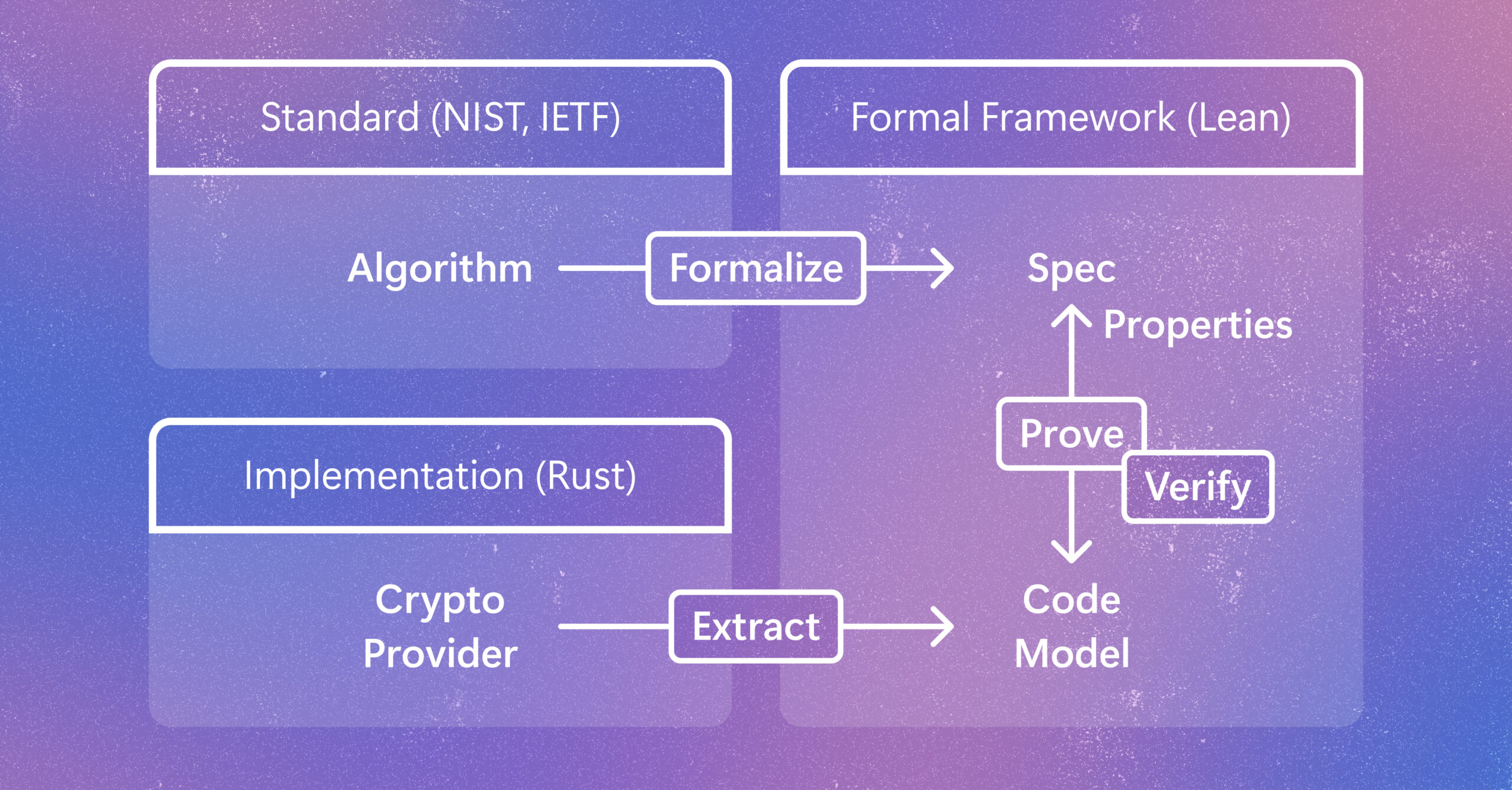
Cryptographic code supports vital protections in modern computing systems. Learn how a new method helps verify code as developers write it while preserving speed and adaptability as it gets implemented and evolves. The post Verifying Rust cryptography in SymCrypt, from standards to code appeared first on Microsoft Research.
MIT News · Artificial Intelligence· news.mit.eduJul 6, 2026
PhD student Rachel Sava, winner of the Envisioning the Future of Computing Prize, explores transformative improvements and dystopian risks of neural technology.