Skip to content
#federated learning Open access

FEDERATED LEARNING-BASED PRIVACY PRESERVATION FOR INTELLIGENT DATA ANALYTICS

Sep 2026 · International Journal of Engineering Research and Science & Technology · 0 citations

TL;DR

The authors discussed the potential of federated learning in intelligent data analytics with privacy, and reported the potential advantages of federated learning in the context of secure and intelligent data analysis, while preserving data privacy.

Abstract

Federated Learning (FL) is a new machine learning paradigm that allows different users and organizations to jointly learn an intelligent model without sharing local private data. Federated learning retains data locally on devices and sends only model updates to a central server to prevent the owners from losing their data. It can dramatically curtail confidential risks to sensitive information across a variety of sectors, including healthcare, finance, smart cities, and Internet of Things (IoT) use. In this paper, the authors discuss the potential of federated learning in intelligent data analytics with privacy. Briefly introduces the key concepts, current research, privacy concerns, communications issues, and security solutions for a federated environment. The results reported the potential advantages of federated learning in the context of secure and intelligent data analysis, while preserving data privacy. Keywords: Federated Learning, Data Privacy, Intelligent Data Analytics, Machine Learning, Data Security, Privacy Preservation


Read PDF

Similar papers

Conference Open access Aug 2026

Federated Edge Artificial Intelligence Framework for Privacy-Preserving Internet of Medical Things

This paper presents the Federated Edge Artificial Intelligence (FedEdgeMed-AI) framework for Privacy-Preserving Internet of Medical Things, which incorporates edge intelligence, Federated Model Aggregation, Adaptive Privacy-Preserving Optimization, and Resource Management for distributed healthcare applications.

H. R. Gantla, Tejaswini Mallavarapu, Harika B et al. · 0 citations
Open access Sep 2026

A Privacy-Preserving Intrusion Detection System for IoT Networks Using Federated Learning

The experimental results demonstrate that the proposed framework not only maintains competitive detection performance and data privacy but also reduces computational and memory requirements, supporting its suitability as an effective and lightweight IDS for resource-constrained IoT environments.

Ali Abd Alraheem, Ali Obeid, Bassam Noori Shaker · 0 citations
Conference

Multi-layer Privacy Protection for Federated Learning and Encrypted Healthcare Analytics

The Internet of Medical Things (IoMT) enables continuous collection and transmission of healthcare data through interconnected networks of patient wearables and other devices. This capability transforms traditional healthcare systems into data-rich environments. However, this data-rich environment also brings privacy c...

Timothy Kuo, Hui Yang · 0 citations
Sep 2026

FedDeepRiskNet++: a privacy-enhanced federated learning framework for secure and scalable medical IoT systems

The results demonstrate that strong privacy protection, communication efficiency, and high diagnostic reliability can coexist within large-scale federated healthcare systems, making FedDeepRiskNet + + a practical solution for next-generation medical IoT systems.

Ibrahim Aqeel, Emad S. Hassan, Noha Mostafa et al. · 1 citation

On the Limits of Privacy in Federated Learning: Personalization and Adversarial Analysis

This thesis demonstrates that federated learning should not be considered inherently private merely because data remain decentralized, and introduces a personalized privacy-preserving federated learning framework that allows individual clients to select their preferred privacy mechanism and protection level.

Author · 0 citations

Related blog posts

MIT News · Artificial Intelligence Nov 17, 2026

Learning the language of machine learning

By studying the computational foundations of language learning, Associate Professor Jacob Andreas builds intelligent systems that can communicate effectively with humans.

Microsoft Research Blog Nov 16, 2026

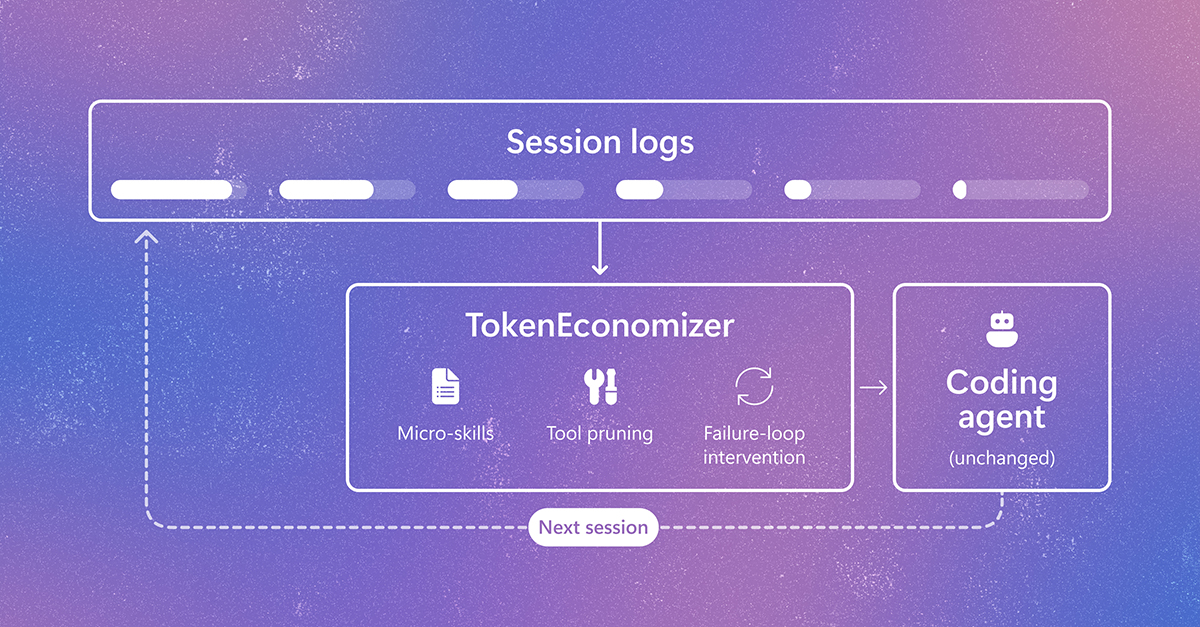
TokenEconomizer: Learning from Experience to Make AI Coding Agents More Efficient

AI coding agents are increasingly help developers fix bugs and build features largely on their own, but every interaction with their models consumes tokens. In each session, an agent sends instructions, tool descriptions, and session history to its model. Most efforts to reduce this cost focus on individual tasks. Yet developers return to the same […] The post TokenEconomizer: Learning from Experience to Make AI Coding Agents More Efficient appeared first on Microsoft Research.

We use cookies to run the site and, with your consent, for analytics and to show ads. See our Cookie Policy.