Accelerating discovery with the AI for Math Initiative
The initiative brings together some of the world's most prestigious research institutions to pioneer the use of AI in mathematical research.
More from the blog
MIT Quantum Initiative launches postdoctoral fellowship program
The Institute welcomes its first cohort of QMIT Fellows this fall to advance interdisciplinary quantum research.
GigaPath-Flash and GigaTIME-Flash: Toward population-scale discovery with efficient pathology foundation models
What if pathology foundation models could do more with less? GigaPath-Flash and GigaTIME-Flash cut computational demands while maintaining strong performance, opening the door to larger studies and broader exploration. The post GigaPath-Flash and GigaTIME-Flash: Toward population-scale discovery with efficient pathology foundation models appeared first on Microsoft Research.
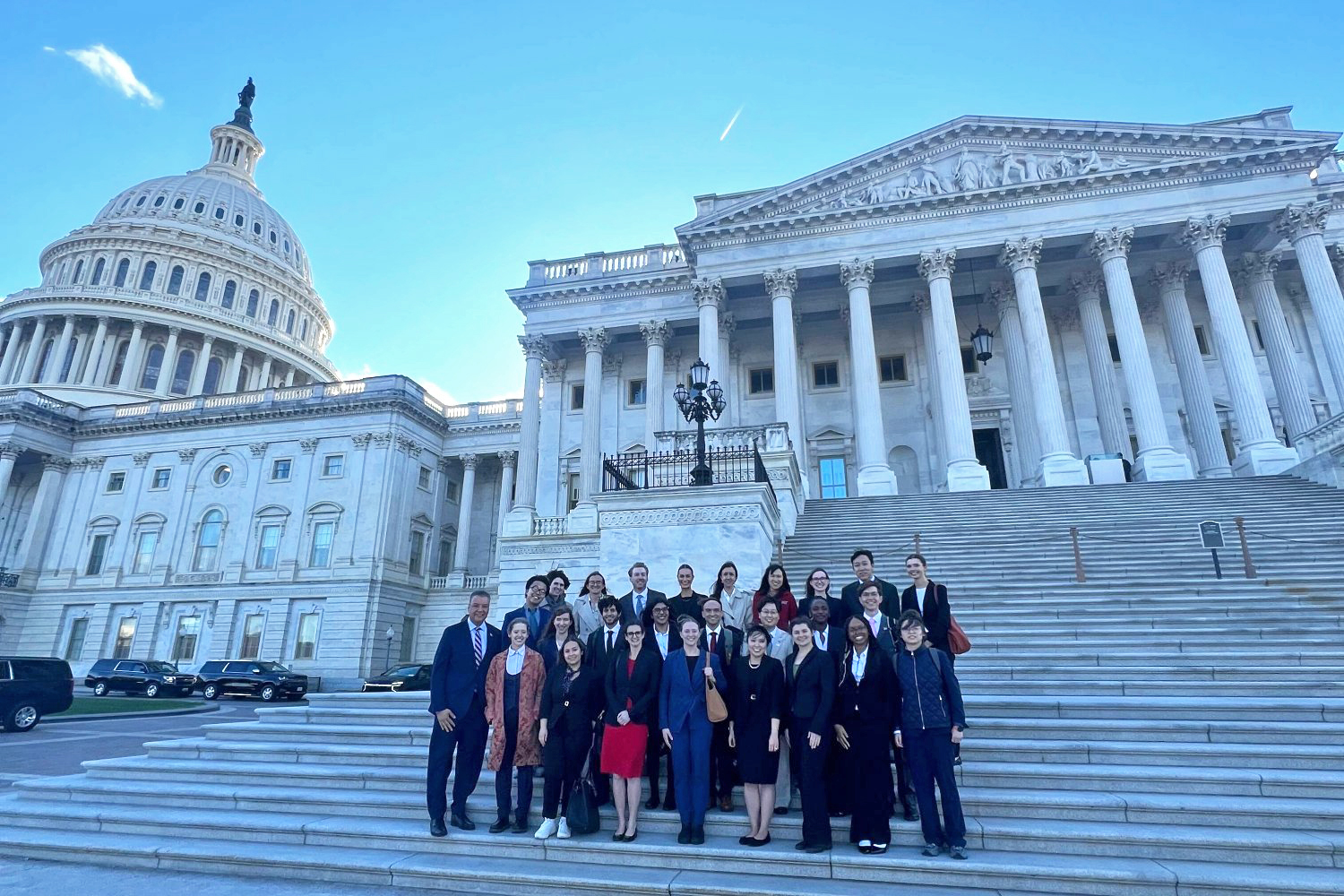
Connecting research to policy on Capitol Hill
MIT students and postdocs discussed science funding and research with policymakers in Washington during the MIT Science Policy Initiative’s annual Congressional Visit Days.

Accelerating the frontiers of scientific discovery: Google’s $40M commitment to the Genesis Mission
Google commits $40M in AI tokens and credits for the Genesis Mission
Related papers
AI and Bullshit
It is argued that both AI and bullshitters are untrustworthy informants, and for similar reasons, it is natural to describe AI’s informational outputs as bullshit, as it signals their distinctive kind of epistemic deficiencies, which they share with bullshit.
An explainable generative AI framework for detecting low-rate API-based DDoS attacks in cloud environments
Adaptive Repayment Optimisation for SME Lending: A Stochastic Programming Framework with Generative AI Explanation
The Adaptive Repayment Optimisation Engine is introduced, a novel framework that applies constrained stochastic optimisation to the design of loan repayment schedules for small and medium-sized enterprises (SMEs) and contributes to the operations research literature by bridging stochastic programming, explainable AI, and financial regulation in a novel application domain.
Artificial Intelligence for Real-Time Cyber Threat Classification and Emerging Threat Detection: A Structured Review of Methods, Datasets, Challenges, and Research Directions
The reviewed literature indicates that AI-based methodologies often demonstrate superior detection capabilities for intricate and previously unseen attack patterns compared to traditional methods; however, direct performance comparisons are complicated due to discrepancies in datasets, experimental designs, and evaluation protocols.