AlphaEarth Foundations helps map our planet in unprecedented detail
New AI model integrates petabytes of Earth observation data to generate a unified data representation that revolutionizes global mapping and monitoring
More from the blog
Mapping global methane emissions from space with deep learning
Climate & Sustainability

TimesFM-3: A zero-shot foundation model for multivariate forecasting
Data Management
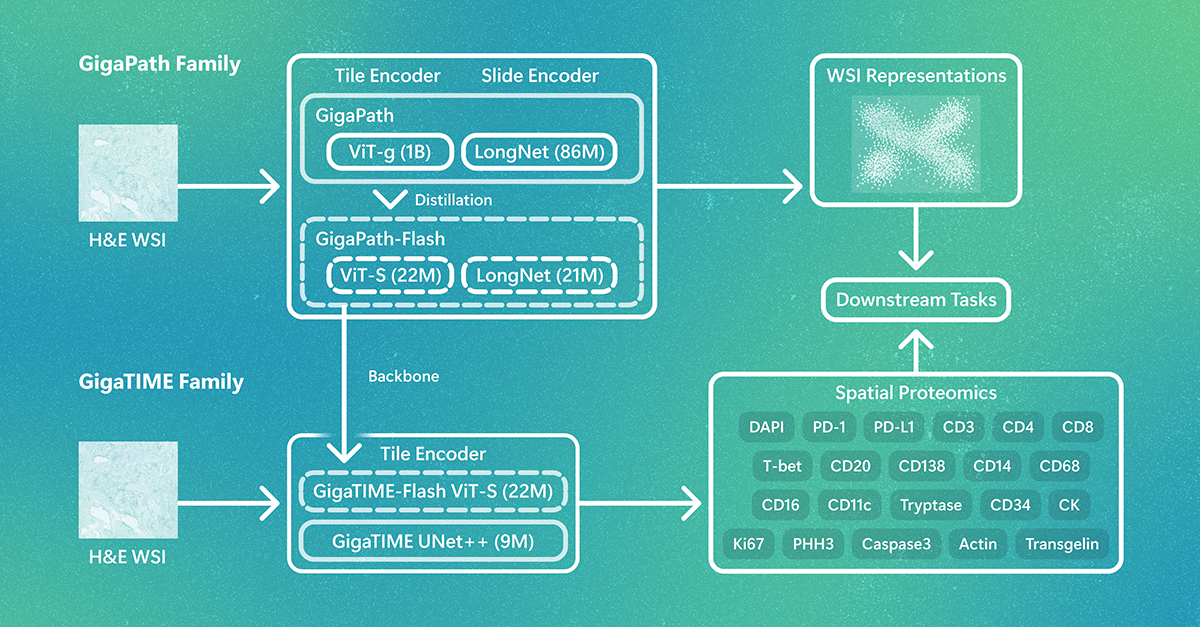
GigaPath-Flash and GigaTIME-Flash: Toward population-scale discovery with efficient pathology foundation models
What if pathology foundation models could do more with less? GigaPath-Flash and GigaTIME-Flash cut computational demands while maintaining strong performance, opening the door to larger studies and broader exploration. The post GigaPath-Flash and GigaTIME-Flash: Toward population-scale discovery with efficient pathology foundation models appeared first on Microsoft Research.

Planetary prediction engine: Automating global models via Earth AI
Earth AI
Related papers
AI-powered Code Review with LLMs: Early Results
In this paper, we present a novel approach to improving software quality and efficiency through a Large Language Model (LLM)-based model designed to review code and identify potential issues. Our proposed LLM-based AI agent model is trained on large code repositories. This training includes code reviews, bug reports, and documentation of best practices. It aims to detect code smells, identify potential bugs, provide suggestions for improvement, and optimize the code. Unlike traditional static code analysis tools, our LLM-based AI agent has the ability to predict future potential risks in the code. This supports a dual goal of improving code quality and enhancing developer education by encouraging a deeper understanding of best practices and efficient coding techniques. Furthermore, we explore the model's effectiveness in suggesting improvements that significantly reduce post-release bugs and enhance code review processes, as evidenced by an analysis of developer sentiment toward LLM feedback. For future work, we aim to assess the accuracy and efficiency of LLM-generated documentation updates in comparison to manual methods. This will involve an empirical study focusing on manually conducted code reviews to identify code smells and bugs, alongside an evaluation of best practice documentation, augmented by insights from developer discussions and code reviews. Our goal is to not only refine the accuracy of our LLM-based tool but also to underscore its potential in streamlining the software development lifecycle through proactive code improvement and education.
System for systematic literature review using multiple AI agents: Concept and an empirical evaluation
Systematic literature review (SLR) is foundational to evidence-based research, enabling scholars to identify, classify, and synthesize existing studies to address specific research questions. Conducting an SLR is, however, largely a manual process. In recent years, researchers have made significant progress in automating portions of the SLR pipeline to reduce the effort and time required for high-quality reviews; nevertheless, there remains a lack of AI-agent-based systems that automate the entire SLR workflow. To this end, we introduce a novel multi-AI-agent system designed to fully automate SLRs. Leveraging large language models (LLMs), our system streamlines the review process to enhance efficiency and accuracy. Through a user-friendly interface, researchers specify a topic; the system then generates a search string to retrieve relevant academic papers. Next, an inclusion/exclusion filtering step is applied to titles relevant to the research area. The system subsequently summarizes paper abstracts and retains only those directly related to the field of study. In the final phase, it conducts a thorough analysis of the selected papers with respect to predefined research questions. This paper presents the system, describes its operational framework, and demonstrates how it substantially reduces the time and effort traditionally required for SLRs while maintaining comprehensiveness and precision. The code for this project is available at: https://github.com/GPT-Laboratory/SLR-automation .
Can Large Language Models Serve as Data Analysts? A Multi-Agent Assisted Approach for Qualitative Data Analysis
Context: Manual qualitative data analysis is time-intensive and can compromise validity and replicability, affecting analysis design, implementation, and reporting. Large Language Models (LLMs) enable human-bot collaboration in Software Engineering (SE), but their potential for qualitative data analysis in SE remains largely unexplored. Objective: The objective of this study is to design and develop an LLM-based multi-agent system that synergizes human decision support with AI to automate various qualitative data analysis approaches. Methods: We used LLM-based multi-agents systems to assist the qualitative data analysis process, deploying 27 agents, each responsible for a specific task, such as text summarization, initial code generation, and extracting themes and patterns. Results: The main findings are: (1) the LLM-based multi-agent system accelerates the qualitative data analysis process, (2) the system effectively automates tasks such as text summarization, initial code generation, and theme extraction, and (3) the publicly accessible code facilitates validation and further evaluation. Conclusion: The proposed LLM-based multi-agent system automates qualitative data analysis process, creating opportunities for researchers and practitioners. Future improvements focus on enhancing multilingual performance and integrating continuous expert feedback. The source code of proposed system and system details can be found here: https://github.com/GPT-Laboratory/Qualitative-Analysis-with-an-LLM-Based-Agentts
Token-Mol 1.0: tokenized drug design with large language models
The integration of large language models (LLMs) into drug design is gaining momentum; however, existing approaches often struggle to effectively incorporate three-dimensional molecular structures. Here, we present Token-Mol, a token-only 3D drug design model that encodes both 2D and 3D structural information, along with molecular properties, into discrete tokens. Built on a transformer decoder and trained with causal masking, Token-Mol introduces a Gaussian cross-entropy loss function tailored for regression tasks, enabling superior performance across multiple downstream applications. The model surpasses existing methods, improving molecular conformation generation by over 10% and 20% across two datasets, while outperforming token-only models by 30% in property prediction. In pocket-based molecular generation, it enhances drug-likeness and synthetic accessibility by approximately 11% and 14%, respectively. Notably, Token-Mol operates 35 times faster than expert diffusion models. In real-world validation, it improves success rates and, when combined with reinforcement learning, further optimizes affinity and drug-likeness, advancing AI-driven drug discovery. In this work the authors present Token-Mol, a token-only 3D drug design model, which deploys the Gaussian cross-entropy (GCE) loss function for regression tasks. It exhibits superior performance in molecular conformation generation, property prediction, and pocket-based generation, thus opening up new avenues for drug design.