LLM-based multi-agent systems can support strategic AI planning by enabling iterative refinement with human experts by supporting structured and collaborative Requirements Engineering processes for AI adoption planning.
Malik Abdul Sami, Zheying Zhang, Muhammad Waseem et al.· e-Informatica Software Engin...· 6 citations
Latent-OPD is proposed, which augments OPD with trajectory-level latent distillation and introduces a progressive teacher-lookahead strategy, which aligns middle-to-late student layers with increasingly deeper teacher layers, establishing Latent-OPD as a highly effective approach to frame-efficient video reasoning.
Aoni Shen, Yongheng Zhang, Ying-Hui Li et al.· 2 citations
Q-CueGraph maps a question and an image representation to budgeted, coordinate-level observations for a frozen reader, and reaches 92% of full-image ANLS on InfographicVQA from about half the image area.
This work introduces REFINE (Refactoring with Evidence-aware Flow for Integrated ageNtic Execution), a tool-agnostic, evidence-aware multi-agent approach for generating Java file-level refactoring candidates that achieves a higher median code-smell reduction with smaller edits and fewer public-method removals.
Muhammad Waseem, Aakash Ahmad, Pekka Abrahamsson· 0 citations
Reach audiences
Advertise in front of researchers, engineers, and readers.
This work introduces FakeIDet3-DB, the first comprehensive database of digital manipulations on real, government-issued IDs, and proposes PACE, a Pseudo-Anonymized Contextual patch Extraction algorithm, which leverages Integral Image mapping and distance-driven Non-Maximum Suppression (NMS).
This work shows that camera motion, object trajectories, and depth can be unified into a single 3D point-track representation, from which one model performs joint camera and object control, depth editing, and motion transfer in a single forward pass, enabling interactive 4D-controllable streaming generation for the fir...
Shiqian Li, Chenguo Lin, Zhi-Guang Liu et al.· 0 citations
NaviDC-OCR introduces deformation-aware learning to incorporate geometric perception into VLMs and proposes an adaptive sampling mechanism for complex layout representation, and a content-structure decoupled learning strategy is developed to explicitly model formula grammars and table structures, enabling more effectiv...
Peng Cai, Zhaofan Zou, Shifa Liu et al.· 0 citations
ClusterAttention is the first training-free method that can be successfully applied in the setting of unstructured input and a single forward pass, and is the first training-free method that can be successfully applied in the setting of unstructured input and a single forward pass without offline calibration.
ScaleResfusion is presented, a scalable diffusion framework for real-world image restoration built on pre-trained text-to-image rectified-flow models that achieves state-of-the-art performance with much higher efficiency and a knowledge-distillation pipeline to reduce sampling cost while maintaining restoration quality...
This paper argues that the key lies in designing an appropriate search-state representation that connects the internal knowledge of LLMs with the structural requirements and constraints of visual-token pruning, and proposes AutoPrune, a training-free framework for LLM-driven visual-token pruning policy design.
Zhen Liu, Wenli Huang, Wei Song et al.· 0 citations
This work forms an episodic multi-key representation that enables precise retrieval of fine-grained memories through a simple key-matching mechanism, and introduces a neighbor filtering mechanism to capture broader semantic context without the massive computational overhead of global memory construction.
Yeeun Choi, Youngbeom Yoo, Joon-Young Lee et al.· 0 citations
This work proposes ParallelWorld, a multi-horizon test-time scaling framework for embodied reasoning that empowers agents to simulate and evaluate multi-step future trajectories in parallel before committing to an action.
Min Chen, Shengjun Zhang, Yu-Xin Li et al.· 0 citations
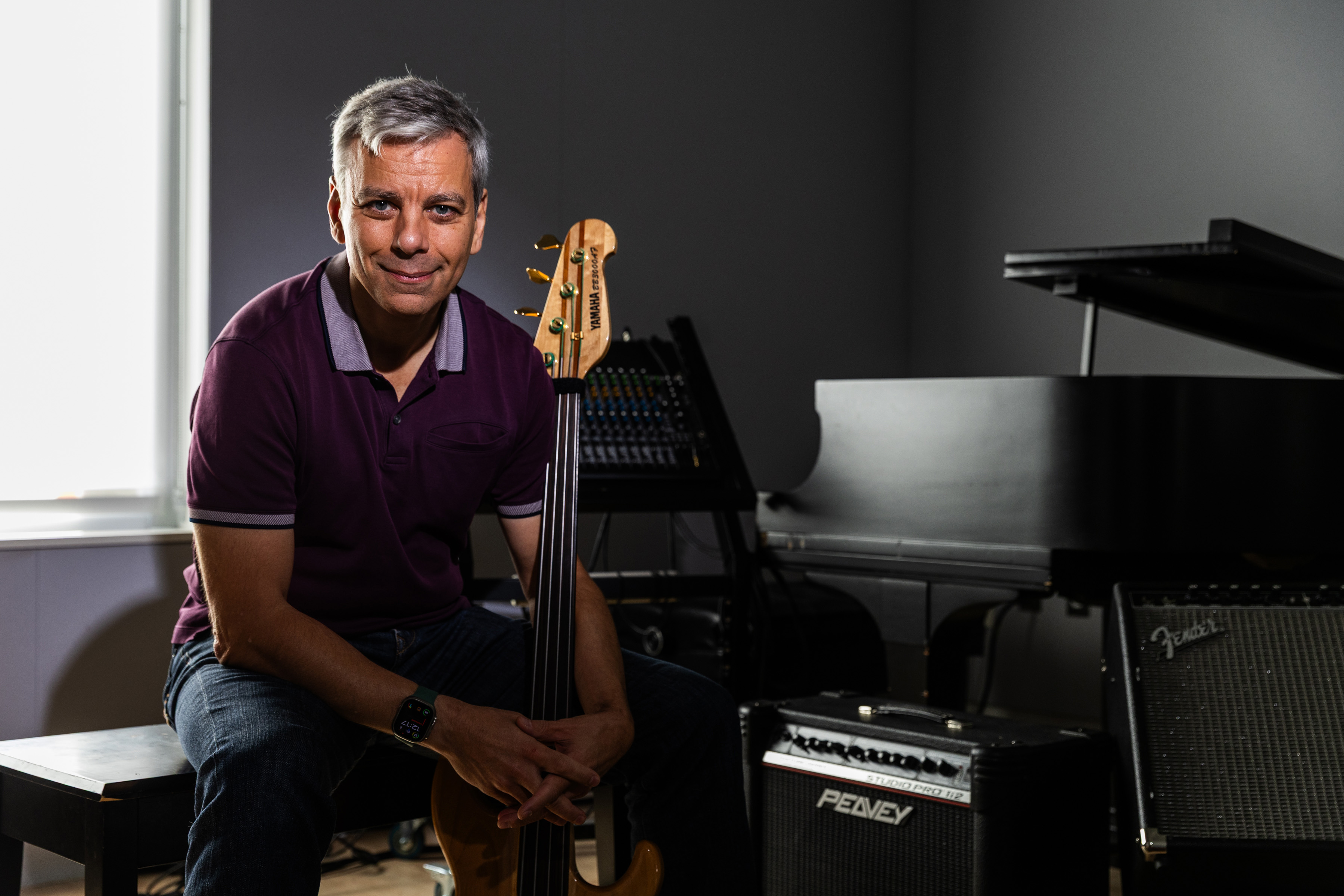
Professor Paris Smaragdis develops computers with superhuman hearing for applications like speech recognition, music understanding, and environmental monitoring.
Exploring how generative AI could make machine vision more accessible to businesses. The post GenEye in a Box: Making Machine Vision Something You Can Just Ask For appeared first on GPT-Lab.
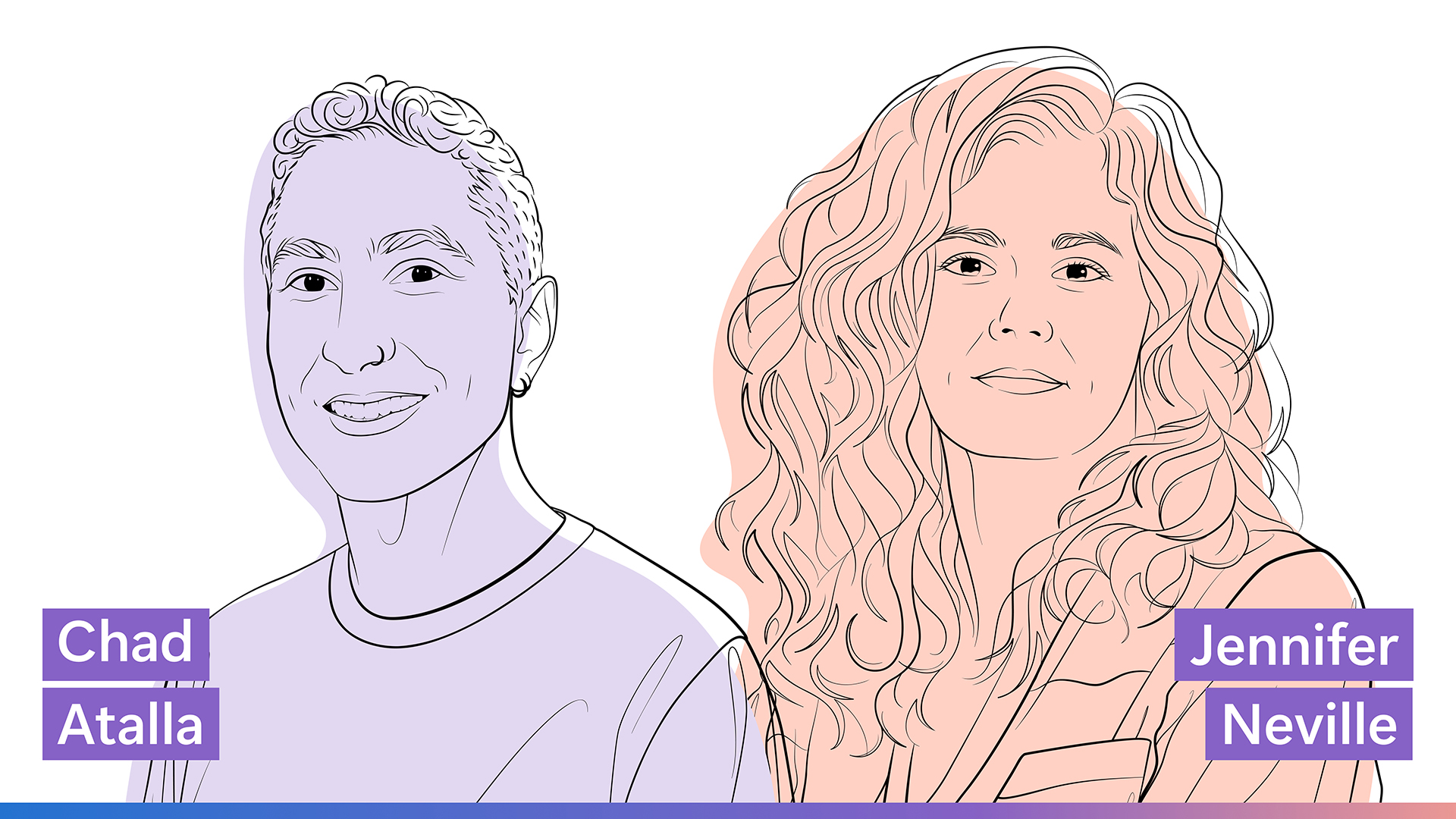
Jennifer Neville did not want to go into computer science—but that’s exactly where she landed. Neville discusses the starts and stops that led to her professional sweet spot and her work identifying “surprising failures” making it hard for AI to handle complexity. The post What AI gets wrong and what failure teaches us appeared first on Microsoft Research.
Computer scientist, entrepreneur, and philanthropist will collaborate with the MIT Schwarzman College of Computing to advance AI and scientific discovery.
We use cookies to run the site and, with your consent, for analytics and to show ads.
See our Cookie Policy.