GlanceWAM is introduced, which decouples imagination from control within a single video DiT: an asynchronous proposer glances ahead on a slow clock to imagine a single lookahead frame seconds into the future in the background, while an action head decodes action chunks at control rate purely in latent space without blo...
Lin-Han Wang, Zi-Jian An, Mingyuan Zhang et al.· 3 citations
The proposed hierarchical long-horizon VLA architecture with an explicit language-memory module improves the success rate and robustness of VLA models on complex long-horizon tasks while providing an interpretable semantic account of the decision process.
Qantara is presented, an end-to-end JEPA whose joint training objective pairs a Brownian-bridge interpolant between consecutive clean latents on the state axis with noise-to-data flow matching on the action axis, and these results move JEPA world models from single-paradigm planners to multi-paradigm controllers.
Ruslan Rakhimov, George Bredis, Yuriy Maksyuta et al.· 2 citations
PACE (Pixel-Adaptive Condense and Extract), a training-free inference framework that accelerates both the vision encoder and the Large Language Model (LLM) via a unified Condense-and-Extract paradigm, is proposed.
Jun-Jie Liu, Shengyuan Ye, Xu Chen· 0 citations
Reach audiences
Advertise in front of researchers, engineers, and readers.
A dual-branch controlled framework is constructed in which both a Vision-based model and an index-based baseline share an identical decoder backbone, training objective, optimizer, and data curriculum, suggesting that transformers are more modality-agnostic than commonly assumed, and that discrete tokenization is not a...
Federated Continual Multimodal Learning (FedCMM), a framework that embeds continual-learning safeguards into the federated optimization loop at three complementary levels, is proposed, confirming that holistic, modality-aware optimization enables robust evolutive adaptation across heterogeneous networked AI deployments...
This work examines whether a robot's action representations preserve the semantic structure captured by pretrained encoders and introduces a plug-and-play method that anchors action representations to a semantic manifold while decomposing representations into a shared semantic channel and a private channel, all discard...
Yuan Xu, Youheng Shi, Chengyang Li et al.· arXiv.org· 0 citations
This work introduces DRIFT (Denoising Redirection via Input perturbation of the Flow-matching Trajectory), a test-time universal adversarial patch placed on the robot's gripper that attacks the denoising velocity field of an off-the-shelf policy.
A simulator-grounded construction framework, instantiated as 3DTongueQA, that shows geometry-grounded supervision supporting both unified language QA and structured prediction and shows geometry-grounded supervision supporting both unified language QA and structured prediction.
The SOPHIAS dataset, a 12-hour multimodal dataset containing recordings of 50 oral presentations delivered by 65 undergraduate and master's students at the Universidad Autonoma de Madrid, enables the exploration of relationships between multimodal behavioral and physiological signals and presentation performance, and p...
SeMoCo, a semantic-first motion codec, is introduced together with a dual-axis motion generator for language-conditioned motion generation and $\Omega$-MotionVerse, a large-scale, multi-source human-motion dataset unified under the SOMA representation is constructed.
Tianlv Huang, He-Tian Guo, Zi-Yi Cai et al.· 1 citation
MemoryCard is a video-memory-based augmentation framework that organizes long videos into self-contained Memory Cards, each corresponding to a distinct topic or event, and consistently improves long-video QA performance under comparable visual-token budgets.
Qing Yang, Pengcheng Huang, Xinze Li et al.· arXiv.org· 0 citations
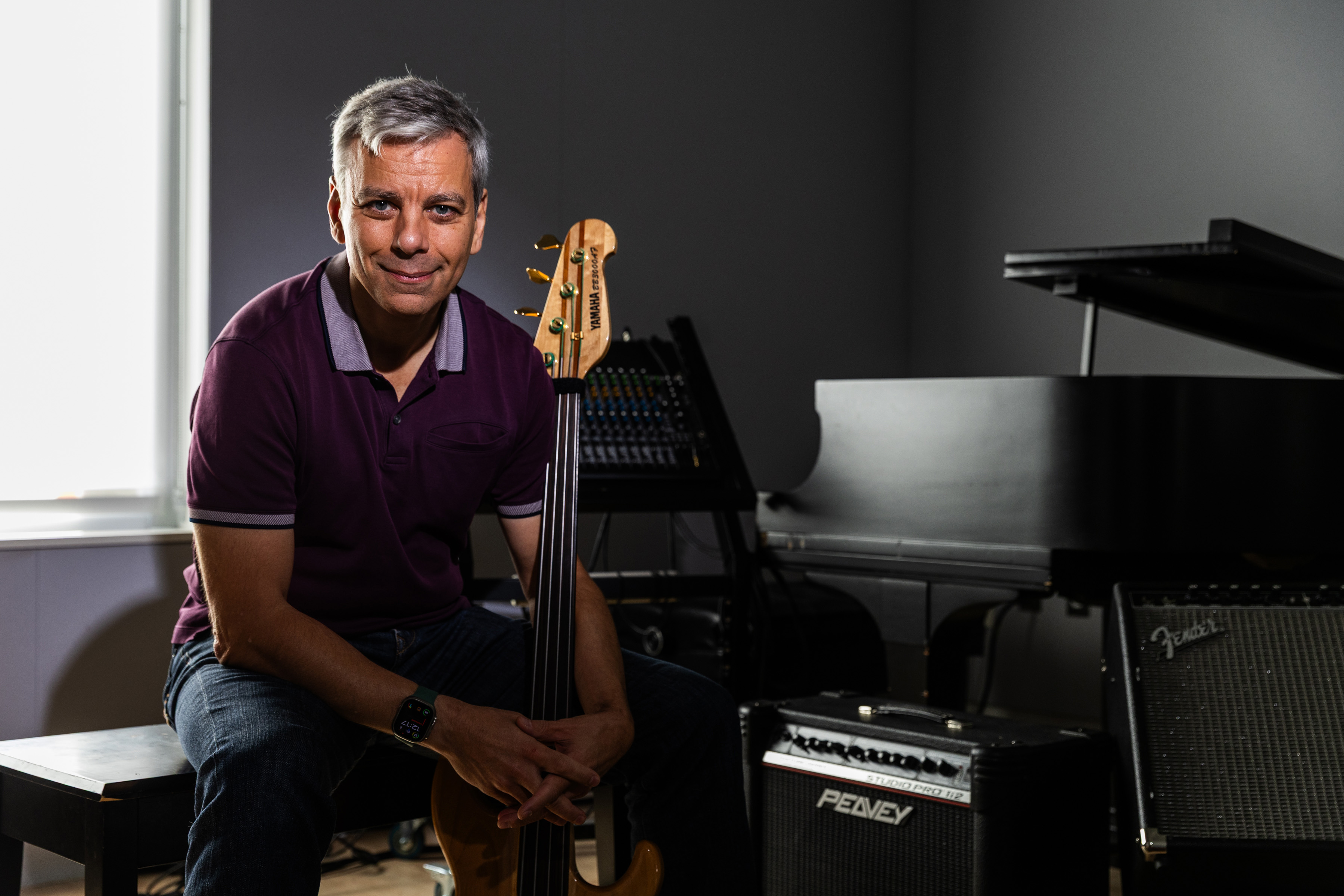
Professor Paris Smaragdis develops computers with superhuman hearing for applications like speech recognition, music understanding, and environmental monitoring.
Exploring how generative AI could make machine vision more accessible to businesses. The post GenEye in a Box: Making Machine Vision Something You Can Just Ask For appeared first on GPT-Lab.
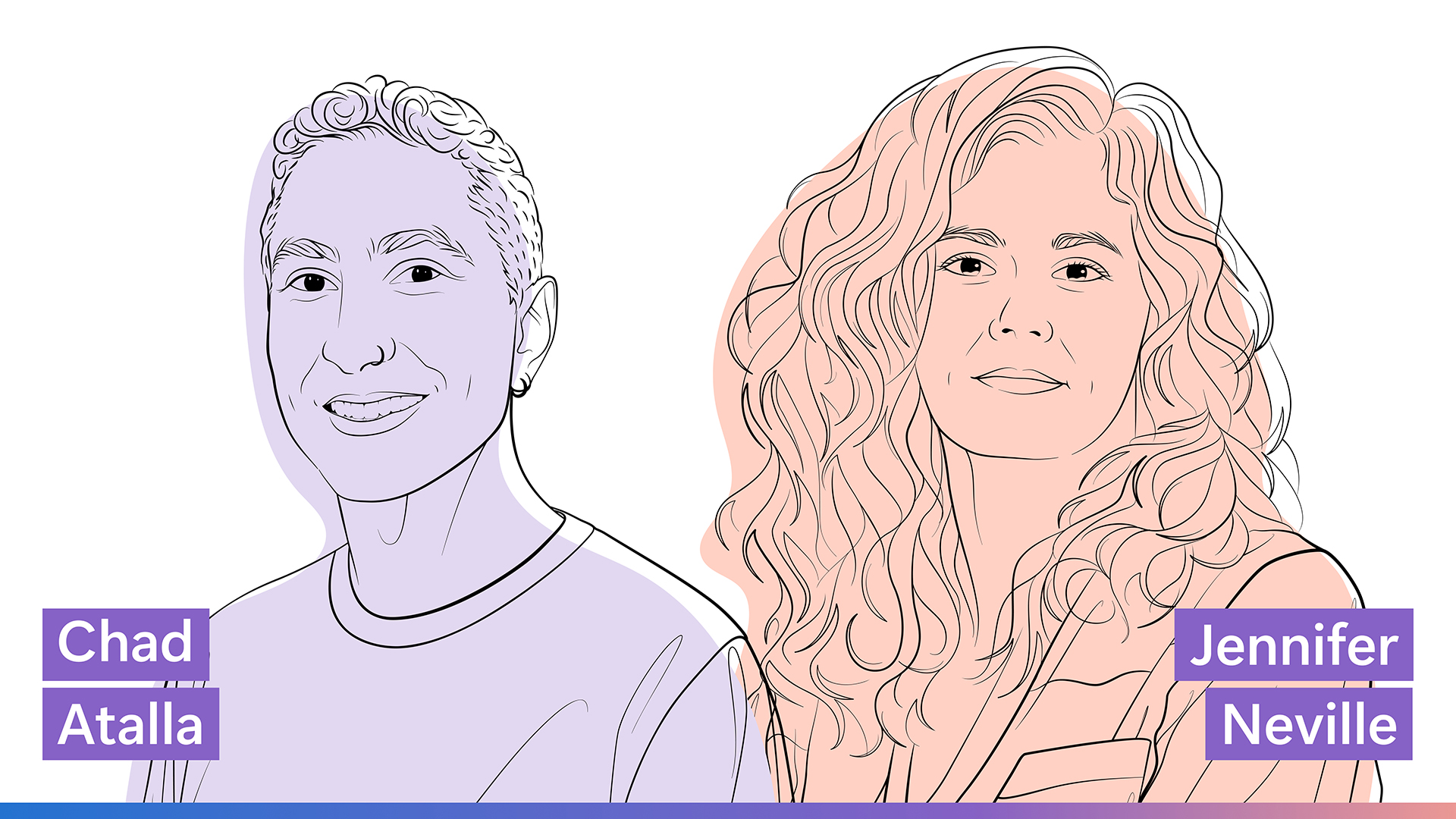
Jennifer Neville did not want to go into computer science—but that’s exactly where she landed. Neville discusses the starts and stops that led to her professional sweet spot and her work identifying “surprising failures” making it hard for AI to handle complexity. The post What AI gets wrong and what failure teaches us appeared first on Microsoft Research.
Computer scientist, entrepreneur, and philanthropist will collaborate with the MIT Schwarzman College of Computing to advance AI and scientific discovery.
We use cookies to run the site and, with your consent, for analytics and to show ads.
See our Cookie Policy.