This work proposes MeanFlow-Transfer, which maps heterogeneous source outputs into a shared velocity representation, uses it to initialize an MF generator from the source weights, and optimizes an MF objective on the target domain, and introduces Continuous Adversarial MeanFlow, a post-training stage that extends conti...
Yara Bahram, Zahra Dehghani, M. Desbos et al.· 0 citations
An Evaluation Agent, middleware that combines Natural Language Inference factual verification, a five-signal poison detector with relevance-weighted aggregation, and a Trust Index is proposed, which reliably blocks instruction injection of unsafe advice while contradiction and subtle semantic weakening remain hard.
Balkrishna Giri, M. Hasan, Jussi Rasku et al.· 0 citations
ReToken is a single learnable embedding trained as an explicit retrieval target that selects a sparse set of query-relevant visual tokens from a pre-filled visual KV cache that yields consistent gains across image and video benchmarks.
Yao Xiao, Reuben Tan, Zhen Zhu et al.· arXiv.org· 0 citations
This work proposes REST (Reward-Enhanced Scored-Trajectory Distillation), a single-stage RL-distillation co-training framework that attaches a decoupled student to an arbitrary RL teacher that enables few-step CFG-free inference that matches or surpasses its 40-step RL teacher, with an overall additional training cost...
Yuhan Li, Fan-Gao Zeng, Sicong Kang et al.· 0 citations
Reach audiences
Advertise in front of researchers, engineers, and readers.
It is indicated that current VLMs can identify anomalies within individual frames but struggle to integrate information across frames to reason about temporal consistency, and TimeCatch provides a controlled benchmark for evaluating temporal grounding in vision-language models.
An Implicit Cultural Alignment Reward Model built upon a lightweight 4.2-billion-parameter Multimodal Large Language Model (MLLM) integrated with a Skip-connection Cross-Attention mechanism, enabling late-stage semantic features to directly attend to early-stage visual representations and better preserve culturally sal...
A novel framework for single-shot shape and pose estimation of unknown spacecraft objects using only a single image and reconstructed geometry is proposed, demonstrating strong generalization to unseen spacecraft.
Josiane Uwumukiza, Jocelyn Zhao, Giovanni Lavezzi et al.· 0 citations
Experiments show that HVA establishes a new Pareto frontier for training-free sparse attention in video diffusion, reducing end-to-end latency by up to $2.13\times while improving fidelity over existing training-free sparse attention baselines.
Dongyeun Lee, A. Zandieh, V. Mirrokni et al.· 1 citation
The method sets a new state of the art in 4D reconstruction and seamlessly generalizes to in-the-wild videos with large viewpoint changes and dynamic motions, improving both novel-view synthesis and the underlying 3D motion.
Liyuan Zhu, Shengyu Huang, Amrita Mazumdar et al.· 0 citations
This work proposes to decouple the frequencies of memory updates and Memory Caching, and introduces two critical mechanisms: an auxiliary Memory Loss that forces persistent internalization of the scene, and a Memory Caching strategy that regularizes active weights against catastrophic drift.
Baback Elmieh, Lynn Tsai, Zeman Li et al.· arXiv.org· 0 citations
This paper provides a formal definition of Causal WMs (CWMs) grounded in the tasks they are intended to support, connecting existing work in causal representation learning, object-centric learning, causal discovery, structural causal models, and model-based decision-making.
BATON improves task success by 11.6% and cumulative success by 14.9% over the SoTA and improves task success by 11.6% over the RoboMemArena on the long-horizon benchmark RoboMemArena.
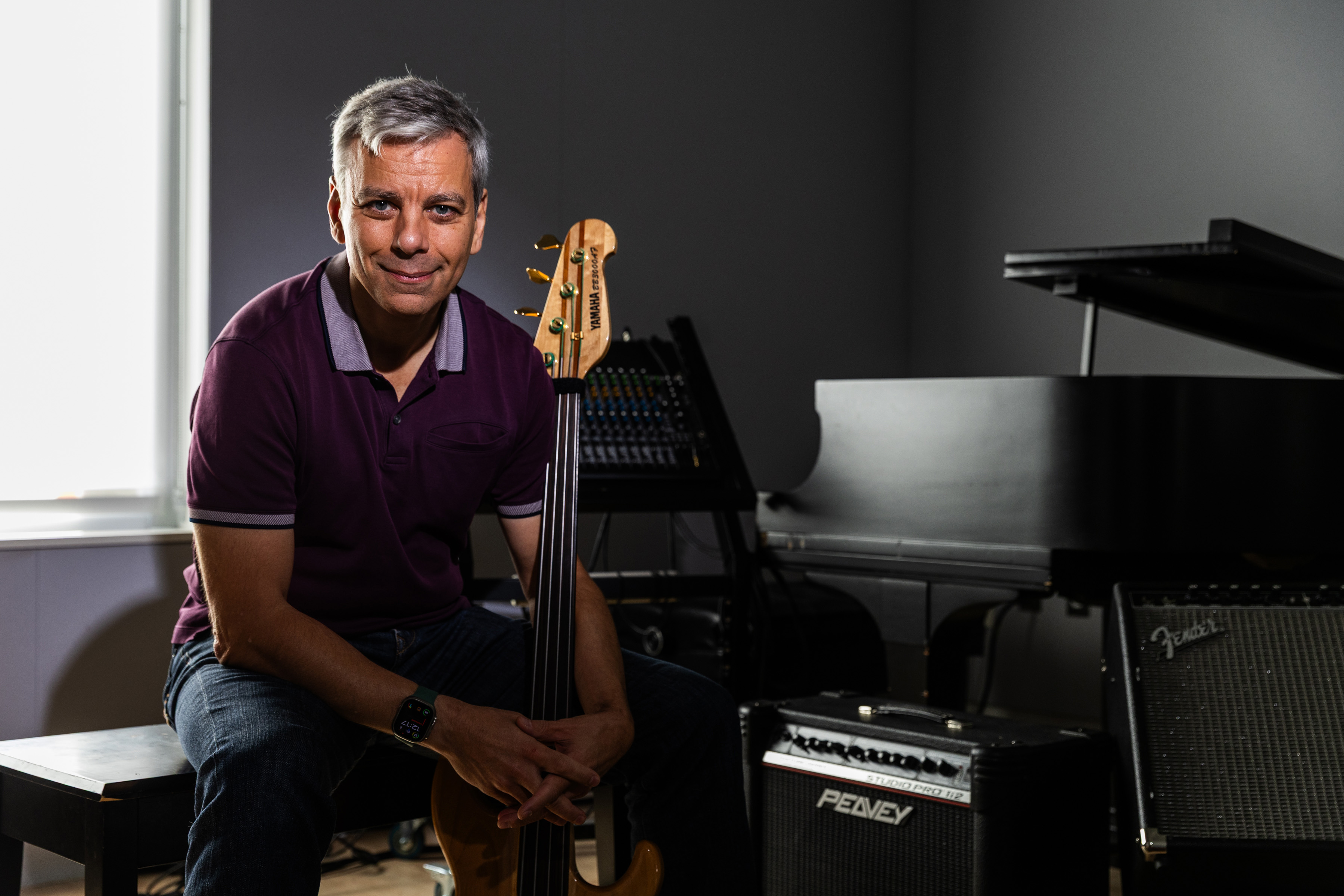
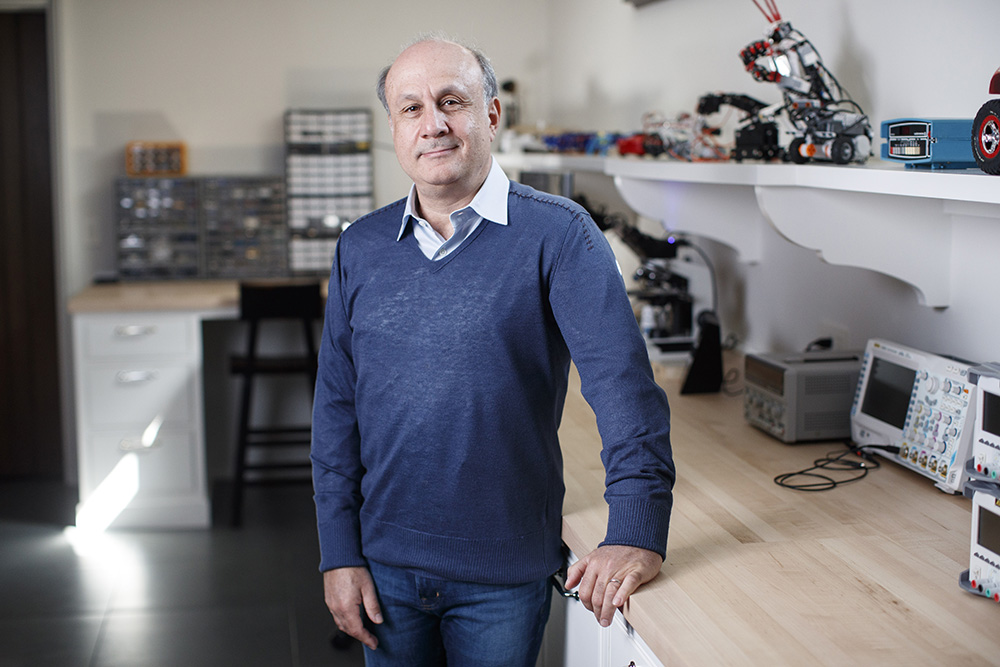
Professor Paris Smaragdis develops computers with superhuman hearing for applications like speech recognition, music understanding, and environmental monitoring.
Exploring how generative AI could make machine vision more accessible to businesses. The post GenEye in a Box: Making Machine Vision Something You Can Just Ask For appeared first on GPT-Lab.
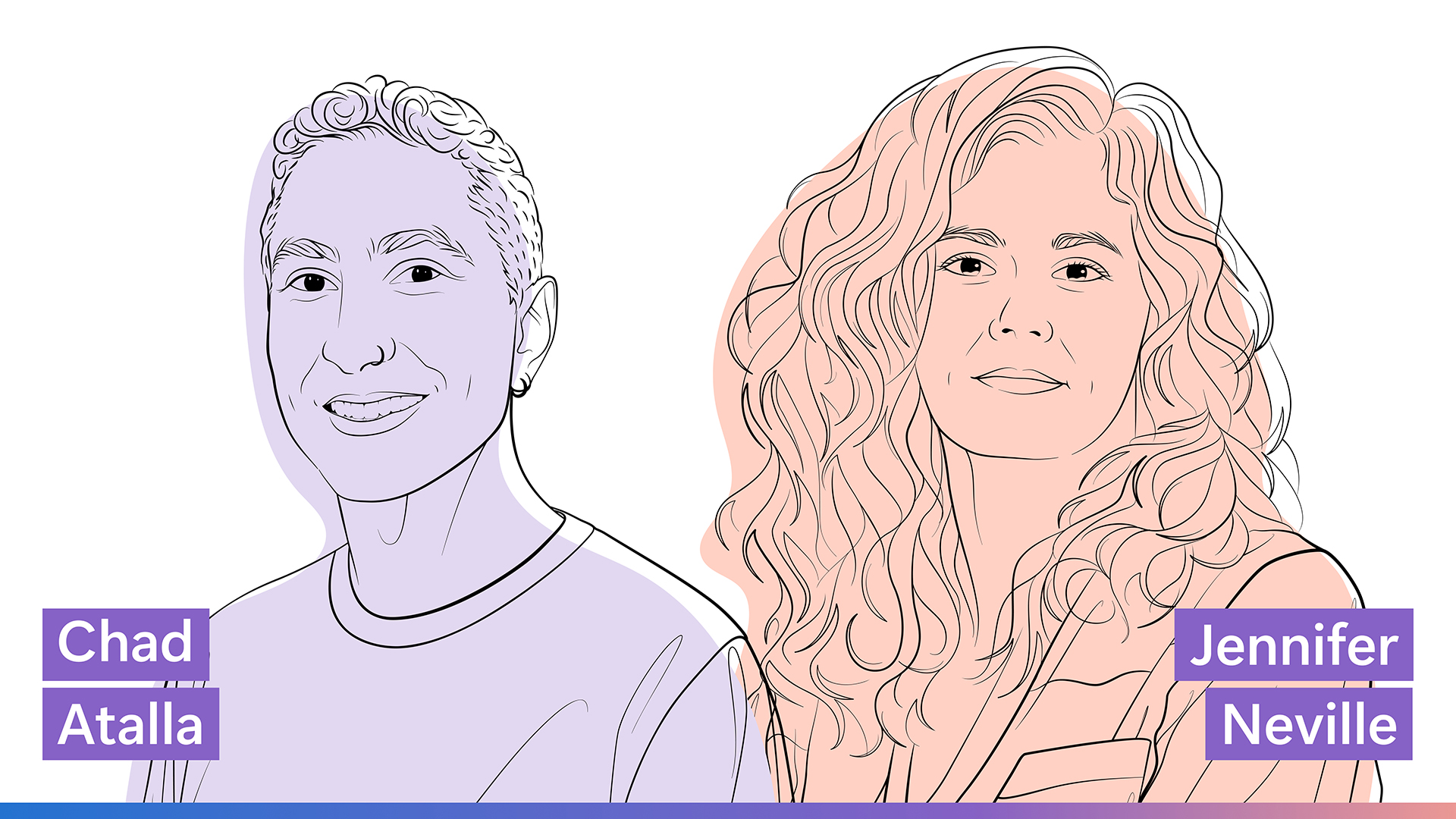
Jennifer Neville did not want to go into computer science—but that’s exactly where she landed. Neville discusses the starts and stops that led to her professional sweet spot and her work identifying “surprising failures” making it hard for AI to handle complexity. The post What AI gets wrong and what failure teaches us appeared first on Microsoft Research.
Computer scientist, entrepreneur, and philanthropist will collaborate with the MIT Schwarzman College of Computing to advance AI and scientific discovery.
We use cookies to run the site and, with your consent, for analytics and to show ads.
See our Cookie Policy.