It is found that sharpening improves preservation of the very nearest neighbors, while smoothing improves preservation of broader local neighborhoods, outperforming alternative affinity constructions including multiscale methods in the mid-local range.
MASS learns low-dimensional principal manifold coordinates with a dense autoencoder for coarse semantic grouping, and then performs quality-aware sparse feature coverage within each group using a TopK sparse autoencoder and proposes MASS.
Peng Sun, Yi Yang, Antong Zhang et al.· 0 citations
This work introduces Co-RL, a framework in which multiple decoupled models, sharing no parameters, are simultaneously optimized through RL using rewards derived from their peers, and shows that unsupervised reasoning can emerge through cooperative multi-agent training.
Yunhao Yang, Yuexin Bian, Yun-Jie Tian et al.· 1 citation
This work proposes BrainWAM, a structured action-space coordination framework that converts semantic reasoning and predictive world modeling into two specialized action-oriented pathways, and aligns them at the level of compact action representations, and introduces an asynchronous rectified-flow inference strategy wit...
Bing Zhan, Shu-Yao Shang, Shuo Lu et al.· 1 citation
Reach audiences
Advertise in front of researchers, engineers, and readers.
This work introduces EgoCITE (Egocentric Context-augmented Indexing and Time-aware Evidence retrieval), a long-horizon agentic memory framework for egocentric QA that improves accuracy over agentic memory baselines by at least 4.4--14.2% while achieving 36$\times$ lower cost than long-context LLM agents.
A pipeline that is fully automatic and cross lingual, using large language models, GPT 5, GPT 4o and Claude Sonnate 4, to independently generate, evaluate, and refine neural network architectures for handwritten optical character recognition, opening the door to rapid and adaptable deployment of OCR technology across m...
Results demonstrate that hierarchical modeling of 3D facial geometry enables interpretable, ontology-linked phenotype classification, though performance on rare leaf terms remains limited.
F. Hellmann, Alexander Hustinx, Benjamin D. Solomon et al.· 0 citations
Mask2Real-WM is presented, a two-stage action-conditioned world model for dexterous manipulation that decouples pixel prediction into a dynamics model and a rendering model that shows that mask conditioning and simulation pretraining are both required for per-DoF action controllability across all 23 degrees of freedom.
Riccardo Feingold, Davide Liconti, Chenyu Yang et al.· 1 citation
This work proposes COMPACT-VA, a planning-aligned working memory framework built on conditional VQ-VAE, compressing extended context into bounded representations, and evaluates on high-signal dynamic scenarios where historical context is most critical for behavior correctness, and accordingly design behavioral metrics.
Zhixuan Liang, Yuxiao Chen, Yurong You et al.· arXiv.org· 1 citation
EgoMemReason is introduced, a comprehensive benchmark for week-long egocentric video understanding through memory-driven reasoning that evaluates three complementary memory types: entity memory, tracking how object states evolve and change across days; event memory, recalling and ordering activities separated by hours...
Understanding when Vision-Language Models (VLMs) will behave unexpectedly, whether models can reliably predict their own behavior, and if models adhere to their introspective reasoning are central challenges for trustworthy deployment. To study this, we introduce the Graded Color Attribution (GCA) dataset, a controlled...
Jonathan Nemitz, Carsten Eickhoff, Junyi Jessy Li et al.· 0 citations
This work explores image generation using flow matching using flow matching and proposes an iterative process that can be integrated into virtually any generative modeling technique, thereby enhancing the performance and robustness of image synthesis systems.
Eldad Haber, Shadab Ahamed, Md Shahriar Rahim Siddiqui et al.· SIAM Journal on Scientific C...· 3 citations
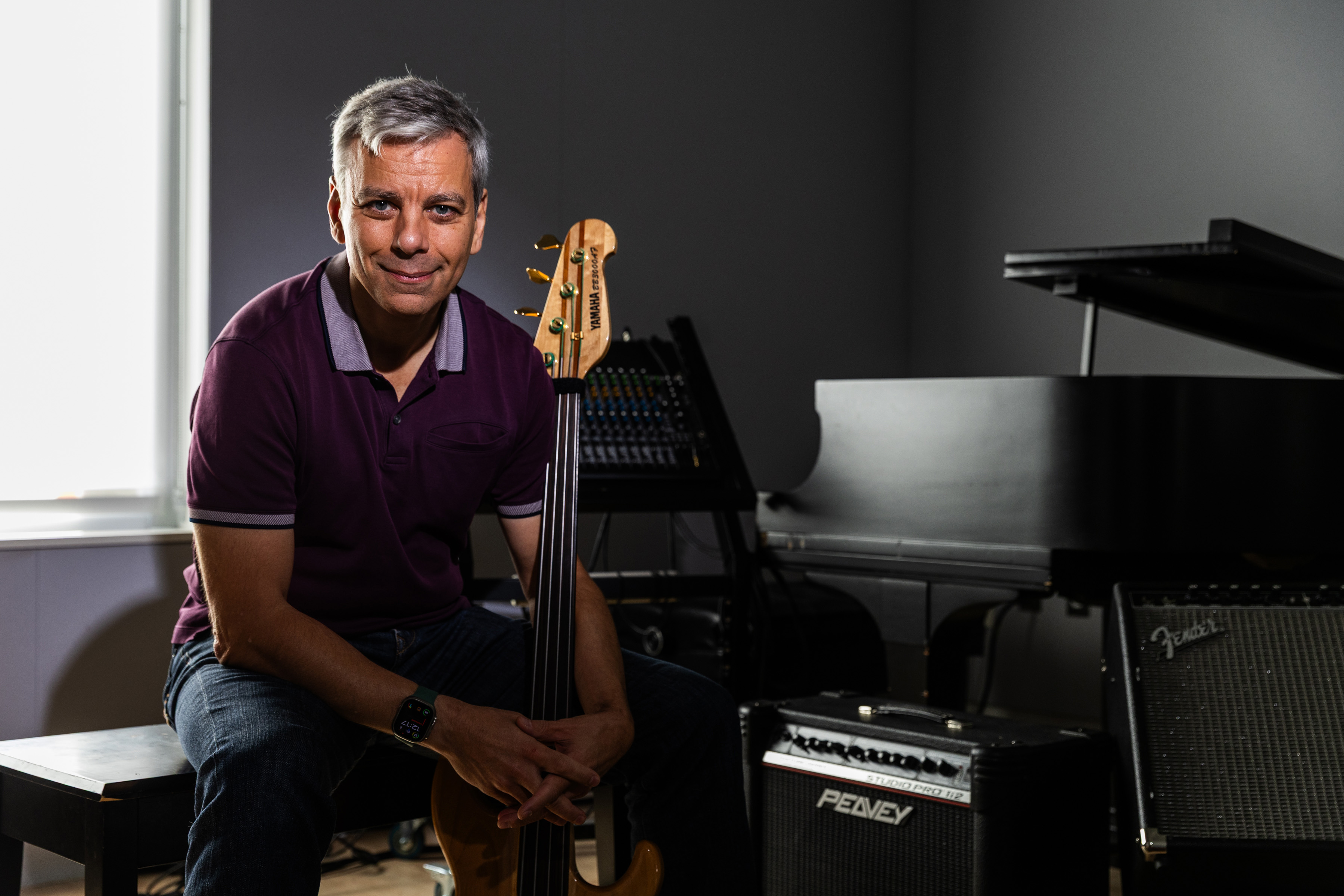
Professor Paris Smaragdis develops computers with superhuman hearing for applications like speech recognition, music understanding, and environmental monitoring.
Exploring how generative AI could make machine vision more accessible to businesses. The post GenEye in a Box: Making Machine Vision Something You Can Just Ask For appeared first on GPT-Lab.
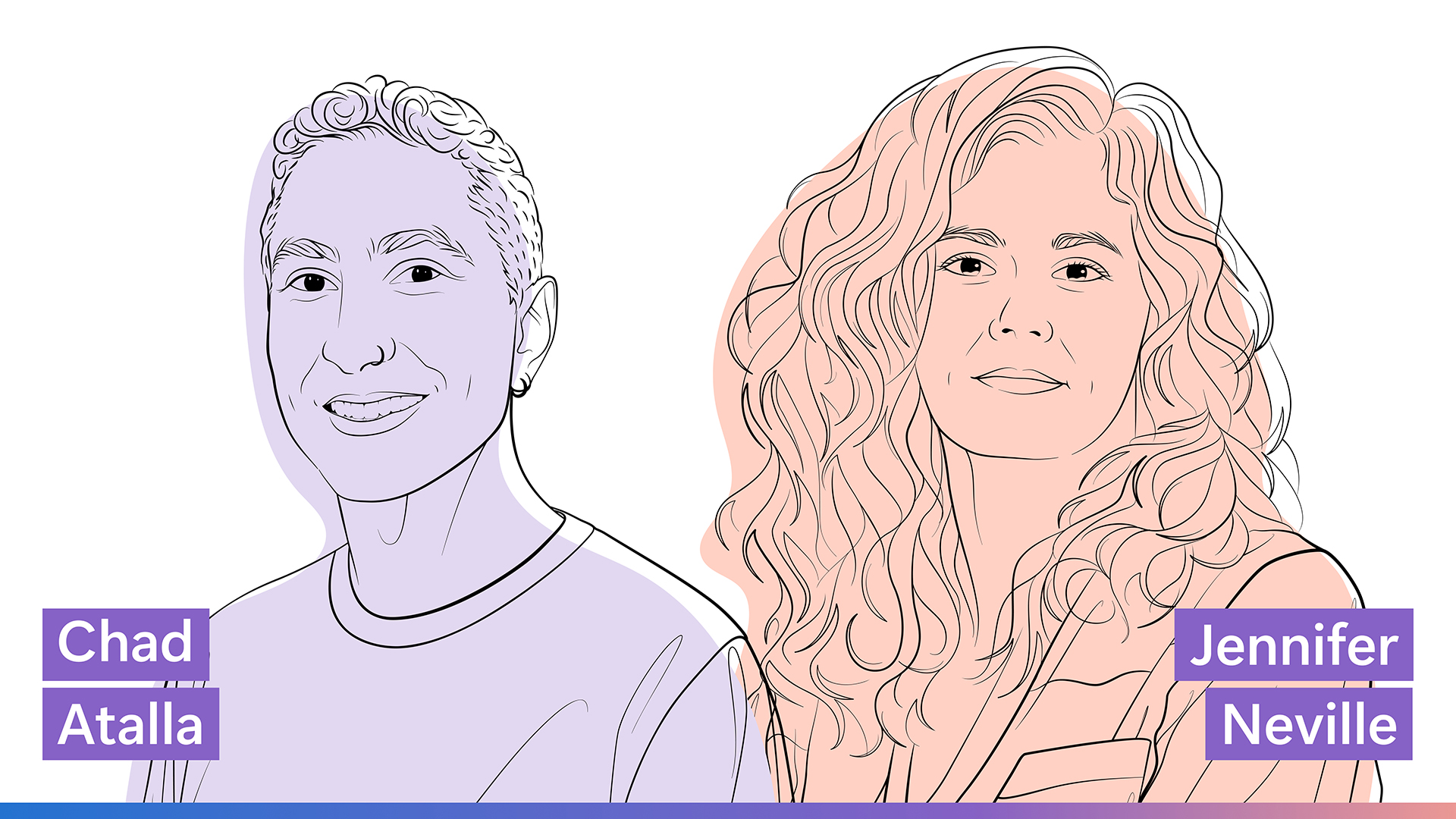
Jennifer Neville did not want to go into computer science—but that’s exactly where she landed. Neville discusses the starts and stops that led to her professional sweet spot and her work identifying “surprising failures” making it hard for AI to handle complexity. The post What AI gets wrong and what failure teaches us appeared first on Microsoft Research.
Computer scientist, entrepreneur, and philanthropist will collaborate with the MIT Schwarzman College of Computing to advance AI and scientific discovery.
We use cookies to run the site and, with your consent, for analytics and to show ads.
See our Cookie Policy.