Digital technology has become a fundamental driving force for global economic and social restructuring.Emerging technologies such as artificial intelligence, big data, cloud edge computing, digital twins andblockchain are transforming digital research from laboratory exploration to large-scale engineeringpromotion.Unli...
Concurrent parameterized games involve a fixed yet arbitrary number of players. They are described by finite arenas in which the edges are labeled with languages that describe the possible move combinations leading from one vertex to another (n players yield a word of length n). Previous work showed that, when edge lab...
Abstract In this paper, we study the nonlinear dispersive waves including the numerically observed rarefaction and dispersive shock waves in the discrete modified KdV equation which has widespread applications in plasma physics. In particular, we propose three distinct quasi-continuum models to approximate both the spa...
Su Yang· Proceedings of the Royal Soc...· 0 citations
Water quality has emerged as a critical global concern that requires advanced monitoring and management strategies. Traditional water-quality assessment methods predominantly rely on laboratory-oriented analysis that are time consuming, expensive, and are often labor-intensive. This study presents a thorough overview o...
K. Y. Kumar, P. Kumaresan· Frontiers in Water· 0 citations
Presently, there is a strong demand for light, economical, and highly maneuverable UAVs that, when operating independently or in a swarm formation, can replace expensive manned platforms. Such applications include emergency response and firefighting in areas such as canyons or rugged terrain, where the agility of the a...
CROCUS is one of four U.S. Department of Energy Urban Integrated Field Laboratories dedicated to advancing understanding of atmospheric, ecological, and hydrological processes in cities. Central to CROCUS’ measurement strategy is the Micronet – a scalable observational network designed to characterize heterogeneous u...
P. Muradyan, Scott Collis, J. O'Brien et al.· Bulletin of The American Met...· 0 citations
The results demonstrate the effectiveness of the proposed framework under the simulated conditions represented by the UrbanIoT dataset and indicate its potential for future real-time smart-city environmental monitoring applications.
A structured narrative review of the latest breakthroughs achieved in the development of energy-efficient Edge AI, focusing specifically on hardware-software co-design practices aimed at improving inference quality, demonstrates that hardware-aware model optimization and heterogeneous computing significantly improve pe...
V. Govindaraj, Muthu Krishnammal P, S. S. Devi et al.· Discover Computing· 0 citations
A lightweight object-detection system based on the Jetson Nano that uses lower-resolution input, TensorRT operator fusion, and FP16 half-precision quantization to overcome the trade-off between constrained on-board computation of edge devices like AGVs in smart warehousing and logistics and the high real-time demands o...
Jun-Lin He, Wen-Bo Peng, Hong-Bo Zhou et al.· International Conference on...· 0 citations
A new computational approach reveals how cells communicate to assemble into tissues. This could accelerate stem cell engineering, improve disease models, and inform therapies.
Microsoft Research Blog· microsoft.comOct 15, 2026
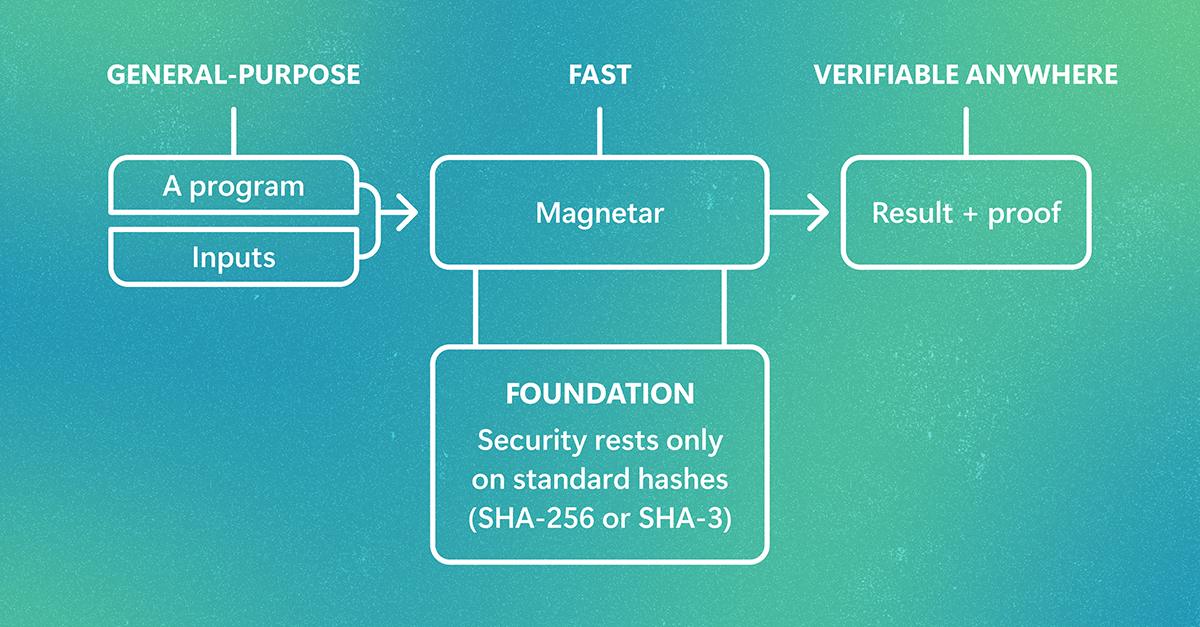
Zero-knowledge proofs can verify computing results without rerunning workloads or exposing sensitive data. Magnetar helps bring them into the mainstream with support for standard programming languages, major speed gains, and quantum-resistant security. The post Proof-based general-purpose computing with Magnetar appeared first on Microsoft Research.
MIT News · Artificial Intelligence· news.mit.eduOct 8, 2026
Jennifer Neville did not want to go into computer science—but that’s exactly where she landed. Neville discusses the starts and stops that led to her professional sweet spot and her work identifying “surprising failures” making it hard for AI to handle complexity. The post What AI gets wrong and what failure teaches us appeared first on Microsoft Research.
We use cookies to run the site and, with your consent, for analytics and to show ads.
See our Cookie Policy.