Skip to content

Category

edge computing

533 papers

#edge computing Open access Aug 2026

A novel approach to ASD detection using intuitionistic fuzzy sets and graph convolutional networks

A novel approach for distinguishing individuals with Autism Spectrum Disorder (ASD) using Intuitionistic Fuzzy Set (IFS) theory and Multi-Scale Enhanced Graph Convolutional Networks (MSE-GCNs), which represents a substantial improvement over existing models for ASD and potentially for other neurological disorders.

S. Rajaprakash, C. Basha, K. Manivanan et al. · 0 citations
#natural language process... Book Open access Aug 2026

Caduceus: MoE Foundation Models for Unifying Biological and Natural Language

This paper introduces Caduceus, a family of MoE-enhanced foundation models built with a hierarchical pre-training paradigm to jointly integrate biological and natural language, and incorporates a multi-task instruction tuning phase, enabling robust protein parsing and natural language question answering.

Mingze Yin, Yiheng Zhu, Jialu Wu et al. · 0 citations
#edge computing Aug 2026

Multi-mode energy harvesting–enabled edge computing architecture for industrial IoT environments

This work presents a multi-mode energy harvesting-assisted edge computing architecture, integrated with a joint optimization of energy consumption and communication behaviour, aimed at enhancing the sustainability, reliability and autonomy of operation in an industrial IoT context.

Dr. Deepa, M. Mehfooza, Padmavathy Thiruppathi Raj · 0 citations
#edge computing Review Open access Aug 2026

A systematic review of artificial intelligence and internet of things applications in precision agriculture

It is argued that AI-ML integration improves productivity in agriculture in terms of crop yield prediction, disease prediction and optimization of resources, amongst others, and a comprehensive strategy for future work in designing sustainable agrifood systems is proposed.

Anita Veerappa Karkikatti, R. H. Goudar, Vijayalaxmi N. Rathod et al. · 0 citations
#edge computing Open access Aug 2026

Post quantum blockchain framework using probabilistic hidden state deep learning for smart IoT systems

Scalability analysis demonstrates that the proposed Post-Quantum Probabilistic Hidden-State Deep Learning framework, evaluated with run on IoT networks with over 1000 nodes, exhibits significant performance.

T. G. Keshavamurthy, S. Guruprasad, K. Hareesh et al. · 0 citations
#edge computing Open access Aug 2026

Federated learning and edge computing-based collaborative detection system for IoT anomaly behavior

This study demonstrates the efficacy of the synergy between federated learning and edge computing in IoT security contexts, providing a scalable and privacy-centric solution for anomaly detection across large-scale distributed devices.

Quan Liu, Yuanyuan Feng · 0 citations
#artificial intelligence Preprint Jul 2026

Constitutional Midtraining: Content Presence Drives Alignment Gains

Post-training alignment is often shallow, eroding under fine-tuning. It remains untested as to whether constitutional midtraining interventions can produce durable alignment when cleanly isolated from post-training. We build a 394M-token constitutional corpus from Anthropic's Constitution and apply constitutional midtraining at 120B scale, where principled, values-based content is inserted into midtraining. A 2x2 design (curriculum ordering x deliberative reasoning) was used to produce four constitutionally midtrained conditions, plus a control, which were evaluated on self-generated and established benchmarks including alignment under pressure, value conflict resolution, blackmail, and emergent misalignment. All models were evaluated across three stages: post-midtraining, post-SFT, and post-benign fine-tuning. Constitutionally midtrained models outperformed the control on alignment generalization and durability, notably on blackmail: SFT instilled a blackmail propensity in all models, but constitutional midtraining blunted it, with the advantage surviving benign fine-tuning (-17.5pp). This durability did not extend to settings that required active resistance to in-context pressure or conflict, where the advantage attenuates after SFT. The presence of constitutional content at midtraining also mattered more than its structure, and constitutional midtraining incurred no capability cost, on average, at any stage (MMLU, ARC-Easy, piqa, GSM8K). A modest amount of constitutional content at midtraining could therefore yield broad, persistent alignment gains, offering a cheap, complementary addition to SFT-centered pipelines. Code, data, and models are available.

Desiree Cho, Cameron Tice, Bernie Hogan et al. · 0 citations
#edge computing Preprint Aug 2026

A Fast Deterministic Algorithm for $(\Delta+1)$-edge coloring in CONGEST

The first $poly(\Delta,\log n)-round algorithm for $(\Delta + 1)$-edge coloring in the CONGEST model is presented and the $n$-dependency of its runtime, $\tilde{O}(\log^5 n)$, matches the best published dependency in the LOCAL model.

Sebastian Brandt, Ananth Narayanan, Alexandre Nolin · 0 citations
#edge computing Preprint Aug 2026

An Integer Programming Approach to Compute Lower Bounds for Ramsey Numbers Using Circulant Graphs

The Ramsey number $R(m,n)$ is the smallest order at which every red-blue edge coloring of a complete graph must contain a blue clique (a complete subgraph) of size $m$ or a red clique of size $n$. Determining these numbers exactly is extremely hard, and even certifying a lower bound requires exhibiting an explicit coloring that avoids both cliques. We develop an integer programming framework for certifying such lower bounds, restricting the search to circulant graphs, whose rotational symmetry lets us reformulate the problem in a projected distance space, reducing the number of binary variables from quadratic to linear in the graph order. We strengthen this projected model through coefficient reduction and solve it with a branch-and-cut algorithm whose separation routine exploits the common neighborhood structure of circulant graphs, combining heuristic and exact maximum-clique algorithms. In an extensive computational campaign on circulant graphs with up to 410 vertices, we improve the best lower bounds previously obtained by other methods by up to 11 points for 25 values of $R(3,n)$ with $24\le n\le49$ and $n\neq27$, each backed by an explicit graph certificate that can be independently verified with a stand-alone exact clique solver. To the best of our knowledge, our method also provides the first reproducible optimization-based procedure for certifying circulant Ramsey numbers $R_C(m,n)$, which we use to establish eight new values of $R_C(3,n)$ with $13\le n\le20$. Our framework, graph certificates, and stand-alone checker are provided as supplementary material to support independent verification and reuse.

Stefano Coniglio, Fabio Furini, I. Ljubić et al. · 0 citations
#edge computing Aug 2026

Sequential Radar–Acoustic Drone Detection Using A Lightweight Deep Learning Framework for Edge-Based Sensor Networks

Experimental results demonstrate that the proposed sequential pipeline preserves high specificity while reducing missed detections compared to radar-only processing and indicates that sequential processing can offer a viable alternative to parallel fusion for edge-based drone detection under SNR and computing constraints.

Faizal Mohd Amin Sharifuldin, N. E. Abdul Rashid, Mohd Adli Md Ali et al. · 0 citations
#edge computing Aug 2026

[Motion parameter decoupling and motion constraint-driven optimization for correcting rigid motion artifacts in cone-beam computed tomography].

The proposed rigid motion artifact correction algorithm demonstrates good performance in estimating motion trajectories and compensating for image artifacts, thus providing a viable and robust solution for suppressing rigid motion artifacts in clinical CBCT imaging.

Hao Jiang, Yongbo Wang, Z. Bian · 0 citations
#edge computing Aug 2026

Разработка автоматизированной системы контроля устойчивости грузоподъемных машин на строительных площадках

Опрокидывание стреловых самоходных кранов сохраняет положение одного из наиболее тяжёлых по последствиям отказов на строительных площадках. Штатный ограничитель грузового момента настраивается по паспортной грузовой характеристике для горизонтальной опорной площадки и не воспринимает ни фактический угол наклона опорного контура, ни просадку выносных опор. Цель работы – построение авторской расчётной модели непрерывного контроля грузовой устойчивости, сводящей измерение реакций опор, углов наклона рамы и стрелы и скорости ветра к одному вычисляемому в реальном времени коэффициенту. Расчёт выполнен по схеме предельного равновесия относительно ребра опрокидывания для модельного крана грузоподъёмностью 25 т с базой выносных опор 5,62 на 5,84 м; ветровая нагрузка принята по ГОСТ 1451-77, нормативная рамка прослежена по редакциям 2020-2026 гг. Критический уклон, при котором паспортная грузоподъёмность ещё отвечает нормативному коэффициенту 1,15, изменяется от 1,76 градуса на вылете 6,0 м до величин свыше 6 градусов на вылете 16 м и более, а при уклоне 3 градуса коэффициент на малых вылетах опускается до 1,02. Расширенная неопределённость вычисляемого коэффициента составила 2,7% при доминирующем вкладе погрешности определения массы груза. Наименьший запас устойчивости приходится на короткие вылеты с тяжёлым грузом, и это обращает привычное представление о максимальном вылете как о самой опасной конфигурации. Overturning of mobile boom cranes remains one of the most severe failures at construction sites. A standard load moment limiter is tuned to the rated load chart obtained for a horizontal supporting area and registers neither the actual tilt of the supporting contour nor the settlement of outriggers. The aim of the work is an author's computational model of continuous load stability control that reduces the measurement of outrigger reactions, frame and boom angles and wind speed to a single coefficient computed in real time. The calculation follows the limit equilibrium scheme about the tipping edge for a model crane with a rated capacity of 25 t and an outrigger base of 5,62 by 5,84 m; the wind load is taken according to GOST 1451-77 and the regulatory framework is traced through the 2020-2026 editions. The critical tilt at which the rated capacity still corresponds to the normative coefficient of 1,15 varies from 1,76 degrees at a radius of 6.0 m to values above 6 degrees at a radius of 16 m and more, and at a tilt of 3 degrees the coefficient at short radii drops to 1,02. The expanded uncertainty of the computed coefficient amounted to 2,7%, with the dominant contribution from the error in determining the load mass. The smallest stability margin occurs at short radii with a heavy load, which reverses the customary view of the maximum radius as the most hazardous configuration.

Владимир Алексеевич Вяткин, Данис Айратович Сафин, Олег Антонович Сидоренко et al. · 0 citations

From tech blogs

See all →
Microsoft Research Blog Aug 31, 2026

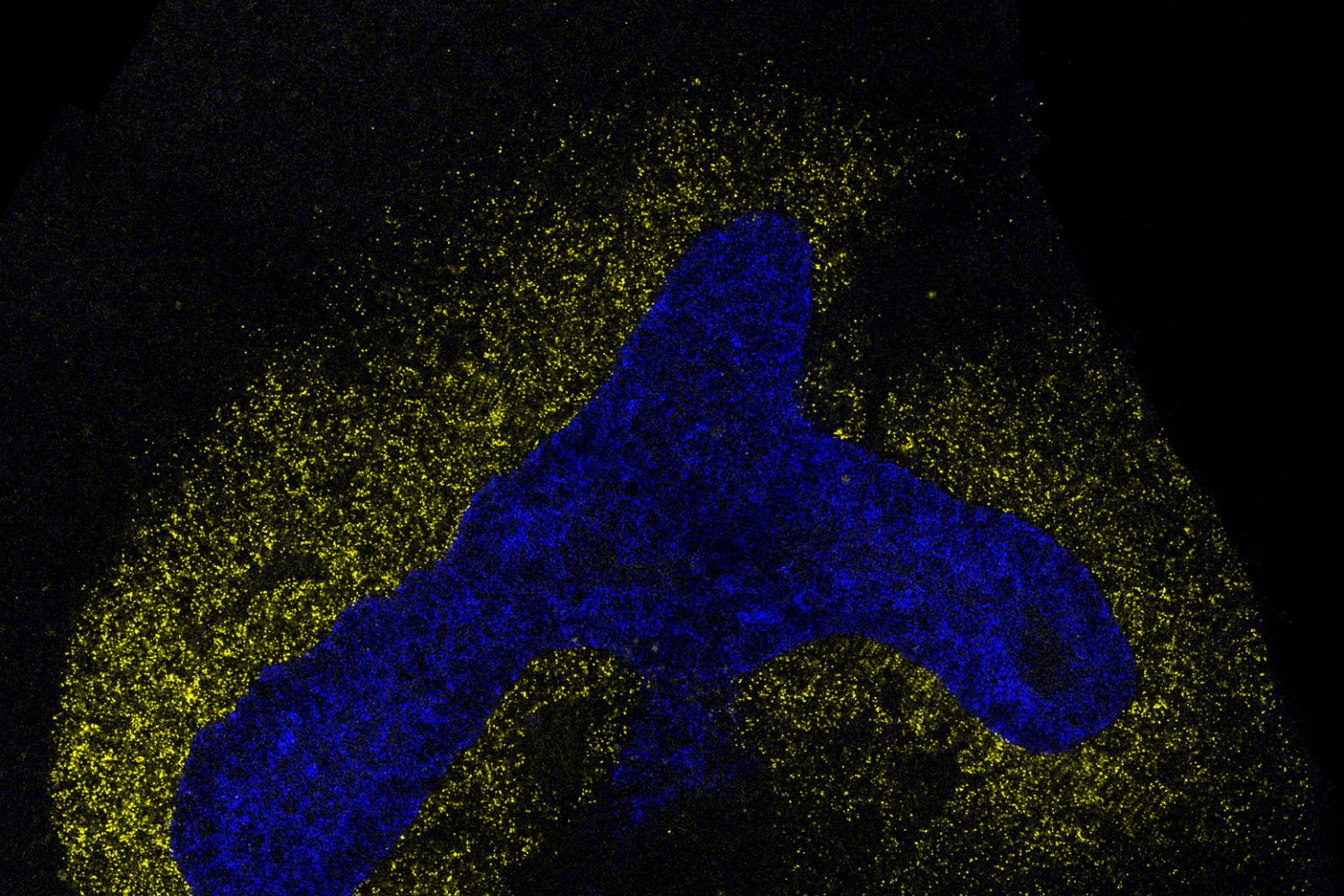
GigaPath-Flash and GigaTIME-Flash: Toward population-scale discovery with efficient pathology foundation models

What if pathology foundation models could do more with less? GigaPath-Flash and GigaTIME-Flash cut computational demands while maintaining strong performance, opening the door to larger studies and broader exploration. The post GigaPath-Flash and GigaTIME-Flash: Toward population-scale discovery with efficient pathology foundation models appeared first on Microsoft Research.

MIT News · Artificial Intelligence Aug 27, 2026

Looking beyond natural sequences

A new machine-learning framework aims to improve the success rate of computational protein design while moving away from results that reproduce sequences found in nature.