Hearing loss is a prevalent sensory disorder with profound social and health impacts. Although hearing aids and cochlear implants can significantly restore auditory perception, they do not address the underlying genetic causes. Inherited forms of hearing loss, often monogenic, are ideal candidates for gene therapy, par...
G. Lahlou, Maxence Cornille, Nicolas Lai et al.· Ear and Hearing· 0 citations
Epigenetic Activation of Dormant Endogenous Visual Genes via a Single-Shot Micro-Injection for the 100% Permanent Reversal of Absolute Blindness आविष्कारकर्ता / अनुसंधानकर्ता (Inventor): बंटी कुमावत (Banti Kumawat) विषय (Subject): एपिजेनेटिक एडिटिंग, मॉलिक्यूलर न्यूरो-सिग्नलिंग और जीन एक्टिवेशन (Epigenetic Editing, Mol...
Banti Kumawat· Zenodo (CERN European Organi...· 0 citations
ABSTRACT Spatiotemporal precision remains a critical challenge against the gene editing technology used for disease treatment. We herein developed a tumor cell‐selective CRISPR/Cas9 gene editing system by introducing a complementary single‐stranded DNA (ssDNA) containing apurinic/apyrimidinic (AP) sites (AP‐ssDNA) alon...
Haoyu Zhang, Yajie Li, Yehan Wang et al.· Angewandte Chemie· 0 citations
We describe here an efficient method for gene editing in mouse T cells, based on well-established, high-efficiency retroviral transduction protocols. Our platform allows analysis of mutant phenotypes in primary murine T cells in vitro and in vivo . This approach uses a single retroviral vector to simultaneously knockou...
Vasileios Morfos, Meredith C. Frie, Daniel Peschkov et al.· Frontiers in Immunology· 0 citations
Reach audiences
Advertise in front of researchers, engineers, and readers.
Reproductive containment delays germplasm degradation and is a promising solution for potential ecological concerns associated with genetically modified fish, while also helping protect intellectual property rights related to fish varieties. However, current methods for fish fertility control, which typically involve i...
Jinzhi Zhao, Yi Rong, Lei Chen et al.· Aquaculture Reports· 0 citations
New Plant Engineering Techniques (NPETs) refers to new biotechnology tools that allow alterations to a plant’s genome by adding, resequencing, or silencing some of its genes or combined with genes from a crossable plant (so-called cisgenesis). NPETs include genome editing (GenEd) tools, such as Clustered Regularly Inte...
John Christopher Beghin· Lincoln (University of Nebra...· 0 citations
Non-viral nanocarrier delivery remains a major translational bottleneck for clustered regularly interspaced short palindromic repeats (CRISPR)-based genome editing because functional outcome emerges from coupled losses across biodistribution, cell uptake, intracellular trafficking, endosomal escape, access to the relev...
Abhisek Sah, B. Singh, Deepak Kumar et al.· Nano LIFE· 0 citations
Lipoprotein(a) [Lp(a)] is an independent, genetically determined, and causal risk factor for atherosclerotic cardiovascular disease (ASCVD) and calcific aortic valve stenosis. Elevated Lp(a) affects approximately 20% of the global population and is not meaningfully modified by lifestyle intervention or existing lipid-l...
Vibhu Parcha, Vera A. Bittner· Current Atherosclerosis Repo...· 0 citations
Current evidence on the genetic, molecular, and regulatory architecture of CMT1A is synthesized, with particular emphasis on distal regulatory elements controlling PMP22 expression, promoter-specific transcriptional regulation, and mechanisms contributing to phenotypic heterogeneity, support an increasingly individuali...
Yousef VatanParast· Egyptian Journal of Medical...· 0 citations
This narrative review summarizes recent advances in the clinical spectrum, genotype-phenotype correlations, and multilevel pathogenic mechanisms of ATP1A3-related disorders and highlights emerging therapeutic directions, including mechanism-based targeting, antisense strategies, and genome editing approaches such as ba...
Jia Yin, Shu-Han Hu, Zi-Han Fan et al.· Neurogenetics· 0 citations
These findings provide the first causal evidence that Malat1 regulates select ethanol-related behaviors in a sex-specific manner, supporting further investigation into its underlying mechanisms in AUD.
D. Gil, Annalisa M. Baratta, C. Ferguson et al.· Neuropharmacology· 0 citations
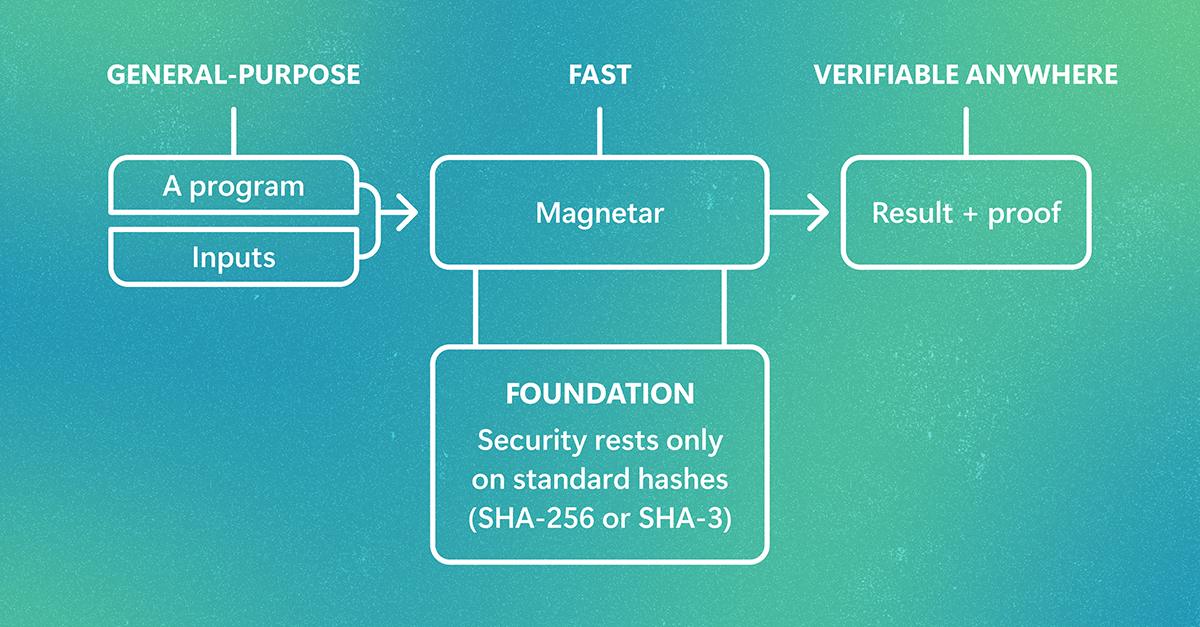
Zero-knowledge proofs can verify computing results without rerunning workloads or exposing sensitive data. Magnetar helps bring them into the mainstream with support for standard programming languages, major speed gains, and quantum-resistant security. The post Proof-based general-purpose computing with Magnetar appeared first on Microsoft Research.
Exploring how generative AI could make machine vision more accessible to businesses. The post GenEye in a Box: Making Machine Vision Something You Can Just Ask For appeared first on GPT-Lab.
We use cookies to run the site and, with your consent, for analytics and to show ads.
See our Cookie Policy.