Efficient CRISPR/Cas12a-mediated targeted mutagenesis of the lw1 gene in sugarcane provides a framework for future engineering of AT-rich cis-regulatory elements in the polyploid sugarcane genome.
This review positions itself against recent NGS-in-plants literature by focusing on the technology-to-breeding translation gap that is most acute in horticultural species, and by highlighting where evidence remains preliminary.
Khwairakpam Rozerto, P. Alila, Khriezodinuo Pienyu et al.· Discover Plants· 0 citations
A universal and scalable method based on CRISPR/Cas9-non-homologous end joining (NHEJ) for Pooled Recombinant Integration of Seamless Markers (PRISM) into protein coding genes, paving the way for genome-scale construction of human cell lines tagged with different types of reporter genes for protein functional character...
ABSTRACT- The days since humanity has had mortality bought by old age and disease, discussion of extending life with inventions in biology and health sciences, have always had a major place in scientific and medical fields. Although a novel idea, in the past few decades, there has been an upsurge of Stem Cell therapies...
Eramma N, Pooja Umamagesh, Shreeja· International Journal For Mu...· 0 citations
Reach audiences
Advertise in front of researchers, engineers, and readers.
Abstract Schwann cells are vital to development and maintenance of the peripheral nervous system and their dysfunction has been implicated in a range of neurological and neoplastic disorders, including NF2 -related schwannomatosis ( NF2 -SWN). We have developed a novel human induced pluripotent stem cell (hiPSC) model...
Olivia Lazaro, Sihong Li, Jacob S. Smiley et al.· Scientific Reports· 1 citation
In Visium HD, transcript positions are computed from sequenced barcodes, which are matched to a list of coordinate barcodes that map to a grid of capture locations. Quantifying reads and assigning their positions have relied on Space Ranger, whose end-user licence prohibits modification and whose published source canno...
Estrogen-related receptors (ERRs) have no natural ligands, vertebrate ERRs rely on their activation function-2 (AF-2) structural domain to recruit coactivators for transcriptional regulation. While metabolic regulation in insects differs significantly from that in vertebrates, it remains unclear whether the regulatory...
Jinxin Wu, Die Liu, Haoran Xu et al.· PLoS Genetics· 0 citations
Inherited anemias represent a diverse group of genetic disorders characterized by impaired red blood cell production, increased destruction, or abnormal hemoglobin synthesis. This review provides a comprehensive overview of the contemporary clinical landscape, diagnostic workflows, and therapeutic advancements for both...
आविष्कार का शीर्षक: "शून्य से जीवन की शुरुआत: कस्टम राइबोसोम, सिंथेटिक जेनेटिक कोड और उदासीन रक्त आधारित एक नई अनुकूलनीय प्रजाति (Adaptive Life-Form) का निर्माण" मुख्य अन्वेषक / आविष्कारकर्ता (Inventor): बन्टी कुमावत (Banti Kumawat) दस्तावेज़ प्रकार: प्रोविज़नल पेटेंट ड्राफ्ट और तकनीकी विवरण 1. परिचय (Introduction) यह...
Banti Kumawat· Zenodo (CERN European Organi...· 0 citations
The generation of homozygous lines represents a critical step in vegetable crop breeding and germplasm improvement. Conventional self-pollination and purification methods are time-consuming and prone to severe inbreeding depression. In contrast, haploid breeding technology enables the rapid acquisition of completely ho...
Wei-Quan Luan, Yang Yang, Yao-Wei Zhang· Horticulturae· 0 citations
Chronic hepatitis B virus (HBV) infection remains a global public health burden, and functional cure represents the primary goal of clinical management. The nuclear covalently closed circular DNA (cccDNA) minichromosome stably maintained in infected hepatocytes constitutes the major barrier to HBV cure. Clinically, f...
Qing Peng, Li-Yuan Hao, Sheng-Hao Li et al.· Frontiers in Microbiology· 0 citations
Lactic acid bacteria (LAB) are generally recognized as safe, which makes them ideal hosts for producing food-related chemicals. Traditional metabolic engineering has mostly focused on editing one or a few genes, which often fail to meet the demands of industrial production. High-throughput metabolic engineering based...
Lei Zhang, M. Qiao, Yong-Ping Xin· ACS Food Science & Techn...· 0 citations
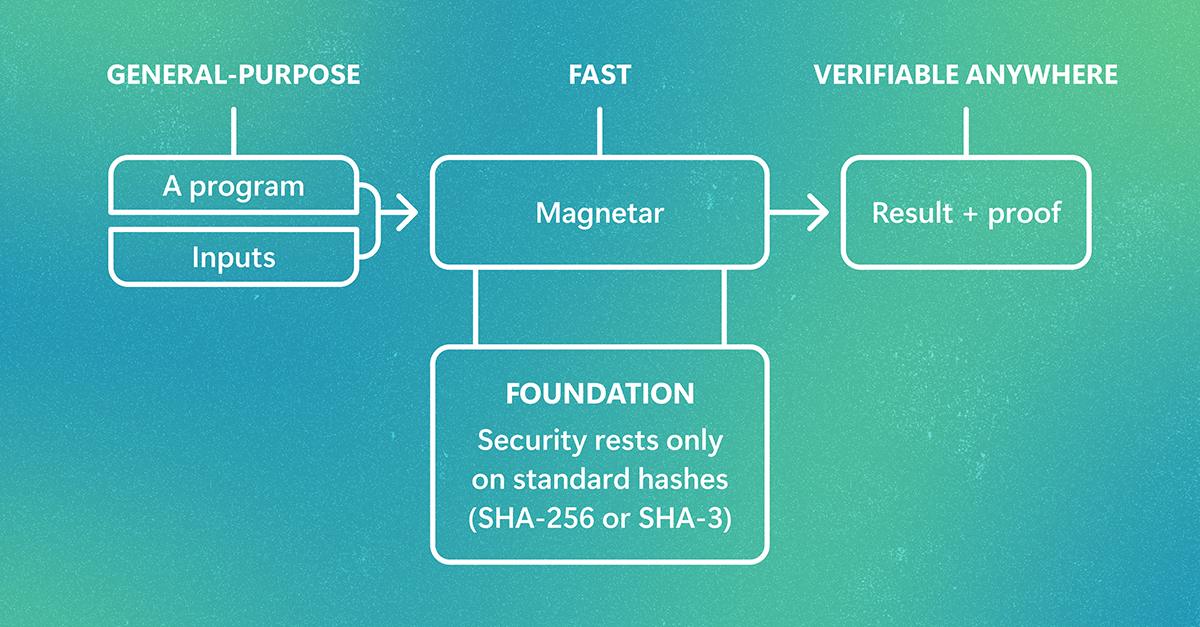
Zero-knowledge proofs can verify computing results without rerunning workloads or exposing sensitive data. Magnetar helps bring them into the mainstream with support for standard programming languages, major speed gains, and quantum-resistant security. The post Proof-based general-purpose computing with Magnetar appeared first on Microsoft Research.
Exploring how generative AI could make machine vision more accessible to businesses. The post GenEye in a Box: Making Machine Vision Something You Can Just Ask For appeared first on GPT-Lab.
We use cookies to run the site and, with your consent, for analytics and to show ads.
See our Cookie Policy.