The findings suggest that open-source models, when trained with community-derived preference signals, can support high-quality mental health support assistance while offering a more privacy-preserving alternative for sensitive support contexts.
J. Kim, Maya Ajit, S. Gong et al.· arXiv.org· 4 citations
Recent developments in AI safety research have called for red-teaming methods that effectively surface potential risks posed by generative AI models, with growing emphasis on how red-teamers' backgrounds and perspectives shape their strategies and the risks they uncover. While automated red-teaming approaches promise t...
Wesley Hanwen Deng, Mingxi Yan, Sunnie S. Y. Kim et al.· 0 citations
AgentLens is a mobile GUI agent that adaptively uses three visual modalities during human-agent interaction: Full UI, Partial UI, and GenUI, and it extends a standard mobile agent with adaptive communication actions and uses Virtual Display to enable background execution with selective visual overlays.
Jeong-Han Kim, Byeongjun Joung, Junwon Lee et al.· arXiv.org· 1 citation
A unified framework for evaluating LLM uncertainty based on Hill numbers, a family of diversity measures, is introduced, which provides a common and intuitive scale for interpreting variation in LLM outputs while accommodating different notions of semantic similarity and different sensitivities to output distributions.
Is an LLM telling you different facts than it's telling me? This paper introduces ConsistencyAI, an independent benchmark for measuring the factual consistency of large language models (LLMs) for different personas. ConsistencyAI tests whether, when users of different demographics ask identical questions, the model res...
Peter Banyas, Shristi Sharma, Alistair Simmons et al.· 0 citations
A human's moral decision depends heavily on the context. Yet research on LLM morality has largely studied fixed scenarios. We address this gap by introducing Contextual MoralChoice, a dataset of moral dilemmas with systematic contextual variations known from moral psychology to shift human judgment: consequentialist, e...
This study represents the first controlled comparison of attribution bias between human and artificial evaluators in aesthetic judgment, revealing that AI systems not only replicate but amplify this human tendency.
Natural-language instructions rarely specify every detail required for embodied action. An agent asked to ``prepare an apple,'' for example, must still determine whether to wash or cut it, where to place it, and in what order to perform these actions. Such decisions often reflect user-specific preferences that are demo...
Manjie Xu, Xinyi Yang, Wei Liang et al.· 0 citations
Doctorina's advantage over physicians extended from primary-diagnosis selection to higher-rated diagnostic workup and initial treatment after adaptive consultation and was extended from primary-diagnosis selection to higher-rated diagnostic workup and initial treatment after adaptive consultation.
Andy Nkansah, Hanna Plotnitskaya, S. Salavei et al.· 0 citations
AV-STE is proposed, a modular streaming audio-visual front-end that restores corrupted semantic speech tokens from noisy audio and lip video before they reach the speech LLM, and remains entirely frozen, preserving its pretrained conversational capabilities.
It is shown that while recommendations are perceived as relevant across groups, participants with ADHD report significantly higher levels of time blindness, post-usage regret, and emotional distress when consuming recommendations.
Vedad Misirlić, Gregory Mayr, Elisabeth Lex· 0 citations
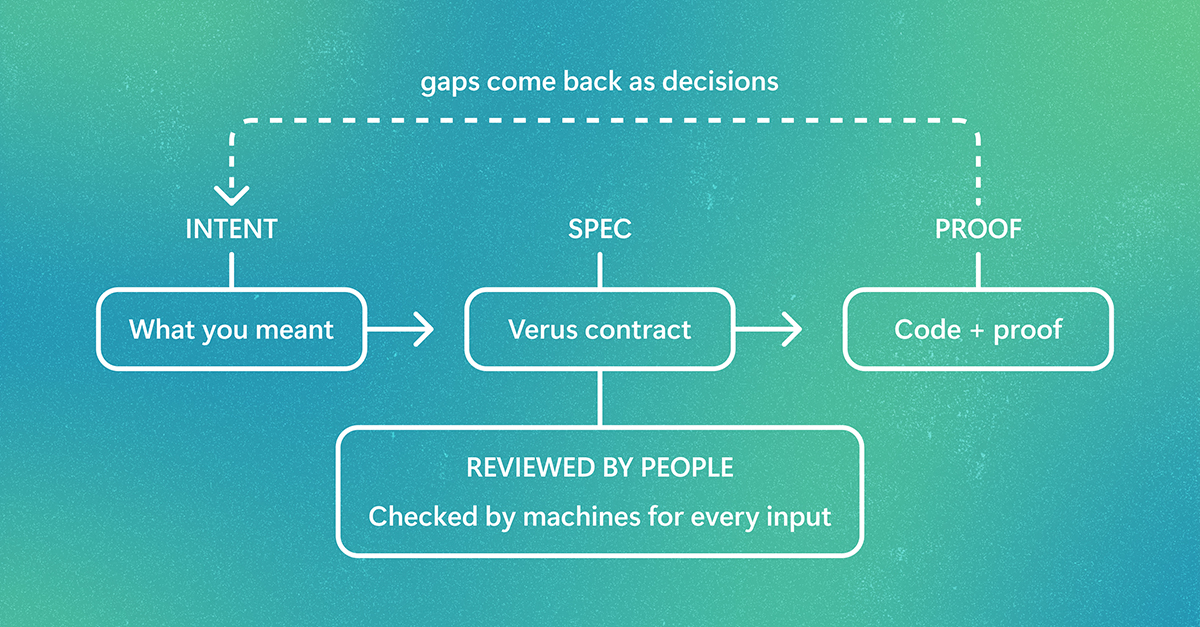
AI agents can generate code at a scale that’s hard for humans to review line-by-line. PDD Kit helps ensure the code is doing what the developer intended by creating formal specifications and testing against them. It converts developer intent into a Verus specification, proves AI-generated code meets it for every input, and uses tests where proofs aren't practical. Developers review intent, not every line. The post Formally verifying agent-written full-stack web apps with PDD Kit appeared first o…
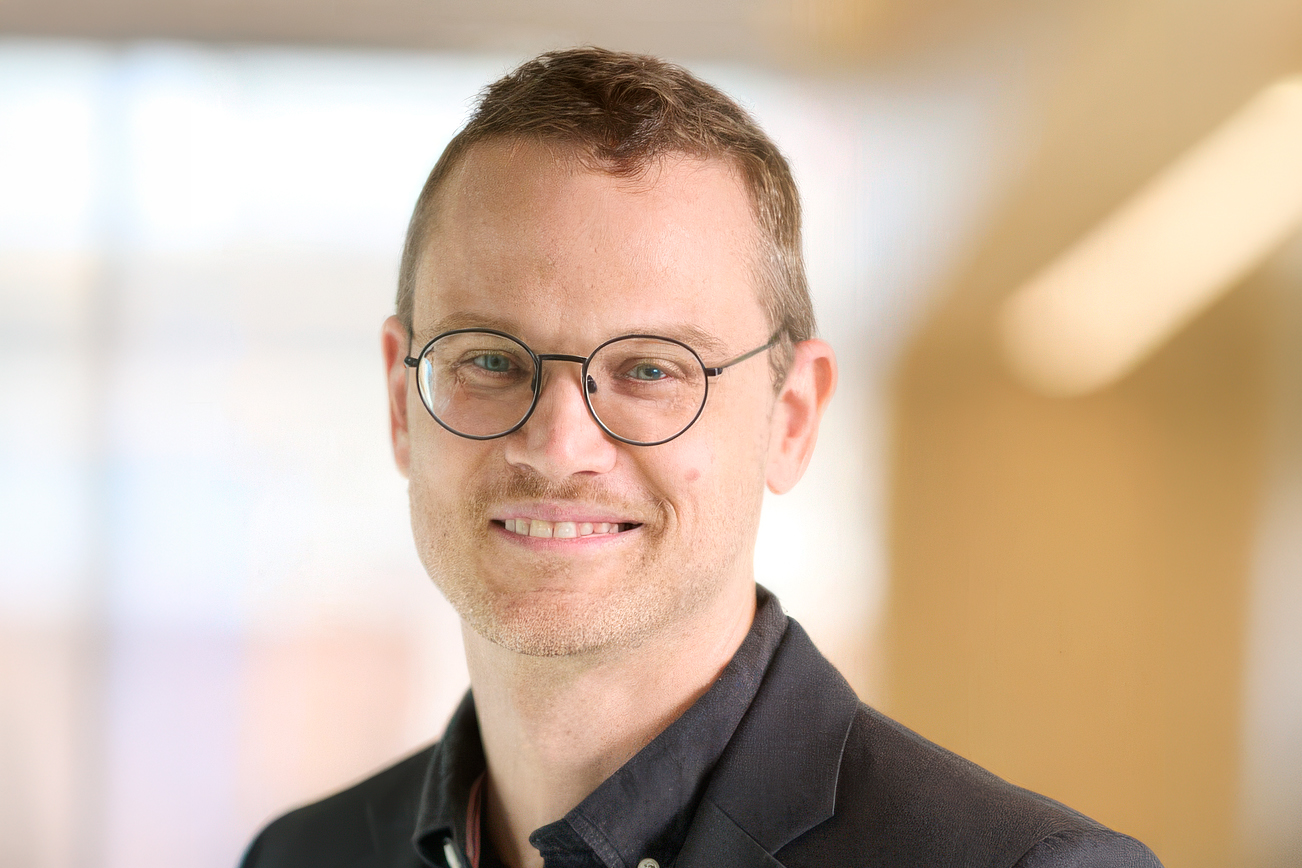
Professor Paris Smaragdis develops computers with superhuman hearing for applications like speech recognition, music understanding, and environmental monitoring.
MIT News · Artificial Intelligence· news.mit.eduOct 23, 2026
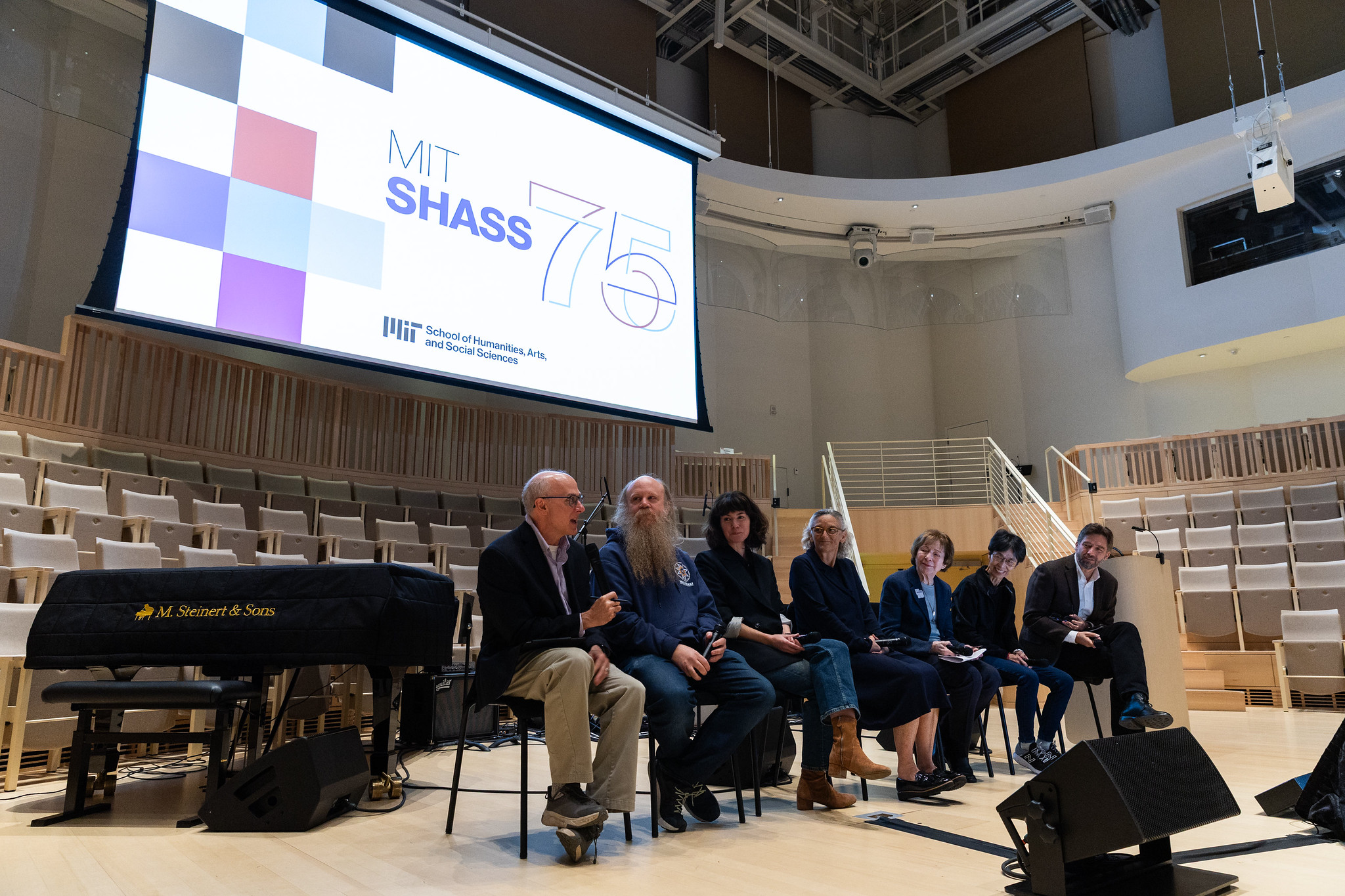
During the School of Humanities, Arts, and Social Sciences’ 75th Anniversary Symposium, President Sally Kornbluth said “MIT has never needed your particular insight and guidance more than we do now.”
MIT News · Artificial Intelligence· news.mit.eduOct 23, 2026
Assistant Professor Benjamin Lindquist studies how engineers deliberately injected randomness into early AI, giving rise to deep-learning models that sometimes hallucinate.
MIT News · Artificial Intelligence· news.mit.eduOct 22, 2026
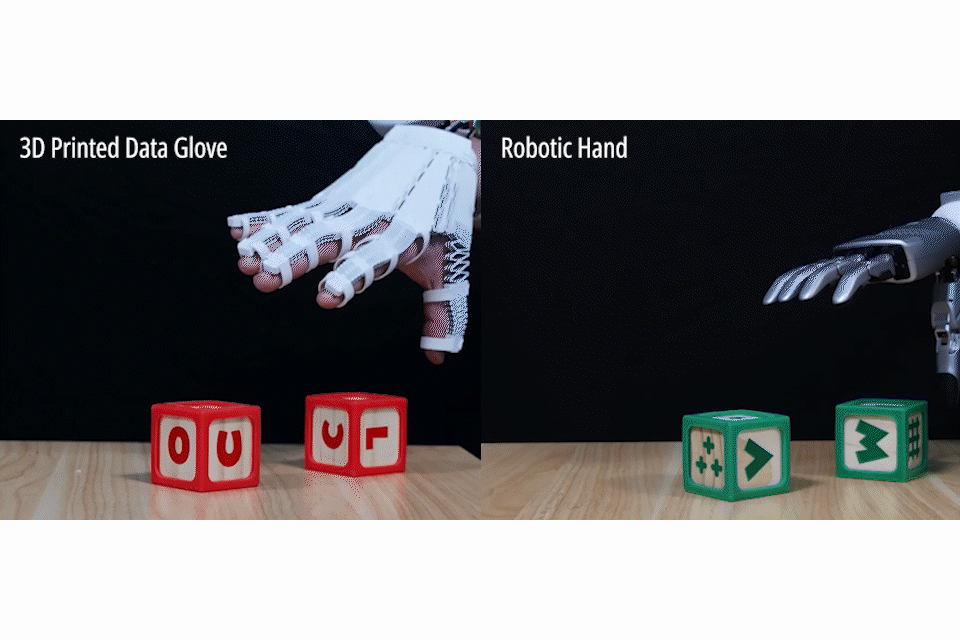
“X-Hinges” helps design and 3D print items like lamps and gloves with an interactive twist: automatically embedded sensors that perceive and adaptively respond to human contact.
We use cookies to run the site and, with your consent, for analytics and to show ads.
See our Cookie Policy.