Contrastive inverse dynamics thus provides a distribution-free anti-collapse signal that requires no target network, stop-gradient, pretrained encoder, or reconstruction objective, and it is argued that the anti-collapse pressure can instead come from the transition data itself.
EvalXRL is a benchmark in which a Large Language Model (LLM) coding agent uses different XRL methods to diagnose a held-out malfunction in an RL agent, and then repair it, and proposes the first head-to-head comparison of multiple XRL methods in closed-loop usage.
Ram Rachum, Yotam Amitai, Bálint Gyevnár et al.· 0 citations
Reconstruction of the underlying networks with high fidelity and forecasts on par with a model that is supplied with the true network are achieved, providing a step toward explainable and scalable forecasting of complex systems.
Jonas Braun, Fabian Fischbach, Daniel Köglmayr et al.· 0 citations
The results show that integrating data from general-purpose knowledge graphs and sensor networks through data fusion can enhance the prediction accuracy of traffic forecasting models, and offers a potential pathway toward improved interpretability.
Mattis thor Straten, Yannick Wölker, Steffen Strohm et al.· International Conference on...· 0 citations
Reach audiences
Advertise in front of researchers, engineers, and readers.
Gradient Uncertainty-Aware Policy Optimization is proposed, which models each group gradient as a random variable under a Bayesian formulation and estimates its probability distribution and derives gradient uncertainty using a Dirichlet-based formulation and uses it to calibrate the contribution of each group gradient during aggregation.
Peizheng Guo, Jianqi Zhang, Xingyu Zhang et al.· 0 citations
Novelty and Surprise Prioritized Experience Replay (NSPER) is introduced, which uses novelty to capture underrepresented states and surprise to expose gaps in the agent's understanding of the environment and is extended with NSPER+R, integrating these signals as intrinsic rewards to jointly improve replay quality and exploration.
Hoda Yamani, Henry Williams, Bruce A. MacDonald· 0 citations
A reusable optimal-transport recipe for generative explanations and a controlled benchmark for stress-testing whether they localize, and a synthetic-to-real gap: label-free heatmaps that look compelling on planted lesions are not evidence of real localisation.
Merging finetuned models combines specialized capabilities without joint training or access to the original data. Most methods operate by linear arithmetic in Euclidean weight space, which cannot carry the geometry of the update. Orthogonal Model Merging (OrthoMerge) uses a single orthogonal transform for each weight matrix, but such a transform cannot change singular values. We propose CORAM, which partitions each target matrix into row slices, represents every expert slice by its singular value decomposition in the corresponding base-model SVD frame, and merges the task-specific factors on their corresponding manifolds. Because manifold averaging contracts the merged update, CORAM applies an amplification coefficient $\lambda=\kappa\hat{c}$. The scale c_hat is estimated from the expert and merged update norms and is approximately $\sqrt{N}$ for $N$ experts with comparable update magnitudes. The restoration strength kappa is selected from the dispersion of expert updates without evaluating candidate merged models. This rule remains within 0.72 points of the best swept value on all evaluated suites. CORAM also includes spread slicing to distribute highly updated rows across slices and a residual pathway for non-target layers. Across four suites covering three model families, 3B to 9B scales, and language and vision-language experts, CORAM improves over OrthoMerge by 0.25 to 1.35 points and matches or exceeds the strongest weight-space baselines.
Xinyi Sui, Ziran Liu, Nam Ling et al.· 0 citations
Instant Episode Repetition (IER) is introduced, a simple and novel mechanism that improves sample efficiency by immediately repeating action sequences from successful episodes during environment interaction by directly influences the data collection process.
Hoda Yamani, Yuning Xing, Koen van Rijnsoever et al.· 0 citations
This work refine the learning-theoretic upper bound using real algebraic geometry and presents a multi-regime lower-bound framework that disentangles combinatorial and algebraic capacities and extends the topological framework to accommodate general bi-level validation-loss tuning and broader semi-algebraic applications.
MoFE conceptualizes cryptocurrency volatility as a superposition of multi-frequency components, which includes user network based fundamental growth, mining costs and halving mechanism caused seasonal volatility, and market sentiment-induced chaos, and delivers superior Directional Accuracy (DA) and Information Coefficient (IC).
Bowen Liu, Mingming Sun· International Conference on...· 0 citations
Reinforcement Learning (RL) has been promising in single-turn LLM fine-tuning. However, long-horizon agentic reasoning introduces increasingly branching interactions and sparse rewards, exposing several limitations of RL: its heavyweight backpropagation-based training stack makes it impractical to fine-tune larger LLMs, and longer-horizon trajectories make credit assignment in RL substantially harder. This paper argues that evolution strategies (ES) can be a better choice for fine-tuning long-horizon LLM agents. Compared with agentic RL, ES offers three key advantages: 1) Model Scalability: ES enables full-parameter optimization with only minimal, inference-level GPU memory, making it possible to fine-tune large LLMs. 2) Flexibility: its lightweight, black-box feedback interface makes ES fine-tuning easy to compose with prompt-space evolution (e.g., skill optimization&test-time compute); and 3) Long-Horizon Scalability: ES performs trajectory-level parameter attribution without decomposing rewards across horizons, yielding better scalability than Agentic RL as the horizon length grows. Based on this insight, we propose Agentic ESOpt, a full-parameter agentic fine-tuning framework tailored to flexible parameter--context co-evolution. At each step, Agentic ESOpt samples perturbations around the current LLM parameters, evaluates the resulting agents with rewards, and applies an online reward-weighted update. To improve the exploration--adaptation trade-off, Agentic ESOpt further introduces a cosine decay schedule of the perturbation scale $\sigma$. On WebArena-Lite, full-parameter optimization of Qwen-3.5-27B improves the No Skill baseline by 6.69%. In test-time automatic heuristic design, Agentic ESOpt performs online prompt--parameter co-evolution, improving its matched baseline in 28 of 36 settings.
Zhi Zheng, Rongsheng Chen, Yunpeng Ba et al.· 1 citation
A weeklong summer workshop brought higher education faculty to campus to explore how AI and machine learning materials can be adapted for their classrooms.
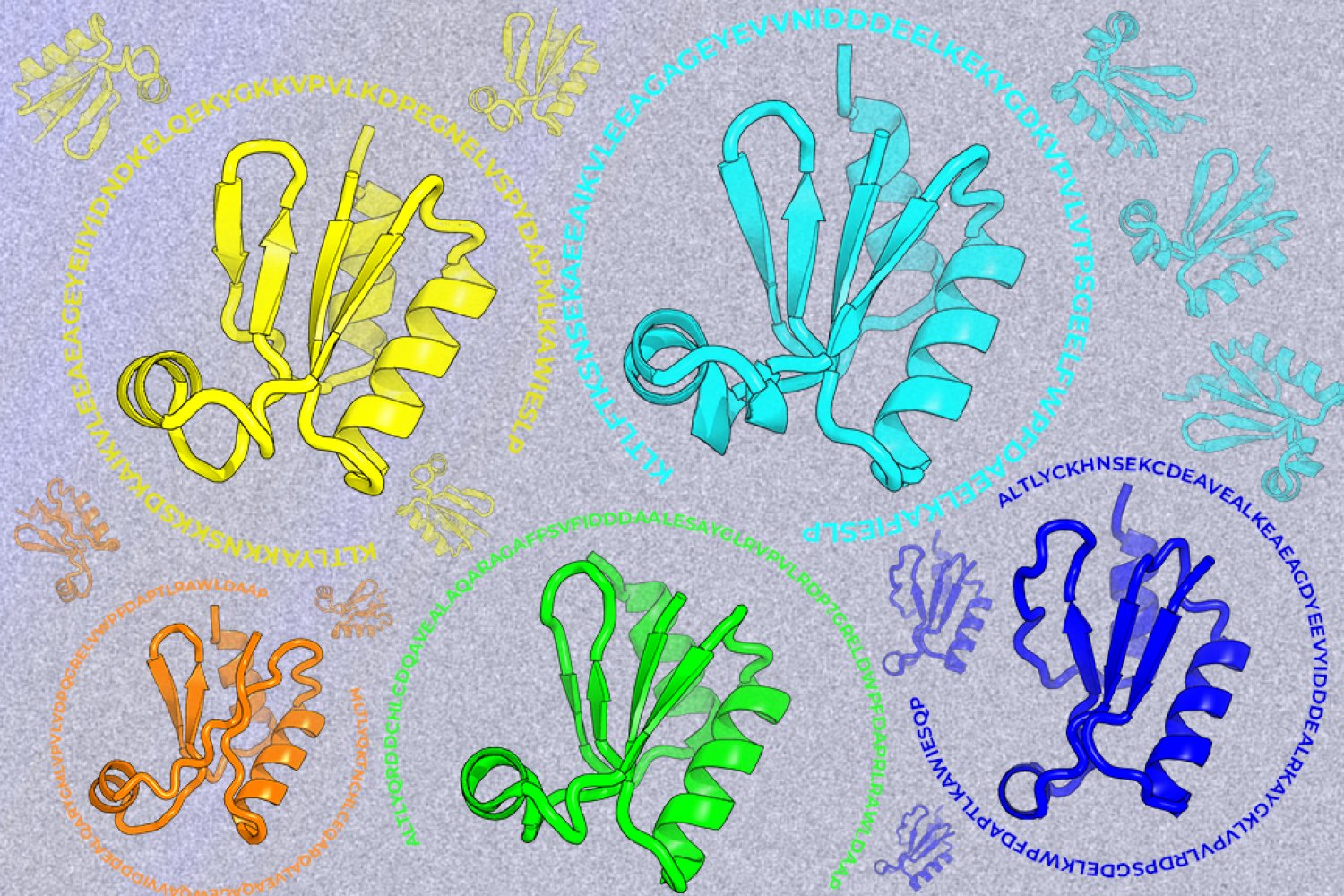
A new machine-learning framework aims to improve the success rate of computational protein design while moving away from results that reproduce sequences found in nature.
MIT News · Artificial Intelligence· news.mit.eduAug 24, 2026