This work proposes QWM, a framework that leverages world models to perform test-time search over imagined trajectories on top of Q-learning to select high-value actions during both online rollouts and evaluation, and significantly outperforms strong prior state-of-the-art methods on both sample efficiency and performance.
Perry Dong, Yueru Jia, Chelsea Finn et al.· 0 citations
The study yields two findings: first, the label's answer form -- not its bit count -- causally determines what fine-tuning teaches: a ranking objective installs an out-of-distribution forward model where the untrained base sits at the guessing prior.
Mingyu Li, Guorui Song, Jing Lin et al.· 0 citations
Tensor networks are powerful formats for compressing large-scale data. However, their application to general data processing has been limited by the difficulty of performing nonlinear operations. Here, we introduce iterative tensor network transformations (ITNTs), a general algorithmic framework for the element-wise evaluation of elementary and nonlinear filtering functions on data encoded as tensor trains (TTs), a class of tensor networks. Our approach operates entirely in the compressed domain, enabling efficient computation on exponentially large datasets while maintaining a controlled computational cost. We demonstrate its power in two key areas: (I) evaluating highly nonlinear elementary and filtering functions on a 3D reactive flow field, enabling high-fidelity reaction rate computation and region filtering, and (II) finding extrema in complex optimization problems, such as solving Max-SAT instances on spaces up to $2^{70}$ configurations. These results establish ITNT as a foundational tool that provides tensor network methods with the capability for general-purpose data science and large-scale optimization.
Xiao Wang, Tomohiro Hashizume, Pia Siegl et al.· 2 citations
This work proposes SURE-Ridge, a non-iterative, closed-form estimator for equal variance linear Gaussian SEM, which achieves the lowest structural Hamming distance in the small-sample regime and the lowest run time across all sample sizes tested, compared with NOTEARS, DAGMA, and GBNSL baselines.
Sambit Mishra, Urbashi Mitra· 0 citations
Reach audiences
Advertise in front of researchers, engineers, and readers.
This work proposes a logic-based framework for node classification in Simple Graph Convolution (SGC) networks that uses minimal abductive explanations as an intermediate representation for rule extraction.
Bryan Lima Cavalcante, Thiago Alves Rocha· 0 citations
A comparative evaluation of six deep learning models--covering state-space, MLP, RNN, and Transformer-based architectures--emphasizing generalization across markets suggests that N-HiTS and NBEATSx perform competitively in limited-data scenarios, while transformer-based models can reach comparable accuracy but tend to require more adaptation and tuning.
H.S.M. Elashhab, Sai Srijan Papineni, M. Dorn et al.· IEEE Access· 0 citations
An evaluation engine that is algebra-generic and amenable to differentiation, together with an executable specification of the algebras it can accept is presented, both forward and backward.
The proposed Dynamic Regime-Aware Conformal Prediction (DRACP), which combines density-ratio, localized kernel and probabilistic regime-aware weighting with a self-tuning online significance controller in a unified weighted conformal calibration framework, provides the most reliable calibration.
PANDA is a scalable system that uses zero-knowledge proofs to prove the robustness and fairness properties of a model without revealing its private parameters, and can generate proofs of local robustness for neural networks with more than 2.9M parameters in 5 minutes, and can verify them in 10 seconds.
Youwei Zhong, Ben Merbaum, Timos Antonopoulos et al.· 0 citations
J-Miner is introduced, which mines text-level named concepts by aggregating vocabulary-aligned internal signals across layers and token positions, and uses the classifier's own predictions to learn executable decision rules over them, and shows that task-specific decision knowledge can be faithfully represented in an explicit, executable form and reused beyond the classifier in which it was learned.
Yunfan Gao, Xinyi Huang, Tao Sheng et al.· 0 citations
This work gives an agent a tool to switch between specialized LoRA adapters mid-trace, finding that this allows the model to solve problems it previously could not, and that this incurs an up to an 18x reduction in capability tax compared to an agent using only one specialized adapter.
This position paper argues that fairness failures in generative models, albeit driven by multiple factors, are ultimately stemming from an evaluation problem: fairness findings are rarely comparable across papers or actionable for deployment decisions.
M. Vladimirova, Jean-Yves Franceschi, Thibaut Issenhuth· 0 citations
A weeklong summer workshop brought higher education faculty to campus to explore how AI and machine learning materials can be adapted for their classrooms.
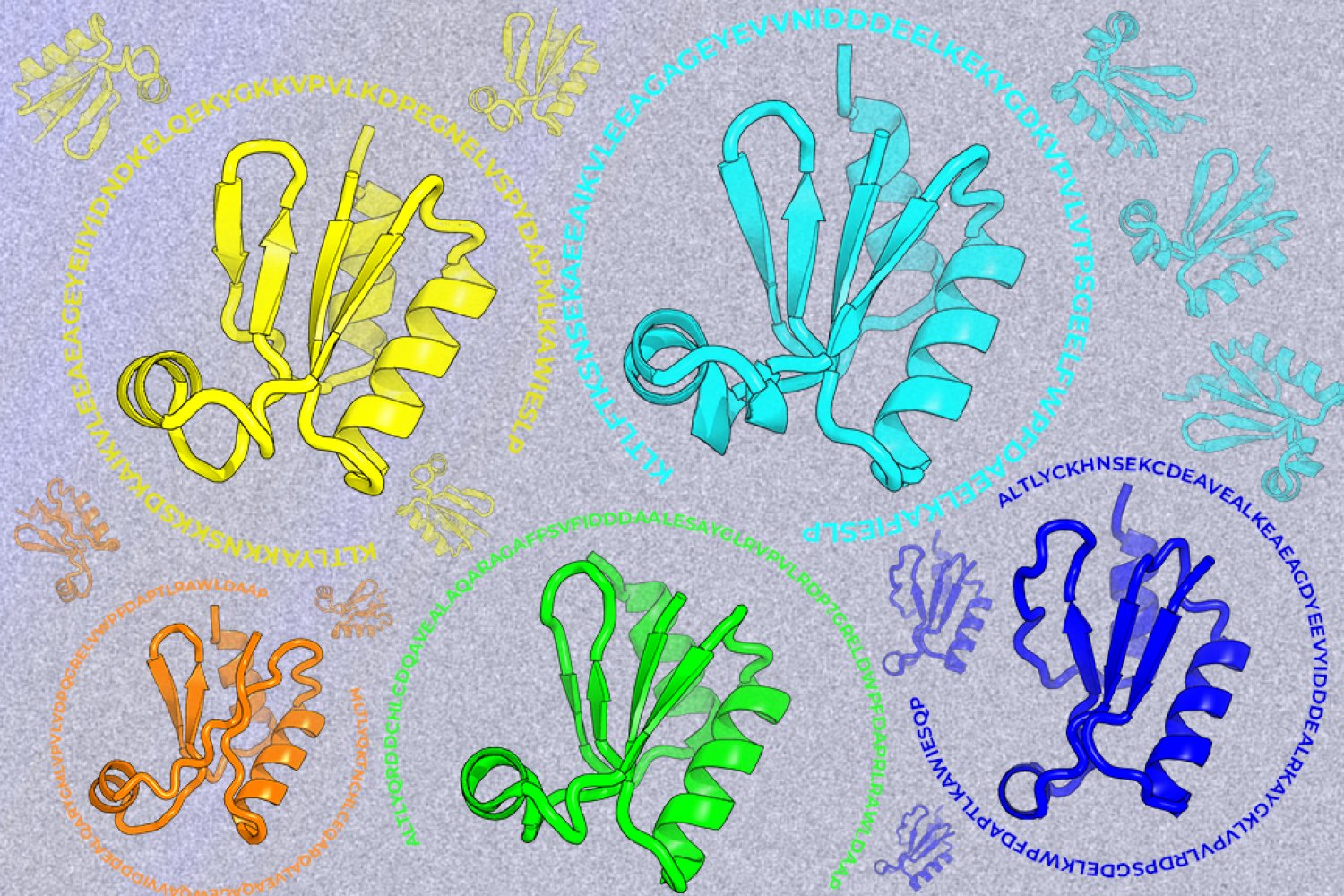
A new machine-learning framework aims to improve the success rate of computational protein design while moving away from results that reproduce sequences found in nature.
MIT News · Artificial Intelligence· news.mit.eduAug 24, 2026